


Former IMF managing director Dominique Strauss-Kahn on Tuesday denied knowing the women he had orgies with were prostitutes and said paying for sex would be too great a risk for a man who was busy “saving the world.”
Strauss-Kahn took the stand for the first time on charges of “aggravated pimping” in an alleged vice ring, in a day of high drama in a French court that saw a former prostitute detail scenes of group sex as “carnage.”
The economist once tipped for the French presidency denied having a “frenetic” program of sex parties at a time when the IMF he led was “saving the world from an unprecedented” financial crisis, adding they only took place four times a year between 2008 and 2011.
Dressed in a dark suit, he told the court in the northern French city of Lille that he would never have attended the sex parties in Paris, Brussels and Washington, if he knew the women were paid to be there.
“I am horrified at the practice of using prostitutes,” he said.
Strauss-Kahn admits being a libertine and said that while he accepted the risk of unusual sexual practices for a man of his stature, he would not have taken the risk of paying prostitutes who would be susceptible to “pressures.”
The 65-year-old finds himself back in the dock four years after his high-flying career and presidential prospects were torpedoed when he was accused of sexual assault by a New York hotel maid, a case later settled in a civil suit.
The crux of the case against him is whether he was aware the women were paid by members of his entourage and whether he played a role in organizing the parties, which he also denied.
“It has happened 10 times that a woman offers herself to me. It is nothing unusual to me,” Strauss-Kahn said.
Asked to define a libertine party, Strauss-Kahn said it was when men and women “came together for the pleasure of sex” and what he liked was the “party atmosphere” of such soirees.
However one former prostitute, Jade — who attended several parties with Strauss-Kahn — described scenes of “carnage” at such a party at a chic Parisian hotel.
“There was [Strauss-Kahn] surrounded by women [on a bed]. That isn’t libertinism, there were no other men. No one asked my name, there was just a hand on my head to perform fellatio,” she said.
However, Strauss-Kahn’s female lawyer, Frederique Baulieu, read evidence from a girlfriend who accompanied him to the party and described it as “free and friendly” — prompting court judge Lemaire to say: “This shows people have different views of libertinism.”
Mounia, another former prostitute, also detailed how Strauss-Kahn performed a sexual act on her which was “against nature” during the party, despite her tears.
“I think he realized [I didn’t want to do it],” she said, adding that she had not refused it because she needed the money.
Strauss-Kahn strongly denied this, saying her tears would have “chilled” him.
“What is sure is we didn’t experience the same thing [at that party]. To me it was friendly, playful,” he said.
Both Jade and Mounia said they had not mentioned to Strauss-Kahn that they were prostitutes.
Strauss-Kahn’s close friend, businessman Fabrice Paszkowski, who is accused of financing and organizing the parties, said he never told the former IMF head that he had paid the women to attend.
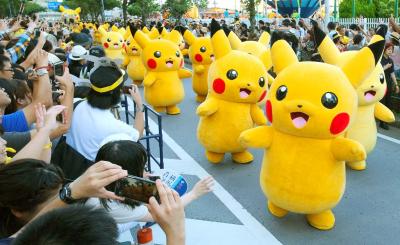
China’s military news agency yesterday warned that Japanese militarism is infiltrating society through series such as Pokemon and Detective Conan, after recent controversies involving events at sensitive sites. In recent days, anime conventions throughout China have reportedly banned participants from dressing as characters from Pokemon or Detective Conan and prohibited sales of related products. China Military Online yesterday posted an article titled “Their schemes — beware the infiltration of Japanese militarism in culture and sports.” The article referenced recent controversies around the popular anime series Pokemon, Detective Conan and My Hero Academia, saying that “the evil influence of Japanese militarism lives on in

DIPLOMATIC THAW: The Canadian prime minister’s China visit and improved Beijing-Ottawa ties raised lawyer Zhang Dongshuo’s hopes for a positive outcome in the retrial China has overturned the death sentence of Canadian Robert Schellenberg, a Canadian official said on Friday, in a possible sign of a diplomatic thaw as Canadian Prime Minister Mark Carney seeks to boost trade ties with Beijing. Schellenberg’s lawyer, Zhang Dongshuo (張東碩), yesterday confirmed China’s Supreme People’s Court struck down the sentence. Schellenberg was detained on drug charges in 2014 before China-Canada ties nosedived following the 2018 arrest in Vancouver of Huawei chief financial officer Meng Wanzhou (孟晚舟). That arrest infuriated Beijing, which detained two Canadians — Michael Spavor and Michael Kovrig — on espionage charges that Ottawa condemned as retaliatory. In January

A sign hanging from a rusty ice-green shipping container installed by Thai forces on what they say is the border with Cambodia reads: “Cambodian citizens are strictly prohibited from entering this area.” On opposite sides of the makeshift barricade, fronted by coils of barbed wire, Cambodians lamented their lost homes and livelihoods as Thailand’s military showed off its gains. Thai forces took control of several patches of disputed land along the border during fighting last year, which could amount to several square kilometers in total. Cambodian Kim Ren said her house in Chouk Chey used to stand on what is now the Thai

NEW RULES: There would be fewer school days, four-day workweeks, and a reduction in transportation services as the country battles a crisis exacerbated by US pressure The Cuban government on Friday announced emergency measures to address a crippling energy crisis worsened by US sanctions, including the adoption of a four-day work week for state-owned companies and fuel sale restrictions. Cuban Deputy Prime Minister Oscar Perez-Oliva Fraga blamed Washington for the crisis, telling Cuban television the government would “implement a series of decisions, first and foremost to guarantee the vitality of our country and essential services, without giving up on development.” “Fuel will be used to protect essential services for the population and indispensable economic activities,” he said. Among the new measures are the reduction of the working week in


 RSS
RSS