


US-led air strikes yesterday pushed Islamic State (IS) fighters back to the edges of the Syrian Kurdish border town of Kobane, which they had appeared set to seize after a three-week assault, local officials said.
The town has become the focus of international attention since the group’s advance drove 180,000 of the area’s mostly Kurdish inhabitants into adjoining Turkey, which has infuriated its own restive Kurdish minority — and its NATO partners in Washington — by refusing to intervene.
The group formerly known as the Islamic State of Iraq and the Levant hoisted its black flag on the eastern edge of the town on Monday, but since then, air strikes by a US-led coalition have redoubled. Gunfire could be heard yesterday from the Turkish border.
“They are now outside the entrances of the city of Kobane. The shelling and bombardment was very effective and as a result of it, IS have been pushed from many positions,” said Idris Nassan, deputy foreign minister of Kobane District. “This is their biggest retreat since their entry into the city and we can consider this as the beginning of the countdown of their retreat from the area.”
Islamic State had been advancing on the strategically important town from three sides and pounding it with artillery despite dogged resistance from heavily outgunned Kurdish forces.
Defense experts said it was unlikely that the advance could be halted by air power alone — a stance that left not only Washington, but also the Syrian Kurds’ ethnic kin across the border demanding to know why the Turkish tanks lined up within sight of Kobane had not crossed the frontier.
However, many Turks outside the southeast think it is far better to risk alienating the Kurds than be sucked into a war in Syria.
An unnamed senior US official told the New York Times on Tuesday that there was “growing angst about Turkey dragging its feet to act to prevent a massacre less than a mile from its border.”
“This isn’t how a NATO ally acts while hell is unfolding a stone’s throw from their border,” the official said.
While taking in Kobane’s refugees, Turkey has deep reservations about military intervention. Beyond becoming a target for IS, it fears being sucked into Syria’s war and having to fight the forces of its declared enemy, Syrian President Bashar al-Assad.
With this in mind, Turkish President Tayyip Erdogan has set conditions for Turkey to attack IS: a “no-fly zone” over Syria near Turkey’s border; a safe zone inside Syria to enable refugees currently in Turkey to return; and the arming of moderate opposition groups to help topple al-Assad.
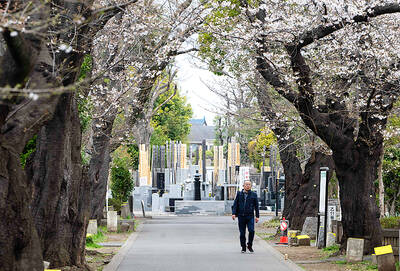
ROCKY RELATIONS: The figures on residents come as Chinese tourist numbers drop following Beijing’s warnings to avoid traveling to Japan The number of Chinese residents in Japan has continued to rise, even as ties between the two countries have become increasingly fractious, data released on Friday showed. As of the end of December last year, the number of Chinese residents had increased by 6.5 percent from the previous year to 930,428. Chinese people accounted for 22.6 percent of all foreign residents in Japan, making them by far the largest group, Japanese Ministry of Justice data showed. Beijing has criticized Tokyo in increasingly strident terms since Japanese Prime Minister Sanae Takaichi last year suggested that a military conflict around Taiwan could

Japan is to downgrade its description of ties with China from “one of its most important” in an annual diplomatic report, according to a draft reviewed by Reuters, as relations with Beijing worsen. This year’s Diplomatic Bluebook, which Japanese Prime Minister Sanae Takaichi’s government is expected to approve next month, would instead describe China as an important neighbor and the relationship as “strategic” and “mutually beneficial.” The draft cites a series of confrontations with Beijing over the past year, including export controls on rare earths, radar lock-ons targeting Japanese military aircraft and increased pressure around Taiwan. The shift in tone underscores a deterioration
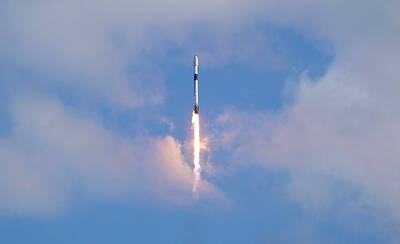
A retired US colonel behind a privately financed rocket launch site in the Dominican Republic sees the project as a response to China’s dominance of the space race in Latin America. Florida-based Launch on Demand is slated to begin building a US$600 million facility in a remote region near the border with Haiti late this year. The project is designed to meet surging demand for the heavy-lift rockets needed to put clusters of satellites into orbit. It is also an answer to China’s growing presence in the region, said CEO Burton Catledge, a former commander of the US Air Force’s 45th Operations

Germany is considering Australia’s Ghost Bat robot fighter as it looks to select a combat drone to modernize its air force, German Minister of Defense Boris Pistorius said yesterday. Germany has said it wants to field hundreds of uncrewed fighter jets by 2029, and would make a decision soon as it considers a range of German, European and US projects developing so-called “collaborative combat aircraft.” Australia has said it will integrate the Ghost Bat, jointly developed by Boeing Australia and the Royal Australian Air Force, into its military after a successful weapons test last year. After inspecting the Ghost Bat in Queensland yesterday,


 RSS
RSS