


Cancer researchers say major progress is being made against a malady that kills more than 7 million people worldwide each year, but funding is short and many challenges remain.
Convincing people to eat healthy, exercise and quit smoking could drastically cut back on many preventable cancers, and a host of environmental factors that may lead to cancer have yet to be solved by science, experts say.
Still, researchers gathered at the American Society of Clinical Oncology (ASCO) annual conference said there is plenty of cause for optimism.
This year’s event, ASCO’s 50th, brings together 30,000 doctors, researchers and pharmaceutical agents from around the world.
“Scientifically, the field of oncology has never been more exciting,” ASCO president Clifford Hudis said.
He cited new targeted therapies that take aim at the cellular functions of tumors, leading to progress against some difficult to treat cancers. Also, immunotherapy is an exciting field that uses a patient’s own immune system to attack tumors, and is showing promise against melanoma, leukemia and a handful of other cancers.
“We have made incredible progress in 50 years,” Northwestern University cancer specialist Jyoti Patel said.
“What has been very exciting in the past several decades is the understanding of the biology of cancer, an effort of working together to catalogue the make-up and the molecular aberrations that distinguish cancer,” Patel said. “In 2014, there will be almost 14 million cancer survivors in the US, and that number is expected to grow twofold over the next decades.”
The death rate from cancer has dropped about 1.5 percent annually over the past decade, and a person diagnosed with cancer today has a higher than 66 percent chance of being alive in five years, according to US government statistics.
“The scientific breakthroughs in cancer are occurring at a breathtaking pace and are being translated into new drugs and devices that benefit patients more quickly than ever before,” ASCO chief medical officer Richard Schilsky said.
However, he warned that this progress is in jeopardy due to a shortage of research funds, particularly from the National Institutes of Health (NIH), the largest government funder of US scientific research, which last year had a budget of US$28.9 billion.
“The NIH budget has been flat for more than a decade and when adjusted for inflation ... is nearly 25 percent lower today than in 2003,” he said.
Hudis agreed that more government funding is needed.
“The nation’s continued investment is critical if we are to make further progress against cancer and accelerated the progress already under way,” Hudis said.
He also called for more focus on addressing both environmental and behavioral risk factors that drive up the cancer burden in the US and around the world.
“While tobacco has long been the leading risk factor for cancer, obesity is a growing problem not only for the US, but worldwide,” he said.
“Obesity is overtaking tobacco, at least in the US, as the leading modifiable risk factor for multiple cancers,” he said, mentioning colon and prostate cancer among the diseases susceptible to weight and eating habits.
A recent study in the Lancet found that one-third of the world was overweight or obese.
“About two-thirds of cancers could be avoided if we changed our lifestyle, our diet and our sun exposure,” Patel said.
She also urged more widespread vaccination against human papillomavirus, which can cause cancers of the cervix, anus, penis, head, neck and throat — as well as improved vaccination against hepatitis, which can lead to liver cancer. Smoking also remains a top cause of cancer.
“So we need better education and stricter regulations for the tobacco industry,” Patel said.
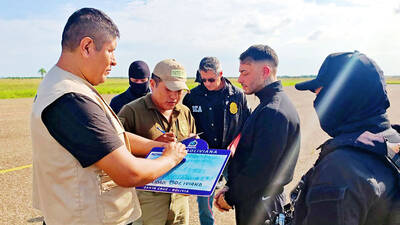
KINGPIN: Marset allegedly laundered the proceeds of his drug enterprise by purchasing and sponsoring professional soccer teams and even put himself in the starting lineups Notorious Latin American narco trafficker Sebastian Marset, who eluded police for years, was handed over to US authorities after his arrest on Friday in Bolivia. Marset, a Uruguayan national who was on the US most-wanted list, was passed to agents of the US Drug Enforcement Administration at Santa Cruz airport in Bolivia, then put on a US airplane, Bolivian state television showed. “The arrest and deportation were carried out pursuant to a court order issued by the US justice system,” Bolivian Minister of Government Marco Antonio Oviedo told reporters. The alleged kingpin was arrested in an upscale neighborhood of Santa
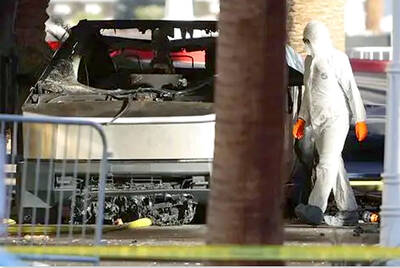
ACTIONABLE ADVICE: The majority of chatbots tested provided guidance on weapons, tactics and target selections, with Perplexity and Meta AI deemed to be the least safe From school shootings to synagogue bombings, leading artificial intelligence (AI) chatbots helped researchers plot violent attacks, according to a study published on Wednesday that highlighted the technology’s potential for real-world harm. Researchers from the nonprofit watchdog Center for Countering Digital Hate and CNN posed as 13-year-old boys in the US and Ireland to test 10 chatbots, including ChatGPT, Google Gemini, Perplexity, Deepseek and Meta AI. Eight of the chatbots assisted the make-believe attackers in more than half the responses, providing advice on “locations to target” and “weapons to use” in an attack, the study said. The chatbots had become a “powerful accelerant for
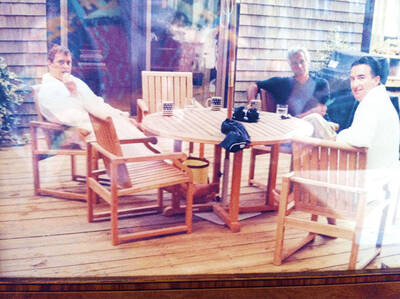
SCANDAL: Other images discovered earlier show Andrew bent over a female and lying across the laps of a number of women, while Mandelson is pictured in his underpants A photograph of former British prince Andrew and veteran politician Peter Mandelson sitting in bathrobes alongside late sex offender Jeffrey Epstein was unearthed on Friday in previously published documents. The image is believed to be the first known photograph of the two men with Epstein. They are currently engulfed in scandal in the UK over their ties to their mutual friend. The undated photograph, first reported by ITV News, shows King Charles III’s disgraced brother and former British ambassador to the US sitting barefoot outside on a wooden deck. They appear to have mugs with a US flag on them
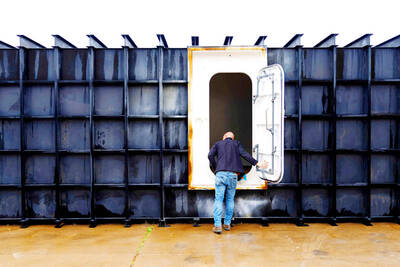
Since the war in the Middle East began nearly two weeks ago, the telephone at Ron Hubbard’s bomb shelter company in Texas has not stopped ringing. Foreign and US clients are rushing to buy his bunkers, seeking refuge in case of air raids, nuclear fallout or apocalypse. With the US and Israel pounding Iran, and Tehran retaliating with strikes across the region, Hubbard has seen demand for his product soar, mostly from Gulf nation customers in Bahrain, Qatar, Kuwait and the United Arab Emirates. “You can imagine how many people are thinking: ‘I wish I had a bomb shelter,’” Hubbard, 63, said in


 RSS
RSS