


NASA has narrowed its hunt for an asteroid to capture to three, the US space agency said on Wednesday.
The asteroids fit the requirements of being between 7m and 10m in size, and further study should be able to narrow the choice even more, scientists said at a conference in San Diego, California.
“We have two to three which we will characterize in the next year and if all goes well ... those will be valid candidates that could be certified targets,” said Paul Chodas, senior scientist at the NASA Near-Earth Object Program Office.
THE PLAN
The plan is to send a robotic spacecraft to capture the asteroid and drag it into orbit around the moon.
Once there, astronauts could visit the asteroid and take samples of it back to Earth for study.
The spacecraft used to travel there and back would be the Orion multi-purpose vehicle, which is being built, but has not yet been used, as well as a new deep space rocket launcher.
The program aims to break new ground by increasing NASA’s capabilities beyond low Earth orbit, where the International Space Station circles the globe.
NASA has touted the planetary defense capabilities the project would build toward protecting the Earth from a potential hazardous asteroid collision, as well as a boost in the technology it could use for future human missions to deep space.
US President Barack Obama has proclaimed the project as a key step on the way to sending humans to Mars by the 2030s.
Bill Gerstenmaier, associate administrator of NASA’s Human Exploration and Operations Directorate, described the asteroid mission as “pretty compelling.”
“If you think about grabbing an object in space, and then manipulating it for our use and putting it into a destination where we could go back and routinely visit, and let commercial companies go visit, I think that is a pretty compelling activity,” Gerstenmaier said.
Obama’s budget for NASA next year asked for US$100 million for the asteroid project, but the overall costs may be as high as US$2 billion.
“It’s a little different way than just a date and a destination. We are really good at just picking dates and destinations, but that’s really hard in this budget environment, where things are constrained and we have flat budgets, et cetera, et cetera, to pull that off,” Gerstenmaier said. “It is not just a one-time thing. It actually feeds forward into the broader context of what we want to do with humans in space.”
TIMEFRAME
The launch could happen as early as 2017 or as late as 2019.
After the launch of the robotic mission, the journey to the asteroid would take a year and a half, and the act of towing it toward the moon could take another three-and-a-half years, NASA said.
The project would use a new fuel technology called solar electric propulsion.
“We are talking about engineering the solar system, in a way. We are talking about taking an asteroid which was once here and then putting it into a useful orbit for our purposes,” Chodas said. “This is a very large idea here that we are talking about and I think it will reinvigorate interest in the space program.”
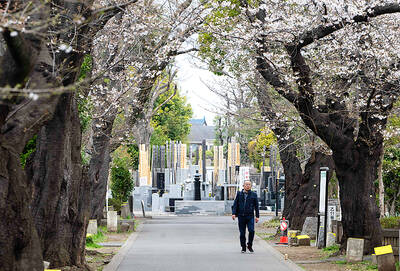
ROCKY RELATIONS: The figures on residents come as Chinese tourist numbers drop following Beijing’s warnings to avoid traveling to Japan The number of Chinese residents in Japan has continued to rise, even as ties between the two countries have become increasingly fractious, data released on Friday showed. As of the end of December last year, the number of Chinese residents had increased by 6.5 percent from the previous year to 930,428. Chinese people accounted for 22.6 percent of all foreign residents in Japan, making them by far the largest group, Japanese Ministry of Justice data showed. Beijing has criticized Tokyo in increasingly strident terms since Japanese Prime Minister Sanae Takaichi last year suggested that a military conflict around Taiwan could
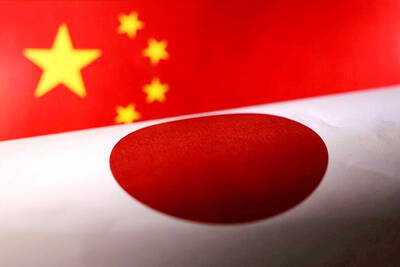
Japan is to downgrade its description of ties with China from “one of its most important” in an annual diplomatic report, according to a draft reviewed by Reuters, as relations with Beijing worsen. This year’s Diplomatic Bluebook, which Japanese Prime Minister Sanae Takaichi’s government is expected to approve next month, would instead describe China as an important neighbor and the relationship as “strategic” and “mutually beneficial.” The draft cites a series of confrontations with Beijing over the past year, including export controls on rare earths, radar lock-ons targeting Japanese military aircraft and increased pressure around Taiwan. The shift in tone underscores a deterioration
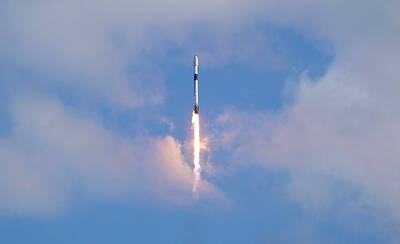
A retired US colonel behind a privately financed rocket launch site in the Dominican Republic sees the project as a response to China’s dominance of the space race in Latin America. Florida-based Launch on Demand is slated to begin building a US$600 million facility in a remote region near the border with Haiti late this year. The project is designed to meet surging demand for the heavy-lift rockets needed to put clusters of satellites into orbit. It is also an answer to China’s growing presence in the region, said CEO Burton Catledge, a former commander of the US Air Force’s 45th Operations
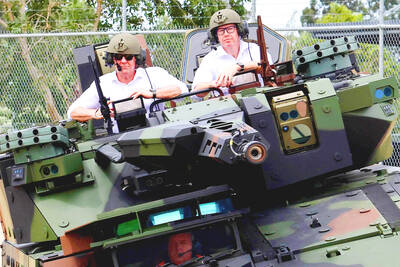
Germany is considering Australia’s Ghost Bat robot fighter as it looks to select a combat drone to modernize its air force, German Minister of Defense Boris Pistorius said yesterday. Germany has said it wants to field hundreds of uncrewed fighter jets by 2029, and would make a decision soon as it considers a range of German, European and US projects developing so-called “collaborative combat aircraft.” Australia has said it will integrate the Ghost Bat, jointly developed by Boeing Australia and the Royal Australian Air Force, into its military after a successful weapons test last year. After inspecting the Ghost Bat in Queensland yesterday,


 RSS
RSS