


The Russian Foreign Ministry has attacked the human rights record of the US in its first report on injustice elsewhere in the world, offering examples such as the Guantanamo Bay prison and wrongful death row convictions, to paint the US as hypocritical for lecturing other nations on the subject of rights.
“The situation in the United States is a far cry from the ideals that Washington proclaims,” the report released on Wednesday says.
Moscow has previously reacted angrily to accusations of human rights breaches that the US Department of State has leveled at Russia in its annual reports. The department has expressed concern about the violent attacks on rights activists and journalists in Russia, most of which go unpunished. It has also criticized abuses in Russia’s Caucasus, including extrajudicial killings, kidnappings and torture.
The 90-page Russian report slams EU nations, Canada and Georgia, but reserves its longest section of 20 pages for what it says are violations by the US. The report does not cover Asia, Africa or the Middle East, other than a five-page section criticizing the NATO operation in Libya.
Moscow laments the ongoing operation of the “notorious” prison in Guantanamo Bay, where terrorism suspects have been held since the Sept. 11, 2001, attacks, and it criticizes US President Barack Obama for “legalizing indefinite and extrajudicial custody and the return of court martials.”
The report accuses the US of prying into citizens’ personal lives and violating the rights of Muslim Americans in the fight against terrorism. It also points to errors made by US courts.
“Judicial errors are the Achilles heel of American justice as concerns capital punishment,” the report says.
It notes about 130 people were sentenced to death in the past 30 years, but were later cleared of the charges, some after they were executed.
The ministry also struck back at international criticism of Russia’s recent parliamentary elections, which independent observers said involved widespread fraud. Outrage over the vote set off a spate of protests led by citizens unhappy with Russian Prime Minister Vladimir Putin’s rule.
The report accuses the US of blocking independent candidates from elections and criticizes the practice of allowing governors to nominate senators when a Senate seat is vacated.
The US Department of State is reviewing the Russian report, spokesman Mark Toner said.
He said such reports can be a “useful mechanism, provided that they are produced using objective methodology.”
“We certainly don’t regard it as interference in our internal affairs when foreign governments, individuals or organizations comment on or criticize US human rights practices,” he said. “In terms of our human rights record, we’re an open book.”
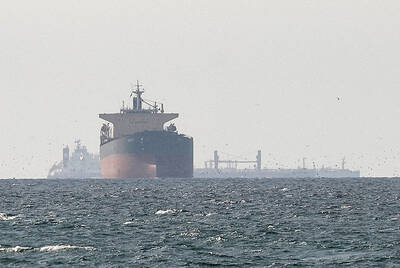
A ship that appears to be taking on the identity of a scrapped gas carrier exited the Strait of Hormuz on Friday, showing how strategies to get through the waterway are evolving as the Middle East war progresses. The vessel identifying as liquefied natural gas (LNG) carrier Jamal left the Strait on Friday morning, ship-tracking data show. However, the same tanker was also recorded as having beached at an Indian demolition yard in October last year, where it is being broken up, according to market participants and port agent’s reports. The ship claiming to be Jamal is likely a zombie vessel that

Cannabis-based medicines have shown little evidence of effectiveness for treating most mental health and substance-use disorders, according to a large review of past studies published in a major medical journal on Monday. Medical use of cannabinoids has been expanding, including in the US, Canada and Australia, where many patients report using cannabis products to manage conditions such as anxiety, post-traumatic stress disorder and sleep problems. Researchers reviewed data from 54 randomized clinical trials conducted between 1980 and May last year involving 2,477 participants for their analysis published in The Lancet. The studies assessed cannabinoids as a primary treatment for mental disorders or substance-use

NATIONWIDE BLACKOUT: US President Donald Trump cut off Venezuelan oil shipments to Cuba, strangling the Caribbean island’s already antiquated grid Cuba’s national electric grid collapsed on Monday, the nation’s grid operator said, leaving about 10 million people without power amid a US-imposed oil blockade that has crippled the already obsolete generation system. Grid operator UNE on social media said that it is investigating the causes of the blackout, the latest in a series of widespread outages that last for hours or days and that this weekend sparked a rare violent protest in the communist-run nation. Officials ruled out a major power plant failure, but had still not pinpointed the root cause of the grid collapse, suggesting a problem with transmission. Officials said that

CONSERVING FUEL: State institutions are to operate only four days a week starting tomorrow, with the measures also applying to schools and universities Sri Lanka on Monday announced a shorter working week to conserve its scarce fuel reserves as it prepares for a prolonged war in the Middle East. The Strait of Hormuz, a key waterway through which about 20 percent of global exports pass in peacetime, has been effectively closed by Iran in retaliation over the US and Israeli war against it, now in its third week. Sri Lankan Commissioner-General of Essential Services Prabath Chandrakeerthi said state institutions would operate only four days a week starting tomorrow. The new austerity measures would also apply to schools and universities, and would remain in place indefinitely. “We are


 RSS
RSS