


Research showing that an average of four children die each year during judo lessons in Japan has alarmed some parents as the country prepares to introduce martial arts as a compulsory school sport.
Yoshihiro Murakawa is one of those concerned about the government’s plan, because he is convinced his 12-year-old nephew died in a reckless judo practice.
The Japan Judo Accident Victims Association, which Murakawa helped create with other families last March, has urged the government to set safety guidelines for judo at school.
“Many factors are involved here,” Murakawa said of his nephew Koji’s death during judo club training. “First of all, many judo instructors at Japanese schools are too ignorant about what to do when a serious incident occurs.”
Murakawa also criticized some judo club instructors at Japanese schools for neglecting safety measures, such as letting children rest properly.
Koji’s mother had asked for special attention to be paid to him when he joined the judo club at a middle school in central Shiga Prefecture, because he had an asthma problem, but one afternoon in July 2009, Koji was still tackling older students and the instructor in the freestyle “randori” training, despite being exhausted, Murakawa quoted students as saying.
After a final throw, Koji lost consciousness and fell into a coma before dying a month later, Murakawa said.
At least 110 children have been killed in school judo practice over 27 years from 1983, according to research by Ryo Uchida, an assistant professor at Aichi University of Education.
“In judo, the number of cases in which trainees die due to techniques unique to the sport such as throwing is significantly high,” Uchida said.
In 2009 and last year alone, 13 children have died and the latest case, involving a six-year-old boy, occurred in November, a local newspaper reported.
Parents have been alarmed by the statistics because Japan plans to introduce traditional martial arts, including judo, as a required subject not only for boys, but also girls at middle schools from next year. Middle school pupils are aged between 12 and 15.
Yasuhiko and Keiko Kobayashi, whose youngest son suffered a grave brain injury when he was 15, also questioned whether the government was fully prepared, saying there had been a lack of thorough investigation into the causes of serious judo incidents.
“With so many children dying, there was no single case taken to a court for a criminal charge,” Yasuhiko Kobayashi said. “No one has taken responsibility.”
Murakawa criticized what he called a “military-like” judo culture that tolerates “beating and kicking” in the name of discipline for young trainees.
“Children, afraid of getting beaten up, must obey the coach and cannot ask for a rest, no matter what,” he said.
Sports doctor Yuzo Shinbara, who is a member of the medical science panel under the All Japan Judo Federation, rejected the argument that there was a mentality among judo trainers that justified tough initiation practices.
The sports association, which recognizes 56 grave judo incidents, has published its own safety guidelines and is studying the risk of head injuries with medical experts, he said.
However, the Japanese government has not provided official safety guidelines for judo lessons at schools.
Uchida warned that more children would be exposed to a risk of serious injuries when judo became part of the official curriculum.
“Judo is an inspiring sport and very educative to one’s mind, but schools must have a safety guideline,” Uchida said.

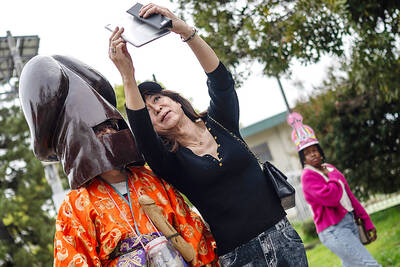
Showcasing phallus-shaped portable shrines and pink penis candies, Japan’s annual fertility festival yesterday teemed with tourists, couples and families elated by its open display of sex. The spring Kanamara Matsuri near Tokyo features colorfully dressed worshipers carrying a trio of giant phallic-shaped objects as they parade through the street with glee. The festival, as legend has it, honors a local blacksmith in the Edo Period (1603-1868) who forged an iron dildo to break the teeth of a sharp-toothed demon inhabiting a woman’s vagina that had been castrating young men on their wedding nights. A 1m black steel phallus sits in the courtyard of

JAN. 1 CLAUSE: As military service is voluntary, applications for permission to stay abroad for over three months for men up to age 45 must, in principle, be granted A little-noticed clause in sweeping changes to Germany’s military service policy has triggered an uproar after it emerged that the law requires men aged up to 45 to get permission from the armed forces before any significant stay abroad, even in peacetime. The legislation, which went into effect on Jan. 1 aims to bolster the military and demands all 18-year-old men fill out a questionnaire to gauge their suitability to serve in the armed forces, but stops short of conscription. If the “modernized” model fails to pull in enough recruits, parliament will be compelled to discuss the reintroduction of compulsory service, German
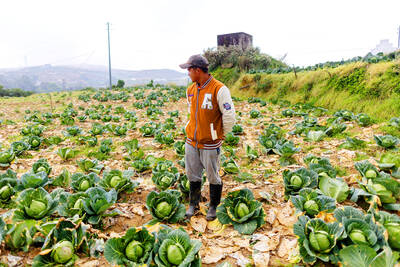
Filipino farmers like Romeo Wagayan have been left with little choice but to let their vegetables rot in the field rather than sell them at a loss, as rising oil prices linked to the Iran war drive up the cost of harvesting, labor and transport. “There’s nothing we can do,” said Wagayan, a 57-year old vegetable farmer in the northern Philippine province of Benguet. “If we harvest it, our losses only increase because of labor, transportation and packing costs. We don’t earn anything from it. That’s why we decided not to harvest at all,” he said. Soaring costs caused by the Middle East

Hungarian Prime Minister Viktor Orban’s officially declared wealth is fairly modest: some savings and a jointly owned villa in Budapest. However, voters in what Transparency International deems the EU’s most corrupt country believe otherwise — and they might make Orban pay in a general election this Sunday that could spell an end to his 16-year rule. The wealth amassed by Orban’s inner circle is fueling the increasingly palpable frustration of a population grappling with sluggish growth, high inflation and worsening public services. “The government’s communication machine worked well as long as our economic situation remained relatively good,” said Zoltan Ranschburg, a political analyst


 RSS
RSS