


A former coup leader, convicted drug trafficker and accused murderer was sworn in as Suriname’s president yesterday, and shop owner Sunil Oemrawsingh was so appalled he couldn’t even watch the ceremony — or understand why so few of his countrymen agree with him.
The 50-year-old has a particular reason for outrage: Surinamean President Desi Bouterse is on trial for his alleged role in the abduction and summary execution of Oemrawsingh’s uncle and 14 other leading citizens, all suspected enemies of the military regime, on a December night in 1982.
“I must admit, I am bitter about this,” Oemrawsingh said.
Bouterse’s return to power has people in ethnically diverse Suriname and abroad wondering whether it will also mean a return to the dark days of the past, when human rights were trampled and isolated Suriname was a launching pad for drugs bound for the US and Europe.
The immediate question for many in this thickly forested Amazon basin nation of about 500,000 people is what will happen with the trial for the “December killings.” So far, there is no indication of any changes.
“The trial goes on,” said Jennifer Geerlings-Simons, the speaker of parliament and a close ally of the new president.
When asked to elaborate, she changed the subject and called criticism of Bouterse propaganda.
Bouterse and nearly 20 others face charges that include murder in a case that has proceeded fitfully before a three-judge panel since November 2007.
In the past, Bouterse has accepted “political responsibility” for the killings, but denied a direct hand in them. As president, he is not required to testify and he could engineer a pardon if convicted in a case that could get him a 20-year sentence. Some fear he could interfere with the trial if testimony gets too uncomfortable, denying the families a resolution.
“We want to know who killed our loved ones and why they died,” Oemrawsingh said.
Bouterse, 64, has loomed over Surinamese politics for three decades. He first came to power in February 1980, when he led a coup that suspended the Constitution and dissolved parliament five years after Suriname gained independence from the Netherlands.
He led another coup in 1990, three years after allowing a return to civilian rule under international pressure, and remained a powerful force even after stepping down as army chief in 1992.
He has long been dogged by allegations of corruption. Convicted of drug trafficking in absentia in 1999 in the Netherlands — prosecutors said he was the leader of the “Suri Cartel” — he was sentenced to 11 years in prison. He avoided that punishment because Suriname doesn’t have an extradition treaty with its former colonial ruler.
Bouterse has shrugged off the conviction while strengthening his political machine. He has also traded his fatigues for dress shirts and slacks, often wearing his loafers without socks.
In the May elections, Bouterse’s party captured 40 percent of the popular vote and 23 seats in parliament with a campaign of pledges to build more houses and increase social security spending. His promises to invigorate the economy — largely dependent on resource extraction, including gold, bauxite and offshore oil — resonate in a country where jobs are scarce.
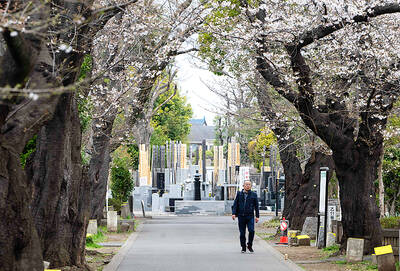
ROCKY RELATIONS: The figures on residents come as Chinese tourist numbers drop following Beijing’s warnings to avoid traveling to Japan The number of Chinese residents in Japan has continued to rise, even as ties between the two countries have become increasingly fractious, data released on Friday showed. As of the end of December last year, the number of Chinese residents had increased by 6.5 percent from the previous year to 930,428. Chinese people accounted for 22.6 percent of all foreign residents in Japan, making them by far the largest group, Japanese Ministry of Justice data showed. Beijing has criticized Tokyo in increasingly strident terms since Japanese Prime Minister Sanae Takaichi last year suggested that a military conflict around Taiwan could

A retired US colonel behind a privately financed rocket launch site in the Dominican Republic sees the project as a response to China’s dominance of the space race in Latin America. Florida-based Launch on Demand is slated to begin building a US$600 million facility in a remote region near the border with Haiti late this year. The project is designed to meet surging demand for the heavy-lift rockets needed to put clusters of satellites into orbit. It is also an answer to China’s growing presence in the region, said CEO Burton Catledge, a former commander of the US Air Force’s 45th Operations

Germany is considering Australia’s Ghost Bat robot fighter as it looks to select a combat drone to modernize its air force, German Minister of Defense Boris Pistorius said yesterday. Germany has said it wants to field hundreds of uncrewed fighter jets by 2029, and would make a decision soon as it considers a range of German, European and US projects developing so-called “collaborative combat aircraft.” Australia has said it will integrate the Ghost Bat, jointly developed by Boeing Australia and the Royal Australian Air Force, into its military after a successful weapons test last year. After inspecting the Ghost Bat in Queensland yesterday,
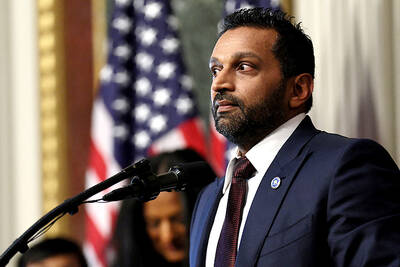
A pro-Iran hacking group claimed to breach FBI Director Kash Patel’s personal e-mail inbox and posted some of the contents online. The e-mails provided by the hacking group include travel details, correspondence with leasing agents in Washington and global entry, and loyalty account numbers. The e-mail address the hackers claim to have compromised has been previously tied to Patel’s personal details, and the leaked e-mails contain photos of Patel and others, in addition to correspondence with family members and colleagues. “The FBI is aware of malicious actors targeting Director Patel’s personal email information,” the agency said in a statement on


 RSS
RSS