


The inspector general investigating fraud, waste and abuse in the US$51 billion Afghanistan reconstruction program has received a failing grade from his peers.
The council of government auditors who reviewed the work asked Attorney General Eric Holder to consider suspending or rescinding law enforcement powers of the Afghanistan reconstruction watchdog.
The US has committed US$51 billion to Afghanistan reconstruction since 2001, and plans to raise the amount to US$71 billion over the next year.
The review found the Afghanistan reconstruction inspector general did not train investigators in use of firearms and deadly force, did not even have a policy on firearms and lacked an electronic filing system to collect important information — including data to measure investigators’ performance.
The Special Inspector General for Afghanistan Reconstruction (SIGAR) is led by retired Marine Major General Arnold Fields. Fields told the review group, the inspectors’ general Council on Integrity and Efficiency, that he accepted the findings and promised improvements were under way.
That did not satisfy Senator Claire McCaskill, a Democrat who heads a committee that investigates government contracting.
“This report proves that SIGAR’s performance is inept,” she said in a statement. “It is time for a house-cleaning at SIGAR, including new leadership. For the sake of our soldiers and the American taxpayer, time is of the essence.”
Fields’ top deputy, John Brummet, disagreed in an interview with the recommendation to remove the office’s law enforcement powers.
“The areas of noncompliance are administrative,” he said.
“There’s no malfeasance. Of course we need one [a firearms policy], but we do not have agents who are armed. We’re waiting to have a policy on firearms use before arming our agents.”
Since May last year, the office has completed 17 audits and has 14 under way.
The letter to Holder was signed by Richard Moore, who conducted the peer review of the Afghanistan watchdog’s investigative section.
Moore, who is the inspector general of the Tennessee Valley Authority, did say that it’s likely Field’s operation will improve in the coming months.
The review looked separately at the investigative work — which involves criminal and civil law enforcement investigations — and the conduct of audits that search for fraud, waste and abuse.
The Afghanistan inspector general’s office did not meet professional standards for investigators, the review said.
The audit operation fared slightly better, getting a passing grade, but with deficiencies. Among them: The watchdog was not monitoring the quality of its work, was inconsistent in following its own audit plan and, in about half its reports, failed to clearly state their objective.
Brummet said that the Afghanistan watchdog office is a “young and growing organization” that is encountering huge obstacles in the war zone.
The US State Department only allows the office to have 20 people in Afghanistan, although they’re augmented by people on temporary assignment. The office is negotiating for an additional 12 staff members in Afghanistan.
But regardless of the number, getting around Afghanistan presents massive problems in security and transportation, Brummet said. One of the most difficult tasks is reaching locations outside Kabul to assess the US training of Afghan forces.
Brummet said that in one of his own visits, he needed an escort of five armored vehicles and 30 US soldiers to leave a provincial base.
In another instance, because of transportation bottlenecks, he needed five days to reach, and return from, a meeting that took two hours.
He said of the review, which his office requested: “It’s good we had these things pointed out to us. We began taking actions to remedy deficiencies.”
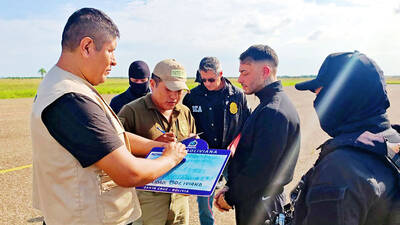
KINGPIN: Marset allegedly laundered the proceeds of his drug enterprise by purchasing and sponsoring professional soccer teams and even put himself in the starting lineups Notorious Latin American narco trafficker Sebastian Marset, who eluded police for years, was handed over to US authorities after his arrest on Friday in Bolivia. Marset, a Uruguayan national who was on the US most-wanted list, was passed to agents of the US Drug Enforcement Administration at Santa Cruz airport in Bolivia, then put on a US airplane, Bolivian state television showed. “The arrest and deportation were carried out pursuant to a court order issued by the US justice system,” Bolivian Minister of Government Marco Antonio Oviedo told reporters. The alleged kingpin was arrested in an upscale neighborhood of Santa
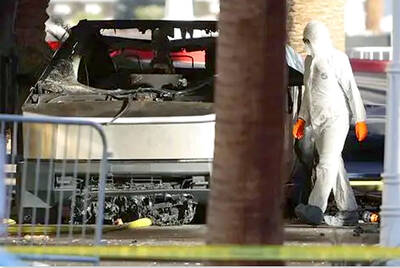
ACTIONABLE ADVICE: The majority of chatbots tested provided guidance on weapons, tactics and target selections, with Perplexity and Meta AI deemed to be the least safe From school shootings to synagogue bombings, leading artificial intelligence (AI) chatbots helped researchers plot violent attacks, according to a study published on Wednesday that highlighted the technology’s potential for real-world harm. Researchers from the nonprofit watchdog Center for Countering Digital Hate and CNN posed as 13-year-old boys in the US and Ireland to test 10 chatbots, including ChatGPT, Google Gemini, Perplexity, Deepseek and Meta AI. Eight of the chatbots assisted the make-believe attackers in more than half the responses, providing advice on “locations to target” and “weapons to use” in an attack, the study said. The chatbots had become a “powerful accelerant for
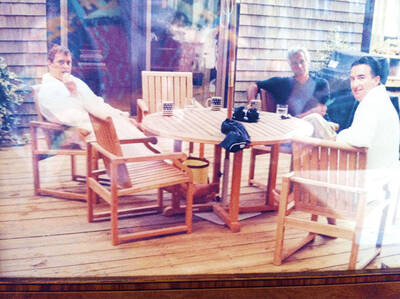
SCANDAL: Other images discovered earlier show Andrew bent over a female and lying across the laps of a number of women, while Mandelson is pictured in his underpants A photograph of former British prince Andrew and veteran politician Peter Mandelson sitting in bathrobes alongside late sex offender Jeffrey Epstein was unearthed on Friday in previously published documents. The image is believed to be the first known photograph of the two men with Epstein. They are currently engulfed in scandal in the UK over their ties to their mutual friend. The undated photograph, first reported by ITV News, shows King Charles III’s disgraced brother and former British ambassador to the US sitting barefoot outside on a wooden deck. They appear to have mugs with a US flag on them
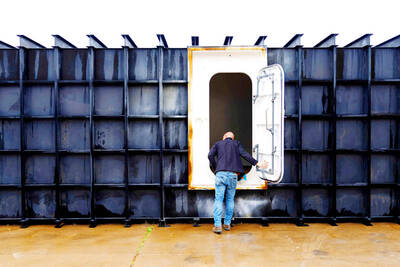
Since the war in the Middle East began nearly two weeks ago, the telephone at Ron Hubbard’s bomb shelter company in Texas has not stopped ringing. Foreign and US clients are rushing to buy his bunkers, seeking refuge in case of air raids, nuclear fallout or apocalypse. With the US and Israel pounding Iran, and Tehran retaliating with strikes across the region, Hubbard has seen demand for his product soar, mostly from Gulf nation customers in Bahrain, Qatar, Kuwait and the United Arab Emirates. “You can imagine how many people are thinking: ‘I wish I had a bomb shelter,’” Hubbard, 63, said in


 RSS
RSS