


Lush pomegranate orchards provide perfect cover for the Taliban, who have turned what should be the fruit basket of Afghanistan into one of the hottest spots of the long insurgency.
In the past year, the crude bombs that are the Taliban’s battlefield talisman have been responsible for the deaths of all foreign soldiers patrolling this valley from 13 bases on each side of the Arghandab River, the US military said.
Arghandab, 20km from Kandahar city, capital of the eponymous province in southern Afghanistan that the insurgents regard as their fiefdom, is at the epicenter of a war well into its ninth year.
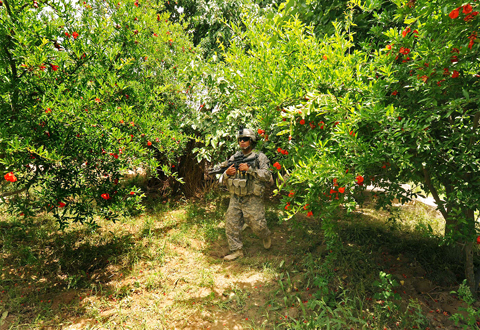
PHOTO: AFP
The district produces half the 100,000 tonnes of pomegranates grown in Afghanistan each year, but is better known for the harvest of improvised explosive devices (IED), that seem as thickly seeded as the fruit trees.
US troopers on patrol around the villages near Forward Operating Base (FOB) Arghandab point to culverts along canals irrigating the orchards as favorite corners for Taliban ambushes.
An explosion across the river to the east was “probably an IED,” one said.
“Someone might have stepped on it. Or it could have been a controlled detonation,” he said. “Either way, we’re finding them.”
Almost 60 percent of the more than 200 foreign troop deaths in Afghanistan this year were caused by IEDs, the independent icasualties.org Web site says.
In Arghandab, a village school has become a proxy battleground between the Taliban and pro-government forces, said US Army Sergeant Stephen Decatur, as he described last month’s find of “nine medium-to-small, 20 to 50 pound [9kg to 23kg] jugs of home-made bombs planted around the school yard.”
“In January, over the course of 10 days, they found hundreds and hundreds of pounds of explosives and IEDS,” he said, adding that some of the bombs contained up to 136kg of explosives.
“There are a lot of advantages to being in Arghandab, mainly because there is so much agriculture — pomegranate orchards have a lot of cover from observation from the air and close air support,” he said.
As US and NATO forces prepare the slow strangulation of the insurgents over the coming summer months, Afghanistan’s Western supporters are, finally, trying to address the economic fundamentals fueling the fight.
More than 70 percent of Afghanistan’s population are tied to the land as tenant farmers or sharecroppers, experts said. The CIA put unemployment in 2008 at 35 percent and inflation last year at 30.5 percent.
Afghanistan produces more than 90 percent of the world’s opium and the US$2.8 billion a year illicit industry helps drugs gangs pay the Taliban for armed muscle to protect production and distribution routes.
With the realization that the insurgency is largely economic rather than ideological — and that many Taliban foot soldiers are simply unemployed men who need the fighting fee to feed their families — Western donors have started channeling their efforts to the grass roots of Afghan society.
In Arghandab, Washington’s international aid arm USAID believes its program to teach Afghan farmers modern techniques for boosting quality and yield has the flow-on benefit of improving security.
The head of the local council of elders, Haji Mohammad agreed, told reporters the project was creating jobs that gave the fighting-age men of the area an alternative to picking up a gun for US$20 a day.
Since the introduction of USAID’s Afghanistan Vouchers for Increased Production in Agriculture project, Arghandab’s pomegranate yield has leapt by 75 percent, to between 15kg and 20kg of fruit per tree, he said.
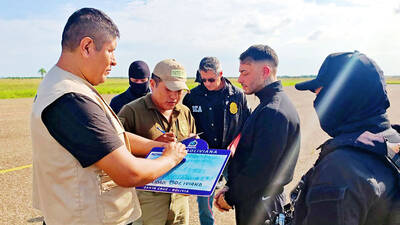
KINGPIN: Marset allegedly laundered the proceeds of his drug enterprise by purchasing and sponsoring professional soccer teams and even put himself in the starting lineups Notorious Latin American narco trafficker Sebastian Marset, who eluded police for years, was handed over to US authorities after his arrest on Friday in Bolivia. Marset, a Uruguayan national who was on the US most-wanted list, was passed to agents of the US Drug Enforcement Administration at Santa Cruz airport in Bolivia, then put on a US airplane, Bolivian state television showed. “The arrest and deportation were carried out pursuant to a court order issued by the US justice system,” Bolivian Minister of Government Marco Antonio Oviedo told reporters. The alleged kingpin was arrested in an upscale neighborhood of Santa
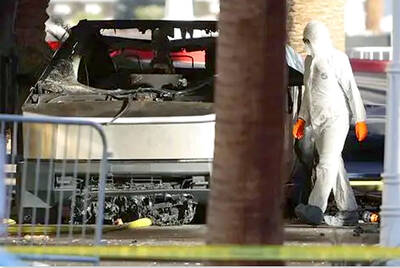
ACTIONABLE ADVICE: The majority of chatbots tested provided guidance on weapons, tactics and target selections, with Perplexity and Meta AI deemed to be the least safe From school shootings to synagogue bombings, leading artificial intelligence (AI) chatbots helped researchers plot violent attacks, according to a study published on Wednesday that highlighted the technology’s potential for real-world harm. Researchers from the nonprofit watchdog Center for Countering Digital Hate and CNN posed as 13-year-old boys in the US and Ireland to test 10 chatbots, including ChatGPT, Google Gemini, Perplexity, Deepseek and Meta AI. Eight of the chatbots assisted the make-believe attackers in more than half the responses, providing advice on “locations to target” and “weapons to use” in an attack, the study said. The chatbots had become a “powerful accelerant for
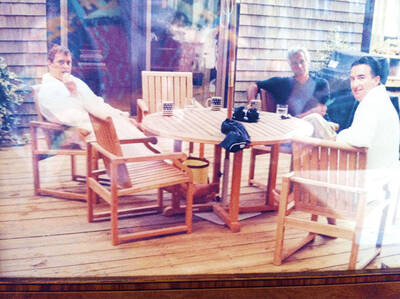
SCANDAL: Other images discovered earlier show Andrew bent over a female and lying across the laps of a number of women, while Mandelson is pictured in his underpants A photograph of former British prince Andrew and veteran politician Peter Mandelson sitting in bathrobes alongside late sex offender Jeffrey Epstein was unearthed on Friday in previously published documents. The image is believed to be the first known photograph of the two men with Epstein. They are currently engulfed in scandal in the UK over their ties to their mutual friend. The undated photograph, first reported by ITV News, shows King Charles III’s disgraced brother and former British ambassador to the US sitting barefoot outside on a wooden deck. They appear to have mugs with a US flag on them
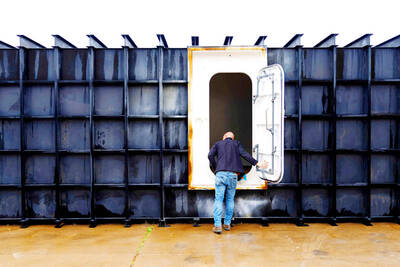
Since the war in the Middle East began nearly two weeks ago, the telephone at Ron Hubbard’s bomb shelter company in Texas has not stopped ringing. Foreign and US clients are rushing to buy his bunkers, seeking refuge in case of air raids, nuclear fallout or apocalypse. With the US and Israel pounding Iran, and Tehran retaliating with strikes across the region, Hubbard has seen demand for his product soar, mostly from Gulf nation customers in Bahrain, Qatar, Kuwait and the United Arab Emirates. “You can imagine how many people are thinking: ‘I wish I had a bomb shelter,’” Hubbard, 63, said in


 RSS
RSS