


Indian police yesterday probed a deadly restaurant bombing that killed nine people, including two foreigners, amid calls for swift justice and questions over its impact on talks with Pakistan.
The government also asked for access to a US-Pakistani national awaiting trial on terror charges in the US who stayed at a religious retreat near the blast site while allegedly scouting possible targets.
Media reports sought to link Saturday’s bombing at the popular German Bakery eatery in Pune, western India, to previous attacks by an India-based Islamist movement, fearing sleeper cells were now active and further strikes likely.
Police in the case are examining security camera footage and forensic evidence. Explosives hidden in an abandoned rucksack under a table are thought to have been triggered remotely.
Indian Prime Minister Manmohan Singh has called for swift, coordinated action “so that the culprits responsible for this heinous act are identified and brought to justice” quickly, his office said pm Sunday.
“We are 100 percent confident of solving the case soon. Various agencies are investigating the matter,” Pune police commissioner Satyapal Singh said.
However, he refused to comment on claims that the Indian Mujahideen, a previously little-known group that claimed responsibility for a series of bombings in New Delhi in September 2008, could be behind the attack.
The Times of India said yesterday that the bombing, which destroyed the restaurant, should be seen in the context of the resumption of talks between India and Pakistan and a major coalition offensive in southern Afghanistan.
Pakistan-based Islamists “could well be trying to open up a conflict zone on Pakistan’s eastern front, which would deflect attention from them,” an editorial in the daily said.
The bombing — the first major attack since the 2008 Mumbai massacre blamed on the banned Pakistan-based Islamist group Lashkar-e-Taiba (LET) — came just a day after New Delhi and Islamabad agreed to resume official talks.
An initial meeting between their foreign secretaries has been scheduled for next Thursday.
Pakistani Prime Minister Yusuf Raza Gilani has condemned the bombing.
But India’s main opposition Hindu nationalist Bharatiya Janata Party (BJP) said the attack — which triggered heightened security across the country — underscored fears the government had acted rashly in agreeing to resume talks.
Senior BJP leader Arun Jaitley said Pune was “a grim reminder about the fragility of our security system, and the adventurous track that we are walking.
Indian Home Minister P. Chidambaram has declined to speculate on who was responsible, but said the government was “pursuing the case of access to David Headley” as he stayed at the nearby Osho Ashram on a previous visit to Pune.
Headley, 49, is alleged to have identified targets for the LET. He denies the charges.
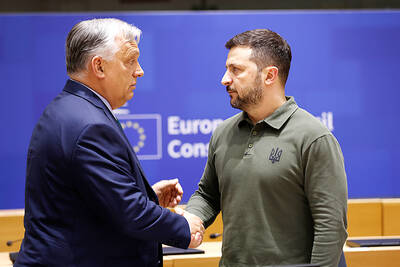
Hungarian authorities temporarily detained seven Ukrainian citizens and seized two armored cars carrying tens of millions of euros in cash across Hungary on suspicion of money laundering, officials said on Friday. The Ukrainians were released on Friday, following their detention on Thursday, but Hungarian officials held onto the cash, prompting Ukraine to accuse Hungary’s Russia-friendly government of illegally seizing the money. “We will not tolerate this state banditism,” Ukrainian Minister of Foreign Affairs Andrii Sybiha said. The seven detained Ukrainians were employees of the Ukrainian state-owned Oschadbank, who were traveling in the two armored cars that were carrying the money between Austria and
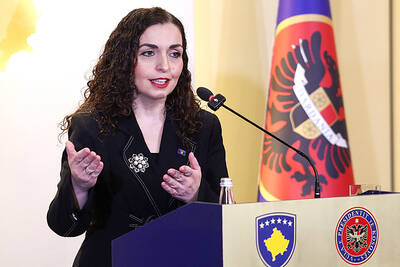
Kosovar President Vjosa Osmani on Friday after dissolving the Kosovar parliament said a snap election should be held as soon as possible to avoid another prolonged political crisis in the Balkan country at a time of global turmoil. Osmani said it is important for Kosovo to wrap up the upcoming election process and form functional institutions for political stability as the war rages in the Middle East. “Precisely because the geopolitical situation is that complex, it is important to finish this electoral process which is coming up,” she said. “It is very hard now to imagine what will happen next.” Kosovo, which declared

MORE BANS: Australia last year required sites to remove accounts held by under-16s, with a few countries pushing for similar action at an EU level and India considering its own ban Indonesia on Friday said it would ban social media access for children under 16, citing threats from online pornography, cyberbullying, online fraud and Internet addiction. “Accounts belonging to children under 16 on high-risk platforms will start to be deactivated, beginning with YouTube, TikTok, Facebook, Instagram, Threads, X, Bigo Live and Roblox,” Indonesian Minister of Communications and Digital Meutya Hafid said. “The government is stepping in so that parents no longer have to fight alone against the giants of the algorithm. Implementation will begin on March 28, 2026,” she said. The social media ban would be introduced in stages “until all platforms fulfill their
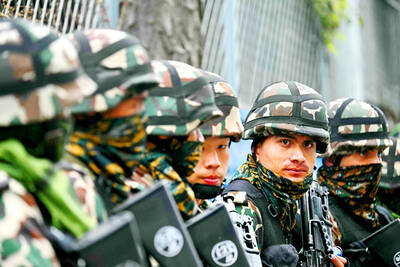
Counting was under way in Nepal yesterday, after a high-stakes parliamentary election to reshape the country’s leadership following protests last year that toppled the government. Key figures vying for power include former Nepalese prime minister K. P. Sharma Oli, rapper-turned-mayor Balendra Shah, who is bidding for the youth vote, and newly elected Nepali Congress party leader Gagan Thapa. In Kathmandu’s tea shops and city squares, people were glued to their phones, checking results as early trends flashed up — suggesting Shah’s centrist Rastriya Swatantra Party (RSP) was ahead. Nepalese Election Commission spokesman Prakash Nyupane said the counting was ongoing “in a peaceful manner”


 RSS
RSS