


Britain’s only known Roman chariot-racing circuit, described as one of the most important sites in the country, risks being lost under a housing project unless campaigners can raise the cash to preserve it in time.
Traces of the huge track were unearthed by archeologists in the city of Colchester in late 2004.
They discovered the elliptical track and key parts of the structure which would have held rows of tiered stone seating, during a routine survey for builders seeking to redevelop a Victorian army barracks and associated garden.
“The circus in Colchester is the only one in Britain, so it’s very rare,” said Philip Crummy, director of Colchester Archaeological Trust, who found it.
“It’s a big old building. It’s the biggest known building in Roman-Britain — it really is an extraordinary discovery,” he said.
It is one of only a handful of chariot-racing tracks ever to be found in the former northwestern provinces of the empire, and the first to be found in the last 20 years, he said.
Bryan Walters, director of the UK’s Association for Roman Archaeology, has called the discovery “one of the most important Roman sites ever found in Britain.”
In a letter to a local newspaper he appealed for more time to raise the necessary funding to buy the site.
“If it is lost, it will scar the reputation of Colchester and probably the developers nationally,” he wrote.
Only part of the track, 450m long and capable of holding 15,000 spectators, has been excavated.
The rest, which Crummy says he has accurately mapped, disappears under roads, gardens and buildings.
Built in the 2nd century BC, archeologists believe it fell out of use in the 3rd century, with many of its constituent materials incorporated into other buildings.
In September last year, the developers, Taylor Wimpey, offered a local community consortium six months to raise funds to buy the barracks and garden to preserve and display the remains underneath.
Efforts to raise the money needed, about £900,000 (US$1.4 million), before the end of this month have been going on ever since.
If the deadline is missed the property will be sold and converted into eight houses.
But Crummy said a massive local appeal had been launched to raise £220,000 of the total and he was optimistic the grand target would be hit with commercial and charitable donations.
“The actual remains of the circus are protected. What we are trying to do is to display [a main part of it] ... rather than simply let it be buried,” Crummy said.
The army building, known as the Sergeants’ Mess, sits on top of remains of all eight of the circus’ starting gates — stone structures with wooden doors that would have unleashed the chariots at the start of the race.
“We see this as an important step in a long-term plan to try and re-integrate the site and to make much more of it as something to visit as a feature of the Roman town,” Crummy said.
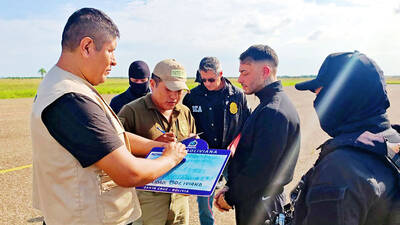
KINGPIN: Marset allegedly laundered the proceeds of his drug enterprise by purchasing and sponsoring professional soccer teams and even put himself in the starting lineups Notorious Latin American narco trafficker Sebastian Marset, who eluded police for years, was handed over to US authorities after his arrest on Friday in Bolivia. Marset, a Uruguayan national who was on the US most-wanted list, was passed to agents of the US Drug Enforcement Administration at Santa Cruz airport in Bolivia, then put on a US airplane, Bolivian state television showed. “The arrest and deportation were carried out pursuant to a court order issued by the US justice system,” Bolivian Minister of Government Marco Antonio Oviedo told reporters. The alleged kingpin was arrested in an upscale neighborhood of Santa
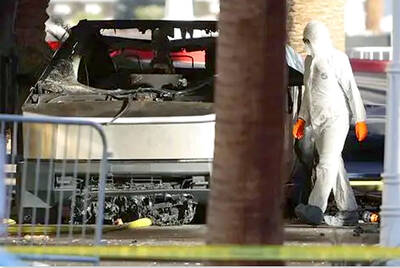
ACTIONABLE ADVICE: The majority of chatbots tested provided guidance on weapons, tactics and target selections, with Perplexity and Meta AI deemed to be the least safe From school shootings to synagogue bombings, leading artificial intelligence (AI) chatbots helped researchers plot violent attacks, according to a study published on Wednesday that highlighted the technology’s potential for real-world harm. Researchers from the nonprofit watchdog Center for Countering Digital Hate and CNN posed as 13-year-old boys in the US and Ireland to test 10 chatbots, including ChatGPT, Google Gemini, Perplexity, Deepseek and Meta AI. Eight of the chatbots assisted the make-believe attackers in more than half the responses, providing advice on “locations to target” and “weapons to use” in an attack, the study said. The chatbots had become a “powerful accelerant for
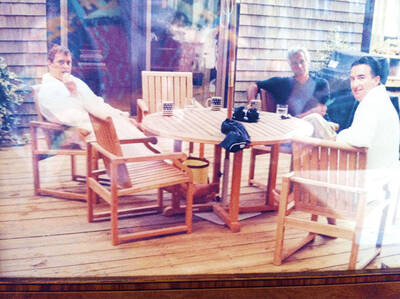
SCANDAL: Other images discovered earlier show Andrew bent over a female and lying across the laps of a number of women, while Mandelson is pictured in his underpants A photograph of former British prince Andrew and veteran politician Peter Mandelson sitting in bathrobes alongside late sex offender Jeffrey Epstein was unearthed on Friday in previously published documents. The image is believed to be the first known photograph of the two men with Epstein. They are currently engulfed in scandal in the UK over their ties to their mutual friend. The undated photograph, first reported by ITV News, shows King Charles III’s disgraced brother and former British ambassador to the US sitting barefoot outside on a wooden deck. They appear to have mugs with a US flag on them
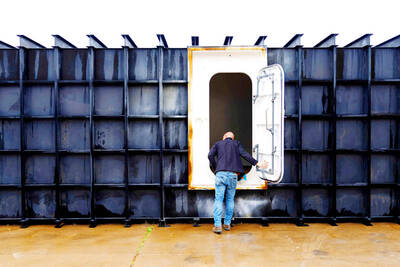
Since the war in the Middle East began nearly two weeks ago, the telephone at Ron Hubbard’s bomb shelter company in Texas has not stopped ringing. Foreign and US clients are rushing to buy his bunkers, seeking refuge in case of air raids, nuclear fallout or apocalypse. With the US and Israel pounding Iran, and Tehran retaliating with strikes across the region, Hubbard has seen demand for his product soar, mostly from Gulf nation customers in Bahrain, Qatar, Kuwait and the United Arab Emirates. “You can imagine how many people are thinking: ‘I wish I had a bomb shelter,’” Hubbard, 63, said in


 RSS
RSS