


Afghan officials agreed on Saturday to take over responsibility for the US military’s Bagram prison north of Kabul, a move that could close a chapter in the troubled history of US detentions since 2001.
The jail at Bagram, where US troops beat to death two prisoners in 2002, stands beside Guantanamo Bay in Cuba and Abu Ghraib in Iraq as a symbol of harsh treatment of detainees under the administration of former US president George W. Bush.
Set up to hold prisoners caught in the campaign against the Taliban after the Sept. 11 attacks on the US, it was housed for eight years in an ex-Soviet aircraft hangar, until last month when that was shut and replaced with a purpose-built US$60 million prison Washington says meets international standards.
US forces have long said the goal was eventually to hand the prison over to Afghans. Afghan President Hamid Karzai has called for an end to detentions by foreign countries on Afghan soil.
The Afghan Defense Ministry said in a statement an agreement had been signed that would see the Afghan government take over operation of the prison and responsibility for “investigating, detaining, observing and trying” its inmates.
“The Afghan Defense Ministry will begin in a few days to train a unit which will take responsibility for the prison,” it said.
Colonel Stephen Clutter, spokesman for US military detainee operations in Afghanistan, said Saturday’s agreement was a memorandum signed by Afghan ministries, setting out their responsibilities. The commander of US and NATO forces, General Stanley McChrystal, attended the meeting but did not sign.
The Afghan Ministry of Defense would first take the lead, eventually transfering the prison to the Afghan justice ministry, responsible for ordinary prisons under Afghan law, Clutter said.
“They are working to an aggressive timescale,” he said.
Afghan personnel could be stationed in the prison by March, and could eventually take it over by the end of this year, depending on how quickly they could be trained.
Clutter said there were now about 750 prisoners at Bagram, including about 30 non-Afghans, some of whom may have been brought there after being captured outside the country.
US authorities in the past have used Bagram to hold terrorism suspects they capture in other parts of the world, although Clutter said it would probably be used only for detainees caught in Afghanistan once it is transferred.
Prisoners held in Bagram are not given lawyers or trials, a practice that Washington was required to end in Iraq last year under an agreement with the Iraqi government.
Washington set up a new system last year to allow Bagram detainees hearings to contest their detention and “personal representatives” from the military who are not lawyers. Human rights groups say those safeguards are insufficient.
Clutter said the eventual goal would probably be for prisoners to be given normal legal rights under Afghan law, although precise procedures would ultimately be for the Afghans to determine once they take responsibility.
Washington would ensure that Afghans are trained to guard the prisoners humanely before the prison is turned over, he said.
“President Karzai himself has said detention and prosecution of suspects should be the responsibility of the Afghan government,” Clutter said. “So that’s where this is heading. This will eventually help Afghanistan strengthen its own security.”
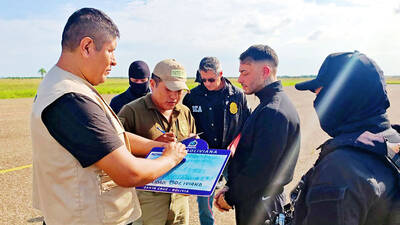
KINGPIN: Marset allegedly laundered the proceeds of his drug enterprise by purchasing and sponsoring professional soccer teams and even put himself in the starting lineups Notorious Latin American narco trafficker Sebastian Marset, who eluded police for years, was handed over to US authorities after his arrest on Friday in Bolivia. Marset, a Uruguayan national who was on the US most-wanted list, was passed to agents of the US Drug Enforcement Administration at Santa Cruz airport in Bolivia, then put on a US airplane, Bolivian state television showed. “The arrest and deportation were carried out pursuant to a court order issued by the US justice system,” Bolivian Minister of Government Marco Antonio Oviedo told reporters. The alleged kingpin was arrested in an upscale neighborhood of Santa

ACTIONABLE ADVICE: The majority of chatbots tested provided guidance on weapons, tactics and target selections, with Perplexity and Meta AI deemed to be the least safe From school shootings to synagogue bombings, leading artificial intelligence (AI) chatbots helped researchers plot violent attacks, according to a study published on Wednesday that highlighted the technology’s potential for real-world harm. Researchers from the nonprofit watchdog Center for Countering Digital Hate and CNN posed as 13-year-old boys in the US and Ireland to test 10 chatbots, including ChatGPT, Google Gemini, Perplexity, Deepseek and Meta AI. Eight of the chatbots assisted the make-believe attackers in more than half the responses, providing advice on “locations to target” and “weapons to use” in an attack, the study said. The chatbots had become a “powerful accelerant for
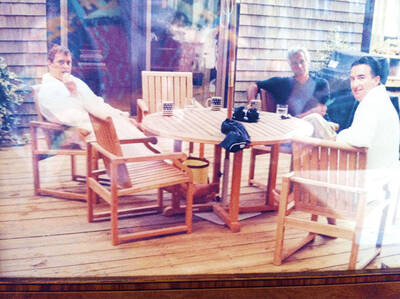
SCANDAL: Other images discovered earlier show Andrew bent over a female and lying across the laps of a number of women, while Mandelson is pictured in his underpants A photograph of former British prince Andrew and veteran politician Peter Mandelson sitting in bathrobes alongside late sex offender Jeffrey Epstein was unearthed on Friday in previously published documents. The image is believed to be the first known photograph of the two men with Epstein. They are currently engulfed in scandal in the UK over their ties to their mutual friend. The undated photograph, first reported by ITV News, shows King Charles III’s disgraced brother and former British ambassador to the US sitting barefoot outside on a wooden deck. They appear to have mugs with a US flag on them
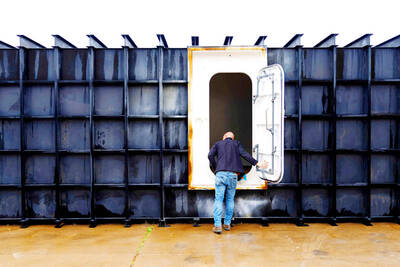
Since the war in the Middle East began nearly two weeks ago, the telephone at Ron Hubbard’s bomb shelter company in Texas has not stopped ringing. Foreign and US clients are rushing to buy his bunkers, seeking refuge in case of air raids, nuclear fallout or apocalypse. With the US and Israel pounding Iran, and Tehran retaliating with strikes across the region, Hubbard has seen demand for his product soar, mostly from Gulf nation customers in Bahrain, Qatar, Kuwait and the United Arab Emirates. “You can imagine how many people are thinking: ‘I wish I had a bomb shelter,’” Hubbard, 63, said in


 RSS
RSS