


Former Cuban president Fidel Castro called the case of two Americans accused of spying for Cuba “strange” on Saturday and questioned whether the timing of their arrests was politically motivated.
In an essay read by a newscaster on state TV, Castro said that the retired Washington couple were taken into custody just 24 hours after the Organization of American States (OAS) voted to lift a decades-old suspension of Cuba’s membership in that group.
Though the US ultimately supported the OAS vote on Wednesday, the administration of US President Barack Obama initially wanted to see more democratic reforms on the communist island before Cuba was readmitted.
Castro called the OAS vote “a defeat for United States diplomacy.”
Walter Kendall Myers and his wife, Gwendolyn, were arrested on Thursday in Washington after a three-year investigation that began before Myers’ retirement from the State Department in 2007.
The US government said they had been spying for Havana for 30 years, recruited by Cuba after a 1978 trip there. Myers received his orders by Morse code and he and his wife usually hand-delivered intelligence, sometimes by exchanging carts in a grocery store, court documents said.
“Doesn’t the story of Cuban spying seem really ridiculous to everyone?” Castro asked, without commenting on its validity.
Myers had been under suspicion since 1995 and FBI investigation since 2006.
If the couple had been watched that long, “why were they not arrested before?” Castro asked.
Court documents say the two were such valued spies, they once had a four-hour meeting with Castro, whom Myers described as one of the great modern political leaders.
Castro said he doesn’t recall meeting them when he was still president.
“I met during this time with thousands of Americans for various reasons, individually or in groups, on occasion with gatherings of several hundred of them,” said the 82-year-old, who ceded power to his brother Raul when he fell ill nearly three years ago and has not been seen in public since.
“Perhaps influencing the case was not only the tremendous reverse suffered [by the US], but also the news that contacts are being made between the governments of the United States and Cuba on issues of common interest,” he said.
Cuba agreed to resume talks with the Obama administration on legal immigration of Cubans to the US and direct mail services after an overture from the US last month.
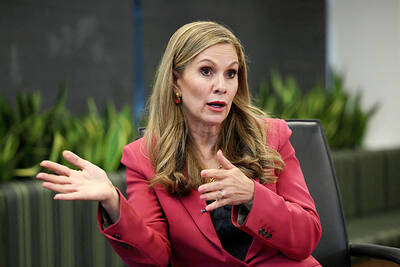
Australians were downloading virtual private networks (VPNs) in droves, while one of the world’s largest porn distributors said it was blocking users from its platforms as the country yesterday rolled out sweeping online age restriction. Australia in December became the first country to impose a nationwide ban on teenagers using social media. A separate law now requires artificial intelligence (AI)-powered chatbot services to keep certain content — including pornography, extreme violence and self-harm and eating disorder material — from minors or face fines of up to A$49.5 million (US$34.6 million). The country also joined Britain, France and dozens of US states requiring
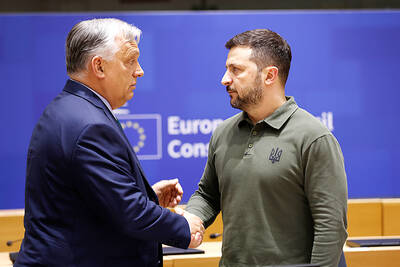
Hungarian authorities temporarily detained seven Ukrainian citizens and seized two armored cars carrying tens of millions of euros in cash across Hungary on suspicion of money laundering, officials said on Friday. The Ukrainians were released on Friday, following their detention on Thursday, but Hungarian officials held onto the cash, prompting Ukraine to accuse Hungary’s Russia-friendly government of illegally seizing the money. “We will not tolerate this state banditism,” Ukrainian Minister of Foreign Affairs Andrii Sybiha said. The seven detained Ukrainians were employees of the Ukrainian state-owned Oschadbank, who were traveling in the two armored cars that were carrying the money between Austria and
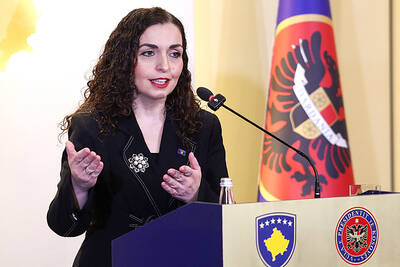
Kosovar President Vjosa Osmani on Friday after dissolving the Kosovar parliament said a snap election should be held as soon as possible to avoid another prolonged political crisis in the Balkan country at a time of global turmoil. Osmani said it is important for Kosovo to wrap up the upcoming election process and form functional institutions for political stability as the war rages in the Middle East. “Precisely because the geopolitical situation is that complex, it is important to finish this electoral process which is coming up,” she said. “It is very hard now to imagine what will happen next.” Kosovo, which declared

MORE BANS: Australia last year required sites to remove accounts held by under-16s, with a few countries pushing for similar action at an EU level and India considering its own ban Indonesia on Friday said it would ban social media access for children under 16, citing threats from online pornography, cyberbullying, online fraud and Internet addiction. “Accounts belonging to children under 16 on high-risk platforms will start to be deactivated, beginning with YouTube, TikTok, Facebook, Instagram, Threads, X, Bigo Live and Roblox,” Indonesian Minister of Communications and Digital Meutya Hafid said. “The government is stepping in so that parents no longer have to fight alone against the giants of the algorithm. Implementation will begin on March 28, 2026,” she said. The social media ban would be introduced in stages “until all platforms fulfill their


 RSS
RSS