


A magistrate investigating the human rights crimes of Francisco Franco has ordered an inquiry into the fate of children kidnapped from left-wing families by the Spanish dictator’s henchmen.
Judge Baltasar Garzon, the controversial national court magistrate, has asked judges to add the missing children to more than 136,000 cases of people who disappeared under the Franco regime.
An unknown number of children were allegedly stolen from “red” families by Franco’s supporters, with details of individual cases being sent recently to courts in Madrid, Barcelona, Bilbao, Valencia, Burgos, Malaga and Zaragoza.
Campaigners say thousands of children were taken from their mothers, especially those in jail, and handed to orphanages in the early years of Franco’s 36-year dictatorship. Some had surnames changed and were never seen again.
As the sister of a guerrilla leader, Emilia Giron was deemed unfit to bring up her son, who was taken from her days after his birth 70 years ago.
“He was a boy and I wanted to call him Jesus,” she recalled in a recent documentary, The Missing Children of Francoism. “But they took him away to baptize him and I never saw him again. I don’t know who took him. I suppose it was a couple who were unable to have their own children but they never asked my permission. The anguish will last until I die.”
The investigation adds a new line of attack in Garzon’s attempts to have Franco’s regime and its henchmen formally accused of perpetrating crimes against humanity. It mirrors the investigations into children taken from left-wing captives in Argentina and given to people loyal to the military juntas that ruled there in the 1970s.
Like many of Spain’s stolen children, Uxeno Alvarez, was sent to an orphanage where he was continually punished.
“When the other children went out for a walk they would leave me behind and make me clean 50 pairs of shoes,” he said in the documentary. “It took me time to understand why. They hated me. I was the son of a ‘red.’”
At least 12,000 children whose parents had died during the civil war or had been executed by Franco’s regime were in state or religious orphanages in 1944. Some put the number as high as 30,000.
When Carmen Garcia’s unmarried mother, a former Republican fighter also called Carmen, gave birth to a baby girl at a hospital run by nuns, she was sent home to recover and told to come back for the child later. When she went back, the child had gone.
“The nuns told her she was no longer there, that they had given her away in adoption,” her daughter said.
The family never found the missing the child.
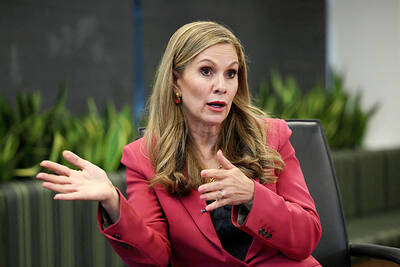
Australians were downloading virtual private networks (VPNs) in droves, while one of the world’s largest porn distributors said it was blocking users from its platforms as the country yesterday rolled out sweeping online age restriction. Australia in December became the first country to impose a nationwide ban on teenagers using social media. A separate law now requires artificial intelligence (AI)-powered chatbot services to keep certain content — including pornography, extreme violence and self-harm and eating disorder material — from minors or face fines of up to A$49.5 million (US$34.6 million). The country also joined Britain, France and dozens of US states requiring
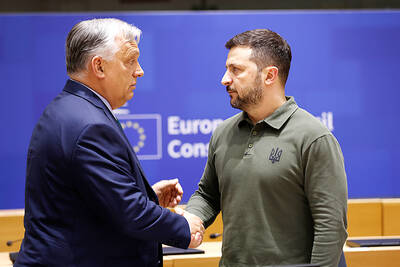
Hungarian authorities temporarily detained seven Ukrainian citizens and seized two armored cars carrying tens of millions of euros in cash across Hungary on suspicion of money laundering, officials said on Friday. The Ukrainians were released on Friday, following their detention on Thursday, but Hungarian officials held onto the cash, prompting Ukraine to accuse Hungary’s Russia-friendly government of illegally seizing the money. “We will not tolerate this state banditism,” Ukrainian Minister of Foreign Affairs Andrii Sybiha said. The seven detained Ukrainians were employees of the Ukrainian state-owned Oschadbank, who were traveling in the two armored cars that were carrying the money between Austria and
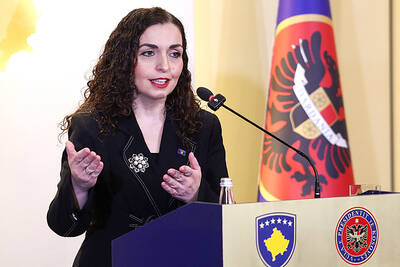
Kosovar President Vjosa Osmani on Friday after dissolving the Kosovar parliament said a snap election should be held as soon as possible to avoid another prolonged political crisis in the Balkan country at a time of global turmoil. Osmani said it is important for Kosovo to wrap up the upcoming election process and form functional institutions for political stability as the war rages in the Middle East. “Precisely because the geopolitical situation is that complex, it is important to finish this electoral process which is coming up,” she said. “It is very hard now to imagine what will happen next.” Kosovo, which declared

MORE BANS: Australia last year required sites to remove accounts held by under-16s, with a few countries pushing for similar action at an EU level and India considering its own ban Indonesia on Friday said it would ban social media access for children under 16, citing threats from online pornography, cyberbullying, online fraud and Internet addiction. “Accounts belonging to children under 16 on high-risk platforms will start to be deactivated, beginning with YouTube, TikTok, Facebook, Instagram, Threads, X, Bigo Live and Roblox,” Indonesian Minister of Communications and Digital Meutya Hafid said. “The government is stepping in so that parents no longer have to fight alone against the giants of the algorithm. Implementation will begin on March 28, 2026,” she said. The social media ban would be introduced in stages “until all platforms fulfill their


 RSS
RSS