


A US appeals court has ruled that three Kentucky men can pursue a lawsuit against the Vatican for the sex abuse committed by US priests.
Central to the case is a 1962 Vatican mandate unearthed in 2003 that outlined a policy of “strictest” secrecy regarding allegations of sexual abuse by clergy and threatened those who spoke out with excommunication.
The Vatican had tried to block the case, alleging that it orchestrated a cover-up of sexual abuse by clergy with the argument that it was protected by laws granting sovereign states immunity from most US civil proceedings.
The federal appeals court ruled that exceptions in the law could allow the Vatican to be held liable for the actions of Church employees acting within the scope of their employment in the US.
“The portions of plaintiffs’ claims that are based upon the conduct of bishops, archbishops and Holy See personnel while supervising allegedly abusive clergy satisfy all four requirements of the tortious act exception,” Circuit Judge Julia Smith Gibbons wrote in a 20-page ruling on Monday.
The Vatican cannot, however, be held liable for the actual abuse because these acts “were not done while ... acting within the scope of their employment,” Gibbons wrote.
Actions taken outside of the US also do not fall under the jurisdiction of US courts, she said.
The case will now return to a lower court to determine whether the claims made by the plaintiffs are sufficient to try the case under the exceptions to the Foreign Sovereignty Immunity Act (FSIA.) Should jurisdiction be established, the court would then turn to the question of whether the Vatican is, in fact, liable.
“The decision does not address liability at all. It’s restricted to a theoretical question of whether there could be jurisdiction,” said attorney Jeffrey Lena, who represents the Holy See in the case.
“The Holy See still maintains that it has full immunity under the FSIA,” he said.
The structure of the Roman Catholic Church raises questions as to whether bishops and other clergy can be considered employees of the Vatican.
The ruling was hailed as a potential breakthrough by abuse victims.
“This is a very encouraging sign and very long overdue step in the long march toward justice, prevention and healing,” said Barbara Dorris, outreach director for the victims group Survivors Network of Those Abused by Priests.
Lena said the Holy See had not challenged whether anyone was harmed in the case but was instead focused on whether a US court had jurisdiction over the Vatican, a foreign sovereign.
He added that the ruling did not establish whether Vatican policy contributed to the allegations of thousands of incidents abuse by Roman Catholic clergy.
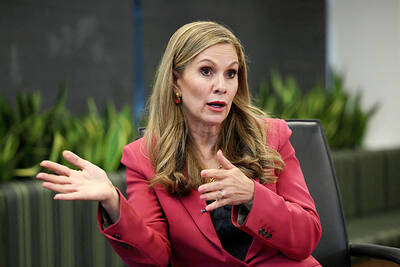
Australians were downloading virtual private networks (VPNs) in droves, while one of the world’s largest porn distributors said it was blocking users from its platforms as the country yesterday rolled out sweeping online age restriction. Australia in December became the first country to impose a nationwide ban on teenagers using social media. A separate law now requires artificial intelligence (AI)-powered chatbot services to keep certain content — including pornography, extreme violence and self-harm and eating disorder material — from minors or face fines of up to A$49.5 million (US$34.6 million). The country also joined Britain, France and dozens of US states requiring
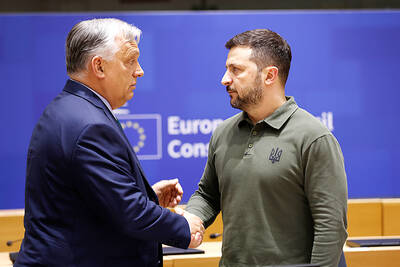
Hungarian authorities temporarily detained seven Ukrainian citizens and seized two armored cars carrying tens of millions of euros in cash across Hungary on suspicion of money laundering, officials said on Friday. The Ukrainians were released on Friday, following their detention on Thursday, but Hungarian officials held onto the cash, prompting Ukraine to accuse Hungary’s Russia-friendly government of illegally seizing the money. “We will not tolerate this state banditism,” Ukrainian Minister of Foreign Affairs Andrii Sybiha said. The seven detained Ukrainians were employees of the Ukrainian state-owned Oschadbank, who were traveling in the two armored cars that were carrying the money between Austria and
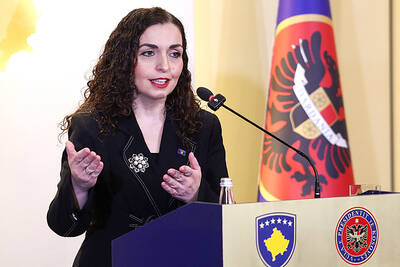
Kosovar President Vjosa Osmani on Friday after dissolving the Kosovar parliament said a snap election should be held as soon as possible to avoid another prolonged political crisis in the Balkan country at a time of global turmoil. Osmani said it is important for Kosovo to wrap up the upcoming election process and form functional institutions for political stability as the war rages in the Middle East. “Precisely because the geopolitical situation is that complex, it is important to finish this electoral process which is coming up,” she said. “It is very hard now to imagine what will happen next.” Kosovo, which declared

MORE BANS: Australia last year required sites to remove accounts held by under-16s, with a few countries pushing for similar action at an EU level and India considering its own ban Indonesia on Friday said it would ban social media access for children under 16, citing threats from online pornography, cyberbullying, online fraud and Internet addiction. “Accounts belonging to children under 16 on high-risk platforms will start to be deactivated, beginning with YouTube, TikTok, Facebook, Instagram, Threads, X, Bigo Live and Roblox,” Indonesian Minister of Communications and Digital Meutya Hafid said. “The government is stepping in so that parents no longer have to fight alone against the giants of the algorithm. Implementation will begin on March 28, 2026,” she said. The social media ban would be introduced in stages “until all platforms fulfill their


 RSS
RSS