


Japan said yesterday it had made progress in a long-standing row with North Korea over its abduction of Japanese citizens as the two nations agreed to complete a new probe this fall.
Analysts said the deal could give fresh impetus to international efforts to end North Korea’s nuclear drive. Japan has refused to give aid to Pyongyang until the emotionally charged kidnapping issue is resolved.
Japan, which has no diplomatic ties with North Korea, said it won assurances that it could inspect sites and conduct interviews inside the secretive state if there were signs of survivors among citizens snatched in the 1970s and 1980s.
The two countries held two days of talks in the northeastern Chinese city of Shenyang that closed early yesterday with a goal of wrapping up a fresh investigation this autumn.
In Tokyo, Foreign Minister Masahiko Komura said that North Korea was moving forward on the abductions, an issue of deep concern for many Japanese voters.
Kyoko Nakayama, the Cabinet minister in charge of the abduction issue, cautiously welcomed the outcome, saying: “We are entering a new phase if they conduct an investigation on the assumption that there are survivors.”
North Korean leader Kim Jong-il admitted at a landmark 2002 summit with then Japanese prime minister Junichiro Koizumi that his regime kidnapped Japanese civilians to train its spies in the enemy nation’s language and customs.
He allowed five to return and said eight others were dead, including the most famous victim, Megumi Yokota, who was a 13-year-old schoolgirl when she was whisked away in 1977. Japan insists more are alive and that North Korea has not acknowledged other abductees.
Masao Okonogi, an expert on the reclusive state, said North Korea “has taken a big step” as it agreed that the probe would look into everyone Japan suspects was kidnapped.
He said North Korea may be counting on action by US President George W. Bush in his final months in office. Bush, who once branded Pyongyang part of an “axis of evil,” has championed a six-nation aid-for-disarmament deal.
“They could make what they do look great if they showed results in the probe into the abductions and at the same time come up with the right moves on the nuclear issue,” said Okonogi, a professor at Tokyo’s Keio University.
“That could trigger major action” by the international community, he said.
The US has put off moves to remove North Korea from its list of state sponsors of terrorism, a move opposed by close ally Japan.
The abduction issue is highly sensitive for Japanese Prime Minister Yasuo Fukuda, a longtime advocate of better relations with Asia who is struggling to reverse low approval ratings caused by domestic issues.
Opinion polls showed wide opposition to Fukuda’s plans announced in June to ease some sanctions on North Korea in return for progress on the abductions.
Japan’s top negotiator Akitaka Saiki said in Shenyang that Tokyo was ready to lift restrictions on chartered flights and the movement of people with its impoverished neighbor once North Korea started the new probe.
“I hope that the investigation will be carried out thoroughly and lead to the swift return of the victims,” Saiki said in Shenyang.
But Japan sidestepped earlier promises to allow a resumption of North Korean ships for humanitarian purposes. Ship transport is considered far more important for North Korea as chartered flights are deemed unrealistic.
Song Il-ho, the North Korean ambassador negotiating with Japan, warned that the communist state was also watching Tokyo’s moves on sanctions.
“If Japan breaks this agreement, all would collapse. We will also take necessary measures,” Song told reporters in Shenyang, as quoted by Japan’s Jiji Press.
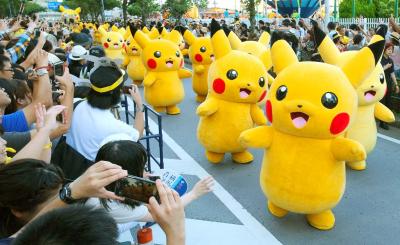
China’s military news agency yesterday warned that Japanese militarism is infiltrating society through series such as Pokemon and Detective Conan, after recent controversies involving events at sensitive sites. In recent days, anime conventions throughout China have reportedly banned participants from dressing as characters from Pokemon or Detective Conan and prohibited sales of related products. China Military Online yesterday posted an article titled “Their schemes — beware the infiltration of Japanese militarism in culture and sports.” The article referenced recent controversies around the popular anime series Pokemon, Detective Conan and My Hero Academia, saying that “the evil influence of Japanese militarism lives on in

DIPLOMATIC THAW: The Canadian prime minister’s China visit and improved Beijing-Ottawa ties raised lawyer Zhang Dongshuo’s hopes for a positive outcome in the retrial China has overturned the death sentence of Canadian Robert Schellenberg, a Canadian official said on Friday, in a possible sign of a diplomatic thaw as Canadian Prime Minister Mark Carney seeks to boost trade ties with Beijing. Schellenberg’s lawyer, Zhang Dongshuo (張東碩), yesterday confirmed China’s Supreme People’s Court struck down the sentence. Schellenberg was detained on drug charges in 2014 before China-Canada ties nosedived following the 2018 arrest in Vancouver of Huawei chief financial officer Meng Wanzhou (孟晚舟). That arrest infuriated Beijing, which detained two Canadians — Michael Spavor and Michael Kovrig — on espionage charges that Ottawa condemned as retaliatory. In January

A sign hanging from a rusty ice-green shipping container installed by Thai forces on what they say is the border with Cambodia reads: “Cambodian citizens are strictly prohibited from entering this area.” On opposite sides of the makeshift barricade, fronted by coils of barbed wire, Cambodians lamented their lost homes and livelihoods as Thailand’s military showed off its gains. Thai forces took control of several patches of disputed land along the border during fighting last year, which could amount to several square kilometers in total. Cambodian Kim Ren said her house in Chouk Chey used to stand on what is now the Thai

NEW RULES: There would be fewer school days, four-day workweeks, and a reduction in transportation services as the country battles a crisis exacerbated by US pressure The Cuban government on Friday announced emergency measures to address a crippling energy crisis worsened by US sanctions, including the adoption of a four-day work week for state-owned companies and fuel sale restrictions. Cuban Deputy Prime Minister Oscar Perez-Oliva Fraga blamed Washington for the crisis, telling Cuban television the government would “implement a series of decisions, first and foremost to guarantee the vitality of our country and essential services, without giving up on development.” “Fuel will be used to protect essential services for the population and indispensable economic activities,” he said. Among the new measures are the reduction of the working week in


 RSS
RSS