


A Philippine court sentenced nine military officers yesterday to jail terms ranging from 12 to 40 years for taking part in a foiled coup plot against Philippine President Gloria Macapagal Arroyo in 2003.
The nine are part of a group of 31 junior officers accused of leading a daylong mutiny in which they took over an upscale hotel and mall complex and rigged it with explosives in Manila’s financial district of Makati. They later surrendered peacefully.
At the conclusion of the five-year trial, Judge Oscar Pimentel of the Regional Trial Court of Makati sentenced two officers to 40 years in prison and seven others to 12 years. They are facing separate court-martial charges.
Pimentel ordered five years served in detention to be subtracted from the sentence.
Deputy presidential spokesman Anthony Golez welcomed the court’s ruling.
“Those who committed crimes against the government and the Filipino people must pay the price for their anarchic actions. We hope they learned their lessons well,” Golez said.
Military Chief of Staff General Hermogenes Esperon had no immediate reaction, but said the verdict showed the judicial system was “taking its due course.”
He said he appreciated the officers’ guilty plea.
Last week, all nine changed their pleas to guilty, indicating a possible plea bargain. But Assistant State Prosecutor Richard Fadullon denied any deal was reached.
Fadullon said the prosecution sought 20 years each for the two officers — Captains Gerardo Gambala and Milo Maestrecampo from the elite army Scout Rangers.
“The decision caught us by surprise,” he told reporters. “Judge Pimentel has his reasons and what the judge imposed was in accordance with the law. It’s harsher than what we expected.”
The government said the July 27, 2003, mutiny was part of a larger coup conspiracy, but the officers who led the action said they were only protesting alleged corruption and demanding the resignation of Arroyo and other officials. They gave up without a shot fired after a 19-hour standoff.
A commission concluded the mutiny was not a spontaneous protest, but part of a larger plot to seize power from Arroyo and appoint a 15-member junta.
It was one of the most serious challenges faced by Arroyo since she took power in a 2001 “people power” uprising that ousted her predecessor, Joseph Estrada, on charges of corruption. She has survived four attempted power grabs and three opposition impeachments during her seven years in power.
Gambala and Maestrecampo were among four identified ringleaders who publicly apologized to Arroyo months after the attempt.
The others, led by former navy Lieutenant Antonio Trillanes and marine Captain Nicanor Faeldon, remained defiant and criticized their comrades for expressing support for Arroyo.
Trillanes later ran successfully for the Senate, but remains in detention pending the outcome of his trial.

ACTIONABLE ADVICE: The majority of chatbots tested provided guidance on weapons, tactics and target selections, with Perplexity and Meta AI deemed to be the least safe From school shootings to synagogue bombings, leading artificial intelligence (AI) chatbots helped researchers plot violent attacks, according to a study published on Wednesday that highlighted the technology’s potential for real-world harm. Researchers from the nonprofit watchdog Center for Countering Digital Hate and CNN posed as 13-year-old boys in the US and Ireland to test 10 chatbots, including ChatGPT, Google Gemini, Perplexity, Deepseek and Meta AI. Eight of the chatbots assisted the make-believe attackers in more than half the responses, providing advice on “locations to target” and “weapons to use” in an attack, the study said. The chatbots had become a “powerful accelerant for

Australians were downloading virtual private networks (VPNs) in droves, while one of the world’s largest porn distributors said it was blocking users from its platforms as the country yesterday rolled out sweeping online age restriction. Australia in December became the first country to impose a nationwide ban on teenagers using social media. A separate law now requires artificial intelligence (AI)-powered chatbot services to keep certain content — including pornography, extreme violence and self-harm and eating disorder material — from minors or face fines of up to A$49.5 million (US$34.6 million). The country also joined Britain, France and dozens of US states requiring
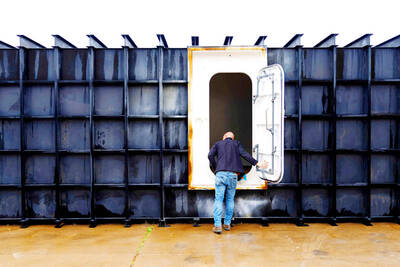
Since the war in the Middle East began nearly two weeks ago, the telephone at Ron Hubbard’s bomb shelter company in Texas has not stopped ringing. Foreign and US clients are rushing to buy his bunkers, seeking refuge in case of air raids, nuclear fallout or apocalypse. With the US and Israel pounding Iran, and Tehran retaliating with strikes across the region, Hubbard has seen demand for his product soar, mostly from Gulf nation customers in Bahrain, Qatar, Kuwait and the United Arab Emirates. “You can imagine how many people are thinking: ‘I wish I had a bomb shelter,’” Hubbard, 63, said in
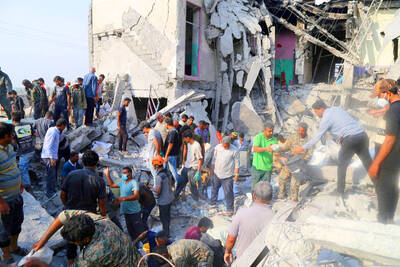
STILL IN POWER: US intelligence reports showed that the Iranian regime is not in danger of collapse and retains control of the public, casting doubt on Trump’s exit Nearly every US Senate Democrat on Wednesday signed a letter sent to US Secretary of Defense Pete Hegseth requesting a “swift investigation” of airstrikes on a girls’ school in Iran that killed scores of children and any other potential US military actions causing civilian harm. Reuters reported on Thursday last week that US military investigators believe it is likely that US forces were responsible for the Feb. 28 strike on the school, as US and Israeli forces launched attacks on Iran. “The results of this school attack are horrific. The majority of those killed in the strikes were girls between the ages


 RSS
RSS