


Hindu extremists accused of killing hundreds of Muslims claim they had the support of a top official long suspected of quietly directing the slayings during riots in western India, according to a news magazine report published this week.
The killings took place over a few days in February 2002, when Hindu mobs rampaged through Muslim neighborhoods in Gujarat state. More than 1,000 people, most of them Muslim, were killed in the violence.
The riots were sparked by a fire that killed 60 passengers on a train packed with Hindu pilgrims -- deaths that Hindu extremists blamed on Muslims, although the cause of the blaze still remains unclear.
The left-leaning news magazine Tehelka reported late on Thursday that their reporter, using hidden cameras, had spoken to some of the main rioters. The men told the reporter that Gujarat's chief minister, Narendra Modi, had encouraged them to massacre Muslims and prevented police from stopping the killings.
Modi, who remains the state's chief minister -- a post equivalent to a US governor -- is a leading member of the Hindu nationalist Bharatiya Janata Party.
Calls to Modi's office went unanswered on Friday, and he has offered no public comment on the Tehelka report. Modi has insisted in the past that he did all he could to prevent the killings.
The BJP dismissed Tehelka's story as political manipulation ahead of Gujarat state elections in December.
Human rights groups have long accused Modi's government of protecting the rioters as well as police officials who did little to control the carnage. The Supreme Court has also criticized the state's lenient handling of Hindus accused of killing Muslims.
On Friday, roughly 125 supporters of an Islamic separatist group protested in Srinagar, the biggest city in the Indian part of Kashmir. The demonstrators chanted "Death to killer Modi," "Down with BJP."
There were similar protests in Hyderabad, a southern city with a large Muslim population that has suffered three bomb blasts since May.
Tehelka said the reporter was posing as a researcher studying the growth of Hindu nationalism.
Tehelka's story quotes activists of the BJP and affiliated right-wing Hindu groups, such as the Vishwa Hindu Parishad and the Bajrang Dal, as saying that bombs were assembled and hundreds of swords collected ahead of the planned violence.
Transcripts of the recordings quote Bajrang Dal leader Babu Bajrangi as saying the killing of the Hindus on the train made him feel like killing Muslims and "hacking them apart."
"I am proud of it. If I get another chance, I will kill even more," he is reported to have said.
Bajrangi, who was arrested and then quickly released on bail for his alleged role in the rioting, was also quoted as saying Modi manipulated the legal system to protect the rioters.
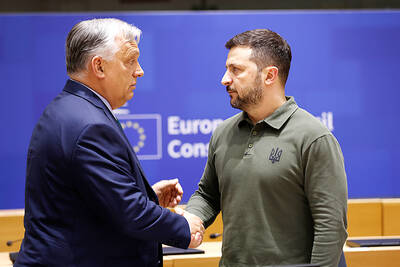
Hungarian authorities temporarily detained seven Ukrainian citizens and seized two armored cars carrying tens of millions of euros in cash across Hungary on suspicion of money laundering, officials said on Friday. The Ukrainians were released on Friday, following their detention on Thursday, but Hungarian officials held onto the cash, prompting Ukraine to accuse Hungary’s Russia-friendly government of illegally seizing the money. “We will not tolerate this state banditism,” Ukrainian Minister of Foreign Affairs Andrii Sybiha said. The seven detained Ukrainians were employees of the Ukrainian state-owned Oschadbank, who were traveling in the two armored cars that were carrying the money between Austria and
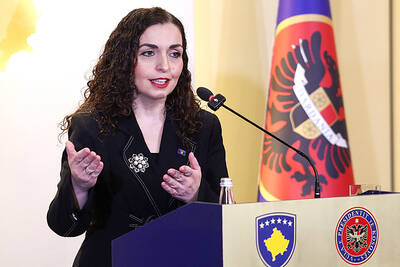
Kosovar President Vjosa Osmani on Friday after dissolving the Kosovar parliament said a snap election should be held as soon as possible to avoid another prolonged political crisis in the Balkan country at a time of global turmoil. Osmani said it is important for Kosovo to wrap up the upcoming election process and form functional institutions for political stability as the war rages in the Middle East. “Precisely because the geopolitical situation is that complex, it is important to finish this electoral process which is coming up,” she said. “It is very hard now to imagine what will happen next.” Kosovo, which declared

MORE BANS: Australia last year required sites to remove accounts held by under-16s, with a few countries pushing for similar action at an EU level and India considering its own ban Indonesia on Friday said it would ban social media access for children under 16, citing threats from online pornography, cyberbullying, online fraud and Internet addiction. “Accounts belonging to children under 16 on high-risk platforms will start to be deactivated, beginning with YouTube, TikTok, Facebook, Instagram, Threads, X, Bigo Live and Roblox,” Indonesian Minister of Communications and Digital Meutya Hafid said. “The government is stepping in so that parents no longer have to fight alone against the giants of the algorithm. Implementation will begin on March 28, 2026,” she said. The social media ban would be introduced in stages “until all platforms fulfill their
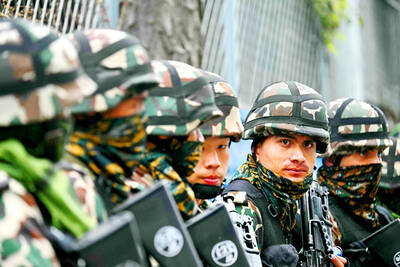
Counting was under way in Nepal yesterday, after a high-stakes parliamentary election to reshape the country’s leadership following protests last year that toppled the government. Key figures vying for power include former Nepalese prime minister K. P. Sharma Oli, rapper-turned-mayor Balendra Shah, who is bidding for the youth vote, and newly elected Nepali Congress party leader Gagan Thapa. In Kathmandu’s tea shops and city squares, people were glued to their phones, checking results as early trends flashed up — suggesting Shah’s centrist Rastriya Swatantra Party (RSP) was ahead. Nepalese Election Commission spokesman Prakash Nyupane said the counting was ongoing “in a peaceful manner”


 RSS
RSS