

The British backlash over the US handling of post-invasion Iraq grew yesterday as another military commander blasted Washington's "fatally flawed" policy.
Major General Tim Cross, the top British officer involved in planning post-war Iraq, said he raised serious concerns with then US secretary of defense Donald Rumsfeld about the possibility of the country descending into chaos.
But Rumsfeld "ignored" or "dismissed" his warnings, the general told the Sunday Mirror newspaper.
On Saturday, the head of the British Army during the 2003 invasion launched a fierce attack on the US over its handling of troubled Iraq since.
General Sir Mike Jackson branded US post-invasion policy "intellectually bankrupt" and said Rumsfeld was "one of the most responsible for the current situation in Iraq."
The comments from both top military officers come at an embarrassing time for the British government, which has tried to soothe reported tensions with the US over Iraq by insisting it will not cut and run from the southern province of Basra.
General Jack Keane, a former vice-chief of staff of the US Army, said last month there was "frustration" in Washington at the deteriorating security situation in the British-run area -- triggering an angry reaction from some quarters in the British military.
In 2003, Cross was the deputy head of the coalition's Office of Reconstruction and Humanitarian Assistance.
"Right from the very beginning we were all very concerned about the lack of detail that had gone into the post-war plan -- and there is no doubt that Rumsfeld was at the heart of that process," the 56-year-old said.
"I had lunch with Rumsfeld in Washington before the invasion in 2003 and raised concerns about the need to internationalize the reconstruction of Iraq and work closely with the UN.
"I also raised concerns over the numbers of troops available to maintain security and aid reconstruction. He didn't want to hear that message. The US had already convinced themselves that Iraq would emerge reasonably quickly as a stable democracy," Cross said.
"Anybody who tried to tell them anything that challenged that idea -- they simply shut it out. Myself and others were suggesting things simply would not be as easy as that. But he ignored my comment. He dismissed it," Cross said.
"There is no doubt with hindsight the US post-war plan was fatally flawed -- and many of us sensed that at the time," he said.
British Prime Minister Gordon Brown, who took over from former prime minister Tony Blair on June 27, had been expected by some commentators to take a step back on Iraq policy.
But he has resisted calls for a timetable for the withdrawal of British troops from Iraq.
The Pentagon announced this week that it is ready to intervene in southern Iraq to quell any unrest in Basra.
The Sunday Times newspaper, citing government department officials, said Britain was preparing to hand over control of Basra to the Iraqi army as early as next month, in a move which would spark renewed claims from Washington that Britain was preparing to cut and run from Iraq.
Britain's Foreign Secretary David Miliband and Defense Secretary Des Browne wrote a joint article in Friday's Washington Post newspaper saying it was "time to set the record straight" after weeks of "misplaced criticism."
"The question some people have asked is: have British forces failed in Basra? The answer is no," they said.
"We believe we remain on track to complete the return of full sovereignty to the Iraqi people as planned. The United Kingdom is sticking to the mission we took on four years ago," they said.
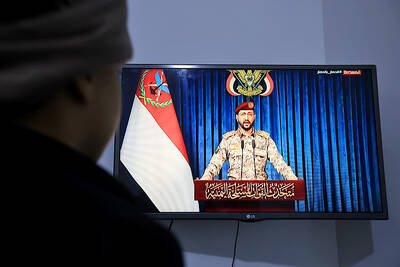
ON THE MOVE: Trump unexpectedly cut short a trip to return to the White House, while the State Department warned Americans to avoid travel to the Middle East The US on Saturday warned that hostilities between Saudi Arabia and Iran-backed Houthis could “escalate rapidly” after a missile attack targeted Riyadh for the first time since the Yemen conflict resumed. US President Donald Trump on Saturday cut short a weekend at Camp David, a secluded presidential complex in rural Maryland, to return unexpectedly to the White House. The White House gave no explanation for the early return, which comes as a new threshold was crossed in the conflict between Saudi Arabia and the Houthis, who control a large part of Yemen and are fighting government forces backed by a coalition led

World leaders gather in New York this week for the UN General Assembly, bracing for US President Donald Trump’s return to the rostrum for a second year running, with talks centering on the widening conflicts in the Middle East and Ukraine and the risks of artificial intelligence (AI). Nearly 130 heads of state meet with the post-World War II order under strain and with the UN itself struggling to remain relevant and weathering attacks from Trump, who has slashed the US’ contributions and withdrawn from dozens of UN bodies. Chinese President Xi Jinping (習近平), who last addressed the diplomatic jamboree via video

Several areas of Thailand’s capital city Bangkok were inundated by continuous rain from Thursday afternoon to yesterday morning that has disrupted traffic and forced some residents to evacuate. Major canals in Bangkok filled with accumulated rainfall exceeding 20cm, officials said yesterday. Floodwaters spread across the city, particularly in the central and eastern parts, blocking roads and stopping traffic. The Thai Meteorological Department warned that the heavy rain would continue in most parts of the country through today, citing a strong low-pressure system over the central region and strengthening southwest monsoon conditions. More than 84,000 people in 21 provinces nationwide were

Typhoon Dujuan forced the cancellation of at least 275 flights in Japan today and prompted warnings of potentially record-breaking rainfall as the storm nears Tokyo. The typhoon, which is accompanied by high winds, has also led to the early closure in Tokyo of one the world’s biggest video game trade fairs and knocked out power for thousands. The Japan Meteorological Agency (JMA) warned yesterday that rain and winds were expected to intensify even before the typhoon’s arrival. “The total rainfall through Tuesday could exceed the average monthly rainfall for September, resulting in record-breaking heavy rain,” the agency said. The typhoon’s wind speeds were at


 RSS
RSS