


The giant quake that wrecked this Pacific coastal town last week has set off a wave of refugees, driving up to 40 percent of its people to quit their ruined homes and move away, the Peruvian government said on Wednesday.
"Between 30 and 40 percent of the inhabitants have been forced to leave" Pisco, which formerly had a population of 130,000 people, Social Development and Women's Affairs Minister Virginia Borra said.
"There are no official figures that identify the scale of the problem," she said, stressing her number was an estimate.
A census is under way of the towns affected by the 8.0-magnitude earthquake -- of which Pisco was worst hit.
The quake killed 540 people in the area, according to an official toll, and destroyed around 85 percent of Pisco, leaving residents camping amid the ruins as the threat of disease and the stench of bodies under the rubble grew.
"It's definitely no longer possible to find any survivors," fire chief Alberto Marticorena said as teams continued combing the wreckage.
At least two more bodies were pulled form the rubble of a hotel on Wednesday.
More bodies were believed to be under the ruins of the Embassy hotel, frequented by backpackers, which buried an unknown number of people when it collapsed.
A week after the Aug. 15 disaster, a daily stream of families with their belongings packed into cars, trucks and tricycles heads out of town on the Panamerican highway.
Many have relatives in the capital Lima, some 240km up the coast, or in nearby towns.
"I can't stay here, my house is leveled. I'm off to Ayacucho where my eldest son lives," said Nilda Escobedo, a mother accompanied by two of her children.
"I hope to come back soon when my house is rebuilt, because I was born here and I will die here," she said.
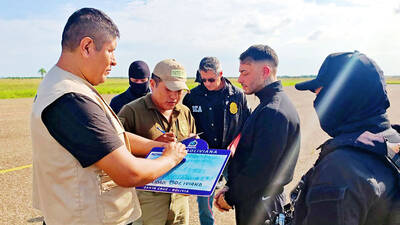
KINGPIN: Marset allegedly laundered the proceeds of his drug enterprise by purchasing and sponsoring professional soccer teams and even put himself in the starting lineups Notorious Latin American narco trafficker Sebastian Marset, who eluded police for years, was handed over to US authorities after his arrest on Friday in Bolivia. Marset, a Uruguayan national who was on the US most-wanted list, was passed to agents of the US Drug Enforcement Administration at Santa Cruz airport in Bolivia, then put on a US airplane, Bolivian state television showed. “The arrest and deportation were carried out pursuant to a court order issued by the US justice system,” Bolivian Minister of Government Marco Antonio Oviedo told reporters. The alleged kingpin was arrested in an upscale neighborhood of Santa
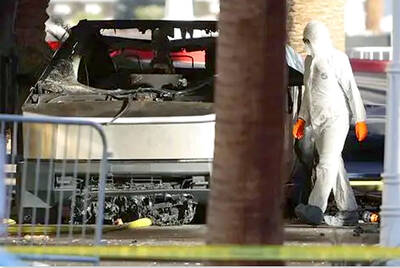
ACTIONABLE ADVICE: The majority of chatbots tested provided guidance on weapons, tactics and target selections, with Perplexity and Meta AI deemed to be the least safe From school shootings to synagogue bombings, leading artificial intelligence (AI) chatbots helped researchers plot violent attacks, according to a study published on Wednesday that highlighted the technology’s potential for real-world harm. Researchers from the nonprofit watchdog Center for Countering Digital Hate and CNN posed as 13-year-old boys in the US and Ireland to test 10 chatbots, including ChatGPT, Google Gemini, Perplexity, Deepseek and Meta AI. Eight of the chatbots assisted the make-believe attackers in more than half the responses, providing advice on “locations to target” and “weapons to use” in an attack, the study said. The chatbots had become a “powerful accelerant for
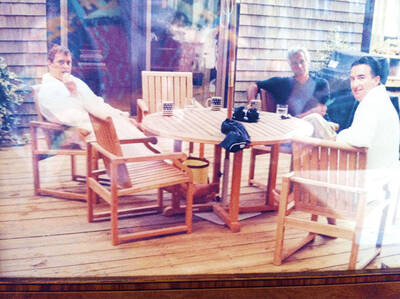
SCANDAL: Other images discovered earlier show Andrew bent over a female and lying across the laps of a number of women, while Mandelson is pictured in his underpants A photograph of former British prince Andrew and veteran politician Peter Mandelson sitting in bathrobes alongside late sex offender Jeffrey Epstein was unearthed on Friday in previously published documents. The image is believed to be the first known photograph of the two men with Epstein. They are currently engulfed in scandal in the UK over their ties to their mutual friend. The undated photograph, first reported by ITV News, shows King Charles III’s disgraced brother and former British ambassador to the US sitting barefoot outside on a wooden deck. They appear to have mugs with a US flag on them
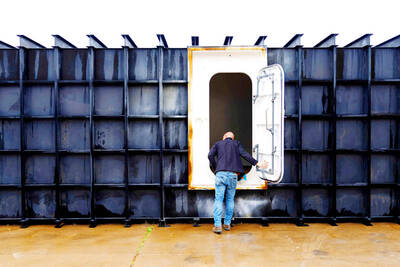
Since the war in the Middle East began nearly two weeks ago, the telephone at Ron Hubbard’s bomb shelter company in Texas has not stopped ringing. Foreign and US clients are rushing to buy his bunkers, seeking refuge in case of air raids, nuclear fallout or apocalypse. With the US and Israel pounding Iran, and Tehran retaliating with strikes across the region, Hubbard has seen demand for his product soar, mostly from Gulf nation customers in Bahrain, Qatar, Kuwait and the United Arab Emirates. “You can imagine how many people are thinking: ‘I wish I had a bomb shelter,’” Hubbard, 63, said in


 RSS
RSS