

Aid groups yesterday struggled to distribute food, water and blankets to survivors of a devastating Peruvian earthquake that killed more than 500 people last week, as aftershocks continued to rattle the population.
The latest was a 4.7 magnitude aftershock that sparked panic among people lining up to leave this town by air and by bus on Monday, the day the rescue effort officially ended and bulldozers began removing mountains of rubble.
Humanitarian aid was flowing in from across the country, and from abroad, though still not sufficient for all those left homeless.
Peruvian President Alan Garcia announced the start of fumigation operations across the town to head off diseases before they turn into possible epidemics, and more than 1,000 police and soldiers were deployed to halt the looting that has sown fear among the battered population.
According to the latest count by the Civil Defense service, 540 people died across the whole quake-hit region of southern Peru, 1,039 were injured, and more than 176,000 people were left homeless.
A total of 35,000 homes were destroyed in the magnitude 8 temblor (7.7 on the Richter scale) that rumbled across southern Peru last Wednesday, most of them in Pisco, which was 70 percent destroyed.
Many survivors, weak and shivering from nights spent out in the open, were lining up for hours at the local air force base for flights taking them away from Pisco.
Other lines formed at town bus stops, where people paid up to US$40 for a ride to Lima or any other city unharmed by the quake.
Five days after the catastrophe, rescue operations wound up to the frustration of some rescue workers who believed there could still be more survivors.
"You feel so powerless when you don't get there in time. I have found lots of bodies, I don't know how many because I find it too hard to count them," firefighter Javier Vallero said.
The town's San Clemente church has been the focus for the grieving. The roof had collapsed in the quake, killing 160 people -- nearly half of the town's 335 identified dead.
On Monday, only the bell towers and part of the broken dome were still standing as heavy machinery knocked down the facade, deemed in danger of falling.
The risk of collapse of the few buildings left standing in Pisco was real and widespread.
"Just about all of them are dangerous," said a chief firefighter, Jose Varallanos.
The mostly poor families whose rudimentary adobe homes had come crashing down would be relocated to temporary lodgings being prepared while the clearing effort already underway intensified.
Still, families camping out in the open near their broken homes were reluctant to leave.
Bolivian President Evo Morales and his vice president pledged half their salaries to the earthquake victims, while Cabinet ministers gave one-quarter of their wages.

PLENARY SESSION: Although the SCO says it is ‘not an alliance directed against other states,’ Putin and Xi have repeatedly made anti-Western speeches during its summits Russian President Vladimir Putin and Chinese President Xi Jinping (習近平) are expected tomorrow in Kyrgyzstan for a two-day summit, also attended by Iran’s and India’s leaders, of a regional bloc seeking to be a counter-influence to the West. Around a dozen heads of states would head to the Kyrgyz capital, Bishkek, to mark 25 years of the Shanghai Cooperation Group (SCO). The group brings together Russia, China, India, Pakistan, Iran, four Central Asian countries and Moscow-allied Belarus. Putin and Xi have previously used SCO summits to promote their vision of a multipolar world and present a united front against the

A swarm of about 700 artificial intelligence (AI) agents created by OpenAI carried out last month’s hack of the open-source platform Hugging Face and in many cases tried to cover their tracks, a pair of reports into the breach said on Wednesday. The coordinated activity by AI agents — programs that run with minimal human supervision — and their attempts to hide it raise questions about how closely AI companies are monitoring tests of increasingly powerful models, and could add fuel to calls for tighter oversight. While some of the rogue behavior has been disclosed or alluded to previously, the two reports
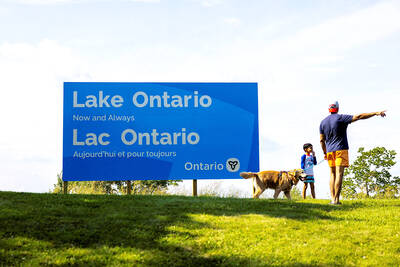
Ontario Premier Doug Ford on Saturday answered US President Donald Trump’s “Lake America” decree with a billboard-sized message on the Canadian shoreline — “Lake Ontario. Now and Always” — as Canadian leaders met Trump’s move with ridicule rather than outrage. Wearing a Canada national soccer team jersey, Ford unveiled the sign near Grimsby and posed for photographs. The message is repeated in French. The display followed Trump’s executive order directing US federal agencies to call Lake Ontario “Lake America.” After months of tariffs, threats to make Canada the 51st US state and personal attacks on its leaders, the reaction in

Dozens of Israeli settlers on Saturday attacked the Palestinian village of Qusra in the northern occupied West Bank after nearly three weeks of tension in the area, drawing rare condemnation from Israeli Prime Minister Benjamin Netanyahu. Earlier this month, a group of settlers began blocking supplies from entering Palestinian houses on the outskirts of the village near Nablus, trapping residents inside and drawing unusually strong criticism from the US ambassador. Weeks later, Israeli forces continue to operate in the area while settlers still roam the surrounding hills. On Saturday, Qusra residents and dozens of settlers had descended on the village,


 RSS
RSS