


An Indian doctor cleared of involvement in failed British car bombings left Australia for his homeland yesterday after authorities handed back his passport, his lawyer said.
Australian officials told Mohamed Haneef he was free to leave a day after the doctor was released from custody into house arrest, after the case against him collapsed.
While Haneef no longer faces terrorism charges, his Australian working visa remains suspended and Immigration Minister Kevin Andrews said he would fight any attempt to have it restored.
"I do not propose to change my decision and the Commonwealth will continue to resist this appeal in the Federal Court," Andrews told reporters.
Andrews said Haneef's lawyers had sought permission for him to leave Australia after his release and the government agreed because the doctor would not have been allowed to stay without a visa anyway.
Andrews, who has faced severe criticism for exercising a little-used ministerial power to cancel Haneef's visa, said he would seek to release the confidential police material on which he based the decision.
Haneef's lawyer Peter Russo said authorities had gagged his client from speaking to the media before his flight out of Australia last night to join his family in the southern Indian city of Bangalore.
Russo said Haneef would continue the fight to clear his name from his homeland.
He called for the Australian government to apologize over the 27-year-old's treatment and urged Andrews to immediately reinstate his visa.
"He [Andrews] seems to be the only person in Australia who still thinks Dr Haneef is guilty of something," Russo said.
He said Haneef was homesick and wanted to see his family, including his wife Firdous, who gave birth to a daughter last month, shortly before his arrest.
"This has been a severely traumatic time for him, made worse by the fact that his wife has just had their first child, a baby Dr Haneef has not even seen yet. His mother is also ill and he wants to be there with her," Russo said.
Haneef's departure ended an ordeal that began on July 2, when he was arrested at Brisbane Airport, then spent almost four weeks in custody as police charged him with "reckless" support for a terrorist group.
The charge centered on a mobile phone SIM card that Haneef last year gave to his second cousin Sabeel Ahmed, who has been charged with withholding information following last month's failed bombings in London and Glasgow.
Sabeel's older brother Kafeel Ahmed remains under police guard in a British hospital with severe burns after allegedly ramming a blazing car into Glasgow Airport on June 30.
The case against Haneef failed after red-faced prosecutors admitted they falsely claimed in court that his SIM card was found in the burning car and inaccurately said he had shared a flat with some of the British bomb suspects.
Russo said Australia's counterterrorism laws needed to be examined to ensure the case was not repeated.
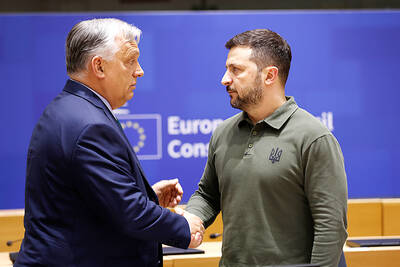
Hungarian authorities temporarily detained seven Ukrainian citizens and seized two armored cars carrying tens of millions of euros in cash across Hungary on suspicion of money laundering, officials said on Friday. The Ukrainians were released on Friday, following their detention on Thursday, but Hungarian officials held onto the cash, prompting Ukraine to accuse Hungary’s Russia-friendly government of illegally seizing the money. “We will not tolerate this state banditism,” Ukrainian Minister of Foreign Affairs Andrii Sybiha said. The seven detained Ukrainians were employees of the Ukrainian state-owned Oschadbank, who were traveling in the two armored cars that were carrying the money between Austria and
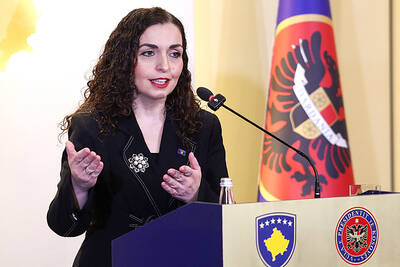
Kosovar President Vjosa Osmani on Friday after dissolving the Kosovar parliament said a snap election should be held as soon as possible to avoid another prolonged political crisis in the Balkan country at a time of global turmoil. Osmani said it is important for Kosovo to wrap up the upcoming election process and form functional institutions for political stability as the war rages in the Middle East. “Precisely because the geopolitical situation is that complex, it is important to finish this electoral process which is coming up,” she said. “It is very hard now to imagine what will happen next.” Kosovo, which declared

MORE BANS: Australia last year required sites to remove accounts held by under-16s, with a few countries pushing for similar action at an EU level and India considering its own ban Indonesia on Friday said it would ban social media access for children under 16, citing threats from online pornography, cyberbullying, online fraud and Internet addiction. “Accounts belonging to children under 16 on high-risk platforms will start to be deactivated, beginning with YouTube, TikTok, Facebook, Instagram, Threads, X, Bigo Live and Roblox,” Indonesian Minister of Communications and Digital Meutya Hafid said. “The government is stepping in so that parents no longer have to fight alone against the giants of the algorithm. Implementation will begin on March 28, 2026,” she said. The social media ban would be introduced in stages “until all platforms fulfill their
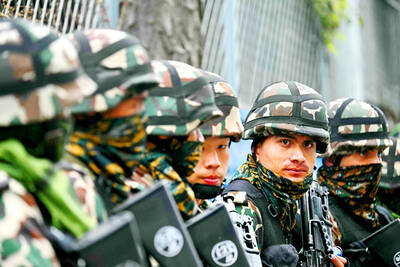
Counting was under way in Nepal yesterday, after a high-stakes parliamentary election to reshape the country’s leadership following protests last year that toppled the government. Key figures vying for power include former Nepalese prime minister K. P. Sharma Oli, rapper-turned-mayor Balendra Shah, who is bidding for the youth vote, and newly elected Nepali Congress party leader Gagan Thapa. In Kathmandu’s tea shops and city squares, people were glued to their phones, checking results as early trends flashed up — suggesting Shah’s centrist Rastriya Swatantra Party (RSP) was ahead. Nepalese Election Commission spokesman Prakash Nyupane said the counting was ongoing “in a peaceful manner”


 RSS
RSS