


The tents of thousands of pilgrims dot the hillside, the air is heavy with the scent of incense and the sounds of the church bell toll across the valley.
This is the Armenian Christian pilgrimage marking the feast of the first century missionary St Thaddeus, deep in the northwestern mountains of the Islamic Republic of Iran.
Every summer for the past half century, thousands of Armenian pilgrims from Iran and beyond have descended on the remote Qareh Kelisa (Black Church) for three days of worship and relaxation with fellow Armenians.
It may seem remarkable that such a tradition holds strong in one of the world's most strictly Islamic countries, but Iran is home to hundreds of thousands of Armenians and a string of historically important churches.
"This is a gathering point which brings people together in one place. It creates solidarity among Armenians from both inside and outside Iran and is the most important date in the calendar," said Hayk Norouzian, a handicrafts dealer from Tehran.
This year up to 4,000 pilgrims, mainly from Iran, neighboring Armenia and Arab countries with significant Armenian populations like Lebanon and Syria have pitched their tents on the hillside to mark the event.
They filled the church -- Iran's most important Christian monument, which dates back to the earliest decades of the faith -- for the climax of the weekend, a church service attended by the patriarchs of Tehran and Tabriz.
"The most important thing is that in a Muslim nation we have preserved this church," said Ani, 32, a computer scientist and choir singer.
"In Turkey, some Armenian churches have been ruined. It is a point of pride that in this country we have this church. The government of Iran values it and appreciates it," she said.
The church, built on the site of St Thaddeus' grave after he was slain by a king, has withstood more than 1,500 years of wars and earthquakes to dominate this landscape.
Its distinctively Armenian pyramidal cupolas and mighty defensive walls perch on a mountain ridge in the north of Iran's West Azarbaijan Province, just 25km from the border with Turkey.
But the pilgrimage is not only about religion -- it also offers Armenians separated by national borders the chance to come together and celebrate their culture without any interference.
It's only 9am, but the early morning chatter of the pilgrims emerging from their tents is joined by joyful sounds of an accordion which has struck up accompanied by a drum.
Arms aloft, two other men surround the musicians in a traditional dance, joined immediately by two women who kick their legs and twirl their hands in time to the music.
The authorities allow the Armenians considerable freedom in celebrating the ritual and the Islamic dress rules that everyone normally has to obey in public in Iran are relaxed.
Women walk around in T-shirts without the headscarves that are obligatory everywhere else in Iran, although they cover their heads in church.
"We are free here to make our prayers and do as we wish. The government organizations help us to feel really free. Nobody bothers us here," said Gevork Vartanian, one of two members of parliament who represent Iranian Armenians.
It is not possible for Muslims to attend the pilgrimage without a special reason. Checks are carried out by Armenian staff on the only road to the church, where local government officials are also in attendance.
Beyond that line, visitors enter, for that weekend at least, a distinctively Armenian Christian world.
"People come here from all over the world for this ceremony. We welcome all Christian people," Vartanian said.
"The authorities carry out this work of separation in order for us to be free," he said.
The campers play Armenian rabiz music and have brought copious amounts of food to indulge in one of the most Armenian of passions -- the khorovats or open-air barbecue.
"What I like is that our youth comes here regardless of whether their main purpose is religious, historical or social. People get to know one another here," said Rene Ahour, a freelance filmmaker from Tehran.
Iran has always emphasized it gives its Christian, Jewish and Zoroastrian religious minorities full freedom of worship.
The presence of Armenians in northern Iran dates back thousands of years and Persian Shah Abbas brought hundreds of Armenian craftsmen to his imperial capital of Isfahan in the 17th century.
The entrance to Qareh Kelisa is adorned with pictures of two Armenian patriarchs flanking large images of Iran's modern leaders -- President Mahmoud Ahmadinejad, supreme leader Ayatollah Ali Khamenei and late revolutionary leader Ayatollah Ruhollah Khomeini.

ACTIONABLE ADVICE: The majority of chatbots tested provided guidance on weapons, tactics and target selections, with Perplexity and Meta AI deemed to be the least safe From school shootings to synagogue bombings, leading artificial intelligence (AI) chatbots helped researchers plot violent attacks, according to a study published on Wednesday that highlighted the technology’s potential for real-world harm. Researchers from the nonprofit watchdog Center for Countering Digital Hate and CNN posed as 13-year-old boys in the US and Ireland to test 10 chatbots, including ChatGPT, Google Gemini, Perplexity, Deepseek and Meta AI. Eight of the chatbots assisted the make-believe attackers in more than half the responses, providing advice on “locations to target” and “weapons to use” in an attack, the study said. The chatbots had become a “powerful accelerant for

Australians were downloading virtual private networks (VPNs) in droves, while one of the world’s largest porn distributors said it was blocking users from its platforms as the country yesterday rolled out sweeping online age restriction. Australia in December became the first country to impose a nationwide ban on teenagers using social media. A separate law now requires artificial intelligence (AI)-powered chatbot services to keep certain content — including pornography, extreme violence and self-harm and eating disorder material — from minors or face fines of up to A$49.5 million (US$34.6 million). The country also joined Britain, France and dozens of US states requiring
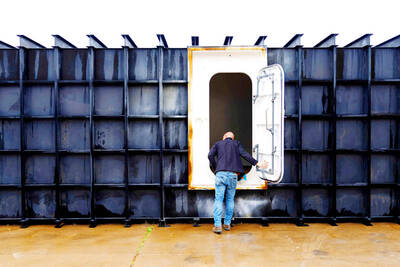
Since the war in the Middle East began nearly two weeks ago, the telephone at Ron Hubbard’s bomb shelter company in Texas has not stopped ringing. Foreign and US clients are rushing to buy his bunkers, seeking refuge in case of air raids, nuclear fallout or apocalypse. With the US and Israel pounding Iran, and Tehran retaliating with strikes across the region, Hubbard has seen demand for his product soar, mostly from Gulf nation customers in Bahrain, Qatar, Kuwait and the United Arab Emirates. “You can imagine how many people are thinking: ‘I wish I had a bomb shelter,’” Hubbard, 63, said in
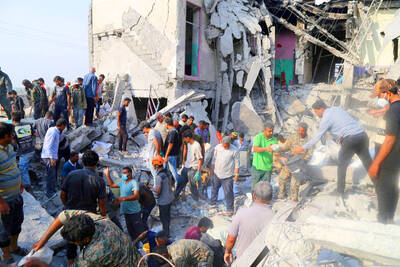
STILL IN POWER: US intelligence reports showed that the Iranian regime is not in danger of collapse and retains control of the public, casting doubt on Trump’s exit Nearly every US Senate Democrat on Wednesday signed a letter sent to US Secretary of Defense Pete Hegseth requesting a “swift investigation” of airstrikes on a girls’ school in Iran that killed scores of children and any other potential US military actions causing civilian harm. Reuters reported on Thursday last week that US military investigators believe it is likely that US forces were responsible for the Feb. 28 strike on the school, as US and Israeli forces launched attacks on Iran. “The results of this school attack are horrific. The majority of those killed in the strikes were girls between the ages


 RSS
RSS