


An Australian state leader accused the federal government yesterday of incompetence in its handling of the case of Indian terror suspect Mohamed Haneef, and of undermining the country's counterterrorism laws.
Queensland Premier Peter Beattie said the case was now mired in confusion because of inconsistencies, and demanded the government provide an explanation to clear them up.
"I've never seen such an incompetent explanation of what's going on from the federal government. They should wake up to themselves," Beattie, a senior member of the Labor party, told Southern Cross Broadcasting. "The level of cynicism which is developing here is going to continue, and then that undermines public confidence in the anti-terrorism laws."
"For heaven's sake, this is starting to look like the Keystone Cops, to be frank," Beattie said.
"These sort of leaks to me are just crazy and unacceptable in a climate where everyone is working to defeat terrorism," he said.
Canberra was quick to strike back. Foreign Minister Alexander Downer accused Beattie of being politically motivated in criticizing the government and the Australian Federal Police.
"Mr. Beattie goes around and calls the federal police keystone cops, he is trying to undermine public support in the federal police for party political reasons," Downer told Nine Network television.
Haneef had been working at a Queensland hospital for almost a year when he was arrested July 2 as he tried to leave for India. He was charged two weeks later with supporting a terrorist organization for giving his mobile phone SIM card to a second cousin in Britain before coming to Australia.
The cousin has been charged in Britain with withholding information about a terrorist attack in connection to last month's failed plot to set off car bombs in London and at the Glasgow airport.
A magistrate granted Haneef bail, but the government canceled his visa before he could be released and says he will be taken into immigration custody if he posts bail. He has declined to do so, and is in jail awaiting trial and an appeal against the visa decision.
The case has been the subject of numerous media leaks, some of which have been attributed to the federal police. Haneef's lawyers claim police and authorities have tried to portray the evidence against him as stronger than it really is, and the government accuses the defense team of unethical behavior.
Among the contentious issues, police have refused to clarify reports that Haneef's SIM card was not found in the vehicle used to attack the Glasgow airport, as was claimed by a prosecutor during Haneef's bail hearing.
Police were also forced on Sunday to deny as inaccurate newspaper reports that had cited unnamed police and government sources saying Haneef was being investigated for a possible attack plot in Australia.
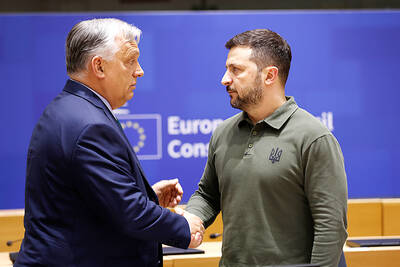
Hungarian authorities temporarily detained seven Ukrainian citizens and seized two armored cars carrying tens of millions of euros in cash across Hungary on suspicion of money laundering, officials said on Friday. The Ukrainians were released on Friday, following their detention on Thursday, but Hungarian officials held onto the cash, prompting Ukraine to accuse Hungary’s Russia-friendly government of illegally seizing the money. “We will not tolerate this state banditism,” Ukrainian Minister of Foreign Affairs Andrii Sybiha said. The seven detained Ukrainians were employees of the Ukrainian state-owned Oschadbank, who were traveling in the two armored cars that were carrying the money between Austria and
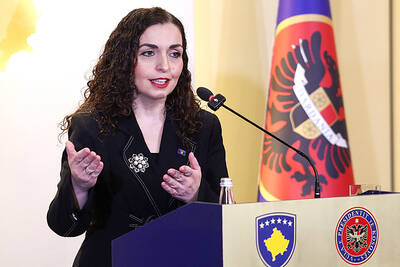
Kosovar President Vjosa Osmani on Friday after dissolving the Kosovar parliament said a snap election should be held as soon as possible to avoid another prolonged political crisis in the Balkan country at a time of global turmoil. Osmani said it is important for Kosovo to wrap up the upcoming election process and form functional institutions for political stability as the war rages in the Middle East. “Precisely because the geopolitical situation is that complex, it is important to finish this electoral process which is coming up,” she said. “It is very hard now to imagine what will happen next.” Kosovo, which declared

MORE BANS: Australia last year required sites to remove accounts held by under-16s, with a few countries pushing for similar action at an EU level and India considering its own ban Indonesia on Friday said it would ban social media access for children under 16, citing threats from online pornography, cyberbullying, online fraud and Internet addiction. “Accounts belonging to children under 16 on high-risk platforms will start to be deactivated, beginning with YouTube, TikTok, Facebook, Instagram, Threads, X, Bigo Live and Roblox,” Indonesian Minister of Communications and Digital Meutya Hafid said. “The government is stepping in so that parents no longer have to fight alone against the giants of the algorithm. Implementation will begin on March 28, 2026,” she said. The social media ban would be introduced in stages “until all platforms fulfill their
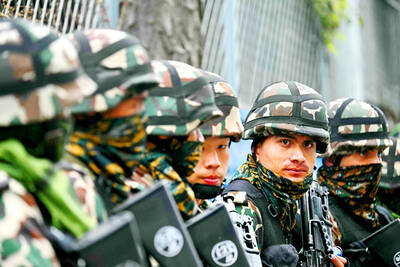
Counting was under way in Nepal yesterday, after a high-stakes parliamentary election to reshape the country’s leadership following protests last year that toppled the government. Key figures vying for power include former Nepalese prime minister K. P. Sharma Oli, rapper-turned-mayor Balendra Shah, who is bidding for the youth vote, and newly elected Nepali Congress party leader Gagan Thapa. In Kathmandu’s tea shops and city squares, people were glued to their phones, checking results as early trends flashed up — suggesting Shah’s centrist Rastriya Swatantra Party (RSP) was ahead. Nepalese Election Commission spokesman Prakash Nyupane said the counting was ongoing “in a peaceful manner”


 RSS
RSS