


Iraq's Interior Ministry has launched an investigation into claims that a police death squad has been operating in Iraq, a top official said yesterday.
The probe was launched as police found the bodies of 10 more men who had been shot dead execution-style and dumped in three different areas of Baghdad's predominantly Shiite suburb of Shula.
Major General Hussein Kamal, Iraq's deputy interior minister in charge of domestic intelligence, said the probe was launched following US military claims that they had detained 22 men wearing police uniforms who were about to kill a Sunni Arab man.
"We have been informed about this and the interior minister has formed an investigation committee to learn more about the Sunni person and those 22 men, particularly whether they work for the Interior Ministry or claim to belong to the ministry," Kamal said.
A US general said US forces had found evidence of a death squad operating in Iraq's Interior Ministry, the Chicago Tribune reported on its Web site on Wednesday evening.
A US military official in Baghdad confirmed the report but declined to provide further details. The official spoke on condition of anonymity.
Major General Joseph Peterson, who commands the civilian police training teams in Iraq, said the 22 men were employed by the Ministry of Interior as highway patrol officers.
The bodies of Sunni Arabs, bound and gagged and shot in the head, have been turning up in Baghdad for months, fueling allegations of sectarian killings, which Sunni Arab leaders say are often carried out by Shiites in army or police uniforms.
Human Rights Minister Nermine Othman said she believed lower-level Interior Ministry officials were assisting criminals involved in killing Iraqis.
"I think there are many people inside the Interior Ministry involved with these deaths or giving the uniforms of colleagues to criminals," Othman said.
"These officials are helping the criminals by informing them on where targeted people are going or where people are living. They are helping them in different ways."
A Sunni Arab political group, the Iraqi Islamic Party, praised the investigation and said it should result in perpetrators being brought to justice.
"Since a very long time, we have been talking about such violations and we have been telling the Interior Ministry officials that there are squads that raid houses and arrest people who are found later executed in different parts of the capital," said party member Nasser al-Ani.
Early yesterday, five handcuffed and blindfolded men, each shot in the head, were found in one location near northern Baghdad's Shula neighborhood, police said.
Four more men aged between 30 years and 35 were found killed in similar circumstances near Shula on the highway to the northern city of Taji, police said.
The body of a young man who seemed to have been shot early yesterday Thursday was dumped near al-Khair river in Shula suburb, police Captain Qassim Hussein said.
Iraq's majority Shiites claimed prominent security services positions when they came to power following the 2003 ouster of former president Saddam Hussein, whose regime suppressed Shiites.
Sunni Arabs, who were once prominent under Saddam, claim Shiites have been killing and kidnapping Sunnis in a campaign of retribution.
Sunni Arabs, however, form the backbone of Iraq's raging insurgency.
Militant leaders like Abu Musab al-Zarqawi have called for Shiites to be targeted in a bid to start a civil war.
also see story:
The future of Iraq is hanging in the balance
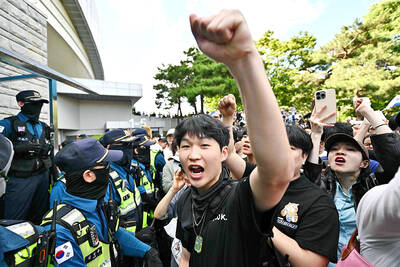
‘ABSURD MISTAKE’: The election commission said that there had been a failure to anticipate turnout after 14 polling stations ran short of ballot papers South Korean riot police yesterday cleared protesters from a Seoul polling station after a 35-hour blockade sparked by a shortage of ballot papers during local elections earlier this week. Wednesday’s election was the first nationwide vote since South Korean President Lee Jae-myung took office following the ouster of Yoon Suk-yeol over his short-lived martial law declaration. Lee’s ruling Democratic Party swept most races, but failed to flip the crucial Seoul mayoral seat. The South Korean National Election Commission apologized, blaming a failure to anticipate turnout after 14 polling stations in Seoul ran short of ballot papers. Some polling stations stayed open until 10pm to

France experienced its hottest spring on record, the French weather service said on Tuesday, after an exceptional early heat wave that also broke highs for the season in England and Wales. Meteo-France said the average nationwide temperature over March to May was 13.8°C — about 1.7°C above the norm, and surpassing records set in 2011 and 2020. “The warmest spring since records began in 1900,” it said in a bulletin. All three months were warmer than average, but the onset of an “unprecedented heatwave” late last month pushed the mercury to highs typically seen at the height of the summer. “Our country had never

A Sherpa guide was found crawling to base camp on Mount Everest a week after he went missing and was reunited with his family, who had given up hope he would return. Dawa Sherpa was last seen on Friday last week descending the mountain, but he did not reach base camp even though his client did. The pair were among the last climbers on the mountain as the climbing season came to an end and the route was dismantled. Dawa was located by a cleaning crew on Thursday morning as he was crawling down the snowy slopes around the Khumbu Icefall, just above
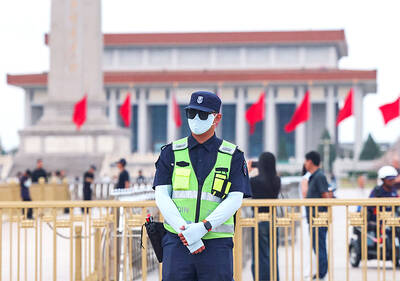
Chinese authorities are snuffing out any remembrance of the deadly 1989 military crackdown on student-led pro-democracy protests in Tiananmen Square, which happened 37 years ago yesterday, in a further tightening of a years-long campaign to erase what happened from public memory. Police told relatives of the victims they would not be allowed to visit a cemetery in Beijing on the anniversary of the crackdown, a person with knowledge of the matter said. Relatives of the victims visited the cemetery on the anniversary for more than 30 years to read memorial statements with police keeping watch, Amnesty International said. Hundreds of people,


 RSS
RSS