


Arab League chief Amr Moussa, who has warned that Iraq is on the verge of civil war, arrived in Baghdad yesterday for what officials have said will be a mission to promote national reconciliation.
League officials have said Moussa is expected to meet Prime Minister Ibrahim Jaafari, President Jalal Talabani and leading Shiite cleric Ayatollah Ali al-Sistani on his first visit to Iraq since a US-led invasion toppled Saddam Hussein in 2003.
The 22-member league had not officially announced the timing of his visit for security reasons. When a league delegation went to Iraq this month, gunmen attacked their convoy and killed three of their police escorts.
Moussa's mission comes at an especially sensitive time for Iraq, which has been plagued by violence as US-backed Iraqi leaders try to advance the political process in a bid to defuse a Sunni Arab insurgency.
An Oct. 15 referendum on a constitution backed by Iraq's new Shiite and Kurdish leaders and fiercely opposed by Arab Sunnis is expected to pass, raising fears of an intensified campaign of suicide bombings and shootings waged by Saddam Hussein loyalists and militants from across the Arab world.
Saddam took the stand on the first day of his high profile trial for crimes against humanity on Wednesday, defying the judge by refusing to state his name and challenging the legitimacy of the court created under US occupation.
Moussa, a veteran Egyptian diplomat, has said there is no clear strategy or leadership to reconcile Iraq's different communities and that civil war could erupt at any moment.
Arab states such as conservative Sunni Saudi Arabia have warned that Shiite Iran has gained wide influence over Iraq and could destabilize the region.
Some Iraqis have criticized the Arab League for neglecting their country, while Arab commentators have said Iraq's proposed constitution does not emphasize Iraq's Arab identity enough, something Saddam stressed in his decades in power.
Saddam trial
Yesterday's newspapers were filled with coverage of the trial of Saddam, who was wearing a dark suit and carrying a worn copy of the Koran as he stepped into court to join seven other defendants being tried in connection with the killing of 140 Shiites in the village of Dijail in the 1980s.
"The people are victorious over a tyrant," read a front-page banner headline in the Al Bayaan newspaper.
A photograph beneath it showed Saddam and the other defendants, including his former vice president Taha Yassin Ramadan and feared intelligence chief Barzan al-Tikriti. Another featured a poor Iraqi family huddled on the floor beneath a television watching their former president take the stand.
At least one international legal watchdog welcomed the adjournment to Nov. 28 by Judge Rizgar Mohammed Amin as a sign of fairness to a defense that complained it had insufficient time to prepare for the case, which centers on the killing of 148 Shiite men after a failed assassination attempt in 1982.
The judge, an ethnic Kurd who has risked revenge attacks by appearing on television to try Saddam, said the court also needed time to persuade witnesses who were "scared" to testify.
With Iraq deeply divided along sectarian and ethnic lines since US troops ousted Saddam in 2003, some have questioned the nation's ability to mount a fair trial. But the government's sponsors in Washington see the process as a showpiece of their efforts to install a credible, democratic system in Iraq.
During a protest against the trial in Saddam's home town of Tikrit, Iraqi forces arrested one of Saddam's nephews who is accused of financing insurgents, national security adviser Mowaffaq al-Rubaie said.
"Yasser Sabawi was inciting violence and giving money and bribes to the youth to turn a peaceful demonstration into a violent one," Rubaie said.
"He is one of the people who fund terrorism and we believe there is strong evidence that he is one of the channels that brings in funds used to finance the terrorist operations in the north and the northeast of the country."
Reporter missing
Meanwhile, the Guardian newspaper said that one of its reporters has disappeared in Iraq and believes he was kidnapped.
Rory Carroll, 33, an Irish citizen who is the Guardian's Baghdad correspondent, was on assignment when he vanished, the paper said in a statement on Wednesday.
"It is believed Mr. Carroll may have been taken by a group of armed men," the statement said. "The Guardian is urgently seeking information about Mr. Carroll's whereabouts and condition."
Carroll's father, Joe, said the Guardian told him three people had been with his son when he was abducted, "and one of them did get a bit roughed up but he was the only one kidnapped."
A story in the newspaper's Wednesday edition about Saddam Hussein's trial carries Carroll's byline. He has been based in Baghdad for nine months and previously reported from South Africa and Rome.
Carroll had broadcast a live report on the trial on the Romanian news channel Realitatea TV earlier on Wednesday. The station said he had been working for them on a freelance basis.
Realitatea TV said Carroll had been kidnapped after trying to learn what ordinary Iraqis thought of the trial.
Joe Carroll, a former correspondent for the Irish Times newspaper, said his son had tried to reassure him about his safety in Baghdad.
"He knew we were worried but he used to reassure us and say that it was not as dangerous as people outside think," Joe Carroll told BBC radio. "He said if you observed basic rules and security you would be OK."
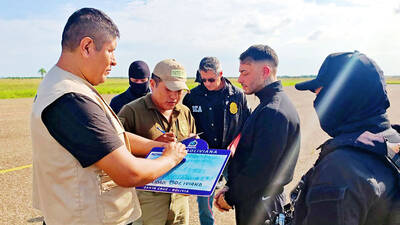
KINGPIN: Marset allegedly laundered the proceeds of his drug enterprise by purchasing and sponsoring professional soccer teams and even put himself in the starting lineups Notorious Latin American narco trafficker Sebastian Marset, who eluded police for years, was handed over to US authorities after his arrest on Friday in Bolivia. Marset, a Uruguayan national who was on the US most-wanted list, was passed to agents of the US Drug Enforcement Administration at Santa Cruz airport in Bolivia, then put on a US airplane, Bolivian state television showed. “The arrest and deportation were carried out pursuant to a court order issued by the US justice system,” Bolivian Minister of Government Marco Antonio Oviedo told reporters. The alleged kingpin was arrested in an upscale neighborhood of Santa
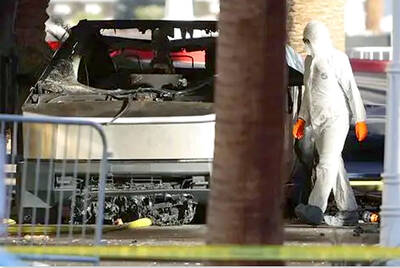
ACTIONABLE ADVICE: The majority of chatbots tested provided guidance on weapons, tactics and target selections, with Perplexity and Meta AI deemed to be the least safe From school shootings to synagogue bombings, leading artificial intelligence (AI) chatbots helped researchers plot violent attacks, according to a study published on Wednesday that highlighted the technology’s potential for real-world harm. Researchers from the nonprofit watchdog Center for Countering Digital Hate and CNN posed as 13-year-old boys in the US and Ireland to test 10 chatbots, including ChatGPT, Google Gemini, Perplexity, Deepseek and Meta AI. Eight of the chatbots assisted the make-believe attackers in more than half the responses, providing advice on “locations to target” and “weapons to use” in an attack, the study said. The chatbots had become a “powerful accelerant for
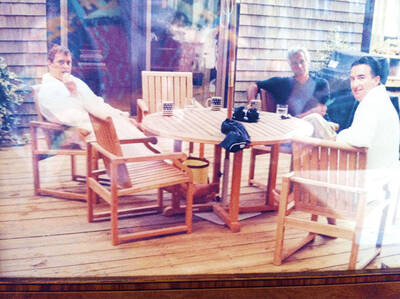
SCANDAL: Other images discovered earlier show Andrew bent over a female and lying across the laps of a number of women, while Mandelson is pictured in his underpants A photograph of former British prince Andrew and veteran politician Peter Mandelson sitting in bathrobes alongside late sex offender Jeffrey Epstein was unearthed on Friday in previously published documents. The image is believed to be the first known photograph of the two men with Epstein. They are currently engulfed in scandal in the UK over their ties to their mutual friend. The undated photograph, first reported by ITV News, shows King Charles III’s disgraced brother and former British ambassador to the US sitting barefoot outside on a wooden deck. They appear to have mugs with a US flag on them
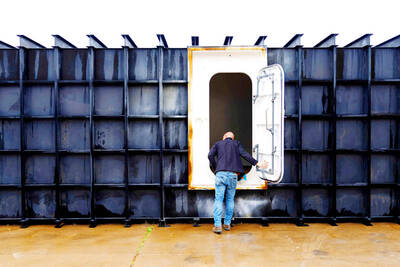
Since the war in the Middle East began nearly two weeks ago, the telephone at Ron Hubbard’s bomb shelter company in Texas has not stopped ringing. Foreign and US clients are rushing to buy his bunkers, seeking refuge in case of air raids, nuclear fallout or apocalypse. With the US and Israel pounding Iran, and Tehran retaliating with strikes across the region, Hubbard has seen demand for his product soar, mostly from Gulf nation customers in Bahrain, Qatar, Kuwait and the United Arab Emirates. “You can imagine how many people are thinking: ‘I wish I had a bomb shelter,’” Hubbard, 63, said in


 RSS
RSS