


Compromise appeared within reach yesterday among the world's most industrialized nations on relieving Africa's crushing poverty and combating global warming.
US President George W. Bush and other leaders of the Group of Eight (G8) nations were to begin arriving at this posh golf resort. Their three days of annual discussions were beginning over dinner at the Gleneagles hotel.
Protesters who have vowed to disrupt the summit were already in place. More than 100 activists, many covering their faces with bandanas and wearing hoods, smashed car windows, threw rocks at police and attempted to blockade one of the main approach roads to the exclusive summit resort.

PHOTO: AP
Police with armor, helmets and shields formed a chain across the closed main highway to Gleneagles from Edinburgh.
After that initial violence, police citing public safety concerns canceled what had been billed as a peaceful march by anti-poverty campaigners planned later yesterday near the summit site.
This year's G8 talks marked the third summit held at remote, sealed-off locales following the 2001 summit in Genoa, Italy, when hundreds of thousands of protesters clashed violently with police.
As preparations continued in Gleneagles, aides met behind closed doors on the two issues UK Prime Minister Tony Blair has made the main focus of this year's summit.
Bush cleared the way for one compromise when he pledged last week to double US support for Africa to more than US$8.6 billion by 2010, up from the US$4.3 billion the US provided last year. That amount wouldn't nearly meet Blair's target for summit nations to increase Africa aid to 0.7 percent of their gross national product, but still would be far higher than any previous US administration's commitment.
Bush, stopping in Denmark on the way to Scotland, said he would emphasize the need for African nations to commit to good governance.
Compromise has proven even tougher on Blair's other key issue, developing a plan to curb emissions of greenhouse gases, with US officials lobbying behind the scenes against setting any specific goals or timetables for emission reductions as called for in the 1997 Kyoto Protocol.
Sir Michael Jay, Blair's representative in the discussions, called the negotiations "pretty intense." He predicted the G8 would reach an accord that recognized the problem and the need to combat it.
The US is the only G8 country that has not ratified the Kyoto Protocol. The US has been at odds with most of the other nations regarding global warming, saying further study is needed about scientific findings on climate change.
Bush said in Denmark that "the surface of the Earth is warmer and that an increase in greenhouse gases caused by humans is contributing to the problem."
However, he made plain that mandatory targets are off the table. He referred repeatedly to the Kyoto treaty in the past tense, even though it took effect in February, and said the goal for his plan is to control greenhouse gases merely "as best as possible."
Bush said he "can't wait" to talk with summit colleagues about the US' alternative proposed approach, which stresses spreading clean-energy technologies to both developed and developing nations.
Blair was expected to try to salvage the climate-change issue by shifting debate away from disagreements with the US and toward gaining support for emission controls in China. The country's surging economy has made it the world's second-biggest producer of greenhouse gases after the US.
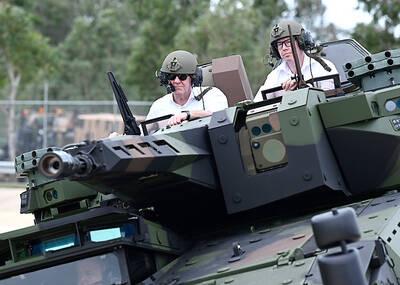
JAN. 1 CLAUSE: As military service is voluntary, applications for permission to stay abroad for over three months for men up to age 45 must, in principle, be granted A little-noticed clause in sweeping changes to Germany’s military service policy has triggered an uproar after it emerged that the law requires men aged up to 45 to get permission from the armed forces before any significant stay abroad, even in peacetime. The legislation, which went into effect on Jan. 1 aims to bolster the military and demands all 18-year-old men fill out a questionnaire to gauge their suitability to serve in the armed forces, but stops short of conscription. If the “modernized” model fails to pull in enough recruits, parliament will be compelled to discuss the reintroduction of compulsory service, German
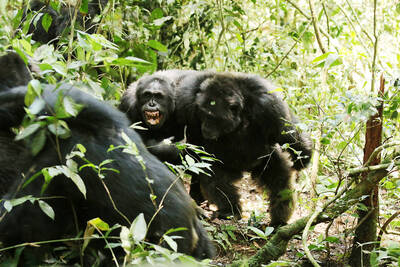
For two decades, researchers observed members of the Ngogo chimpanzee group of Kibale National Park in Uganda spend their days eating fruits and leaves, resting, traveling and grooming in their tropical rainforest abode, but this stable community then fractured and descended into years of deadly violence. The researchers are now describing the first clearly documented example of a group of wild chimpanzees splitting into two separate factions, with one launching a series of coordinated attacks against the other. Adult males and infants were targeted, with 28 deaths. “Biting, pounding the victim with their hands, dragging them, kicking them — mostly adult males,
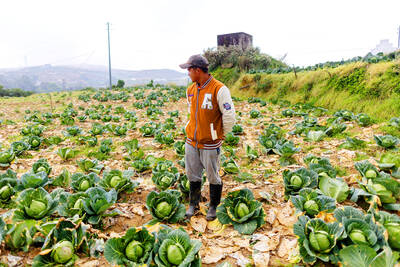
Filipino farmers like Romeo Wagayan have been left with little choice but to let their vegetables rot in the field rather than sell them at a loss, as rising oil prices linked to the Iran war drive up the cost of harvesting, labor and transport. “There’s nothing we can do,” said Wagayan, a 57-year old vegetable farmer in the northern Philippine province of Benguet. “If we harvest it, our losses only increase because of labor, transportation and packing costs. We don’t earn anything from it. That’s why we decided not to harvest at all,” he said. Soaring costs caused by the Middle East
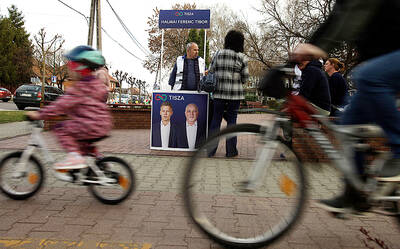
Hungarian Prime Minister Viktor Orban’s officially declared wealth is fairly modest: some savings and a jointly owned villa in Budapest. However, voters in what Transparency International deems the EU’s most corrupt country believe otherwise — and they might make Orban pay in a general election this Sunday that could spell an end to his 16-year rule. The wealth amassed by Orban’s inner circle is fueling the increasingly palpable frustration of a population grappling with sluggish growth, high inflation and worsening public services. “The government’s communication machine worked well as long as our economic situation remained relatively good,” said Zoltan Ranschburg, a political analyst


 RSS
RSS