

When Qiu Chengwei reported the theft of his "dragon saber" he was laughed out of the police station. So the 41-year-old online games player decided to take matters into his own hands.
Swapping virtual weapons for a real knife, he tracked down the man who had robbed him of his prized fantasy possession and stabbed him to death.
Qiu is now facing a possible death sentence in a Shanghai court case which has highlighted concern about the social, psychological and economic impact of one of China's fastest-growing industries.
A spate of suicides, deaths by exhaustion and legal disputes about virtual possessions have been blamed on Internet role-playing games, which are estimated to have more than 40 million players in China.
Qiu's favorite game was Legend of Mir III, a South Korean game which is a huge hit throughout Asia.
It took him hours in front of a computer to win the dragon saber, one of the game's most valuable weapons.
He used a feature of the game to lend it to Zhu Caoyuan, who reportedly sold it without his permission for 7,200 yuan (US$870).
Although this is considerably more than the average monthly wage, the police told Qiu that they could do nothing because the law does not recognize virtual property.
He has pleaded guilty to the manslaughter of Zhu, a crime that can carry the death penalty.
The number of Internet users is estimated to have doubled from under 60 million in 2002 to more than 120 million.
More than a third are believed to be game players, creating one of the world's most lucrative online markets. The operators revenue has grown by more than 40 percent in each of the past two years.
Shanda Networking, the biggest online game company with at least two million users at any given time of the day, more than doubled profits last year.
The national leadership said recently that the country's biggest skill shortage was of Internet game developers.
The information ministry estimates that China needs 600,000 online game technicians to fight off foreign competition. But there is also growing alarm about the social consequences. The government has cracked down on unlicenced Internet cafes, which the official news agency called "hotbeds of juvenile crime and depravity."
Newspapers are filled with reports of Internet-game related crimes and tragedies, such as the suicide in January of a boy of 13 who left notes saying he was so addicted to online games that he had difficulty distinguishing between reality and virtual reality.
Last March, two students in Chongqing fell asleep on a railway track after an all-night Internet session, and a 31-year old Legend of Mir addict reportedly dropped dead after a 20-hour session. Many of the crimes are related to the thefts of virtual possessions.
Hard-core players invest so much time and money into building a powerful online character that the loss or theft of a virtual identity prompts some to take violent action.
At the Shanda customer complaints office in Shanghai, where the staff work behind reinforced glass panels, an adviser, Cassie Fan, said: "We get about a thousand complaints a week. I have been threatened on several occasions. People put so much time and energy into the games that some get extremely upset."
One customer was so enraged that he set fire to himself, suffering serious burns.
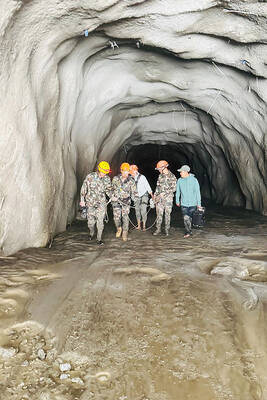
DEATH TOLL 903: More than 900 workers are believe to be trapped in the tunnels and underground areas of several hydropower projects after flash floods in Nepal-Tibet Rescue teams were working to reach more than 900 people thought to be trapped in the tunnels and underground areas of half a dozen hydropower projects in Nepal following the devastating flash floods, ?the National Disaster Risk Reduction and Management Authority said yesterday. The death toll from the unprecedented deluge of ice, rock, mud ?and debris that crashed through valleys of Nepal on Wednesday last week has risen to 903 people, with 16 more dead reported on the Tibet side of the border. More than 4,000 are missing in Nepal, with another 500 in Tibet. Hundreds of bodies, many unidentified, have been

Ontario Premier Doug Ford on Saturday answered US President Donald Trump’s “Lake America” decree with a billboard-sized message on the Canadian shoreline — “Lake Ontario. Now and Always” — as Canadian leaders met Trump’s move with ridicule rather than outrage. Wearing a Canada national soccer team jersey, Ford unveiled the sign near Grimsby and posed for photographs. The message is repeated in French. The display followed Trump’s executive order directing US federal agencies to call Lake Ontario “Lake America.” After months of tariffs, threats to make Canada the 51st US state and personal attacks on its leaders, the reaction in

PLENARY SESSION: Although the SCO says it is ‘not an alliance directed against other states,’ Putin and Xi have repeatedly made anti-Western speeches during its summits Russian President Vladimir Putin and Chinese President Xi Jinping (習近平) are expected tomorrow in Kyrgyzstan for a two-day summit, also attended by Iran’s and India’s leaders, of a regional bloc seeking to be a counter-influence to the West. Around a dozen heads of states would head to the Kyrgyz capital, Bishkek, to mark 25 years of the Shanghai Cooperation Group (SCO). The group brings together Russia, China, India, Pakistan, Iran, four Central Asian countries and Moscow-allied Belarus. Putin and Xi have previously used SCO summits to promote their vision of a multipolar world and present a united front against the

Dozens of Israeli settlers on Saturday attacked the Palestinian village of Qusra in the northern occupied West Bank after nearly three weeks of tension in the area, drawing rare condemnation from Israeli Prime Minister Benjamin Netanyahu. Earlier this month, a group of settlers began blocking supplies from entering Palestinian houses on the outskirts of the village near Nablus, trapping residents inside and drawing unusually strong criticism from the US ambassador. Weeks later, Israeli forces continue to operate in the area while settlers still roam the surrounding hills. On Saturday, Qusra residents and dozens of settlers had descended on the village,


 RSS
RSS