


In what has been described as an epidemic for Japan, as many as one in 10 Japanese youths is living as a modern-day hermit.
Often aided by their embarrassed families, up to 1 million young men may be hiding from the outside world -- perhaps never even leaving their bedrooms.
Called hikikomori (Japanese for "to withdraw from society"), their way is unique to Japan.
Experts in the field estimate that the hikikomori population at anything between 500,000 to 1 million, although according to the Japanese Ministry of Health and Labor the figure is only 50,000.
But this discrepancy is hardly surprising, given how unwilling hikikomori youths and their parents are to speak to outsiders.
To many, the condition is seen as a secret, shameful thing and their stigma is deeply felt.
Journalists in the past have had to speak to hikikomori through closed doors, with their families remaining anonymous and heads just seen in silhouette.
Dai Osaki, now 20, spent a year as a recluse.
His reason was/is a common one -- bullying at school -- which led to his not speaking to anyone for that year -- even his family -- while living in his bedroom, reading manga comics and playing video games.
For the first three months or so, his family pleaded with him to come out, but when that failed they dragged him out and in an effort to interest him in something -- anything -- they took him to a riding school.
Dai never looked back.
He developed a love of horses and riding that has never left him and three months later he returned to school and restored a normal relationship with his parents.
Today he is a full-time riding instructor and acclaimed show-jumper.
To meet Dai and hear him talk -- he has a smile that splits his face -- it is hard to imagine those dark days.
Apart from bullying, other reasons that have been put forward to explain the condition include academic pressure, too much time spent online or playing computer games leading to a poor communication skills, and the effect of most parenting being done by stay-at-home mothers while unavailable fathers work all hours.
Leading Japanese psychiatrist and hikikomiri specialist Dr Tamaki Saito talks about "the black hole of the spirit in Japan."
It's a view of a nation widely-regarded as being dominated by pork-barrel politics, the enslavement to the ideal of financial prosperity and the radical shift in cultural and political beliefs since the war whose young people have been questioning their parents and grandparents' work-ethic values.
But Phillida Purvis, director of Links Japan, which promotes exchange of social welfare ideas between Japan and the UK, said the problem may be that Japan's younger generation have never known hard times.
"Their parents lives were so destroyed by the war, they wanted their kids to have everything. In this way a lot of Japanese kids are quite spoiled," she said.
She also claims Japan's education system doesn't educate its young to "think outside the box," and that because most are brought up without religious teaching, no faith-based coping systems have been established either.
It's almost as if a sizeable proportion of Japan's young are acting as a mental health barometer for the nation's stagnating economy.
But she does see changes, with the devastating Kobe earthquake 10 years ago marking a turning point.
Because the then government did not react fast enough to the disaster, the people began to take matters into their own hands and started volunteering and organizing themselves.
This trend received a further boost in 1998 and 2001 with new laws relaxing the legal and tax status of not-for-profit organizations.
Today, some grassroots social groups are expanding across Japan; a sign, commentators believe, of Japanese people identifying the need to help themselves and their neighbors.
They may offer counselling, trips abroad or an activity, like Dai's riding school.
Link such expansion to a Japanese Ministry of Health survey in 2000, which showed that more than 6,000 hikikomori were seeking help in public health centers and that the signs of change are under way.

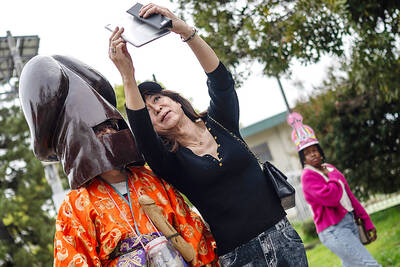
Showcasing phallus-shaped portable shrines and pink penis candies, Japan’s annual fertility festival yesterday teemed with tourists, couples and families elated by its open display of sex. The spring Kanamara Matsuri near Tokyo features colorfully dressed worshipers carrying a trio of giant phallic-shaped objects as they parade through the street with glee. The festival, as legend has it, honors a local blacksmith in the Edo Period (1603-1868) who forged an iron dildo to break the teeth of a sharp-toothed demon inhabiting a woman’s vagina that had been castrating young men on their wedding nights. A 1m black steel phallus sits in the courtyard of

JAN. 1 CLAUSE: As military service is voluntary, applications for permission to stay abroad for over three months for men up to age 45 must, in principle, be granted A little-noticed clause in sweeping changes to Germany’s military service policy has triggered an uproar after it emerged that the law requires men aged up to 45 to get permission from the armed forces before any significant stay abroad, even in peacetime. The legislation, which went into effect on Jan. 1 aims to bolster the military and demands all 18-year-old men fill out a questionnaire to gauge their suitability to serve in the armed forces, but stops short of conscription. If the “modernized” model fails to pull in enough recruits, parliament will be compelled to discuss the reintroduction of compulsory service, German
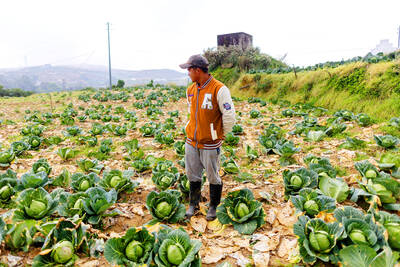
Filipino farmers like Romeo Wagayan have been left with little choice but to let their vegetables rot in the field rather than sell them at a loss, as rising oil prices linked to the Iran war drive up the cost of harvesting, labor and transport. “There’s nothing we can do,” said Wagayan, a 57-year old vegetable farmer in the northern Philippine province of Benguet. “If we harvest it, our losses only increase because of labor, transportation and packing costs. We don’t earn anything from it. That’s why we decided not to harvest at all,” he said. Soaring costs caused by the Middle East

Hungarian Prime Minister Viktor Orban’s officially declared wealth is fairly modest: some savings and a jointly owned villa in Budapest. However, voters in what Transparency International deems the EU’s most corrupt country believe otherwise — and they might make Orban pay in a general election this Sunday that could spell an end to his 16-year rule. The wealth amassed by Orban’s inner circle is fueling the increasingly palpable frustration of a population grappling with sluggish growth, high inflation and worsening public services. “The government’s communication machine worked well as long as our economic situation remained relatively good,” said Zoltan Ranschburg, a political analyst


 RSS
RSS