


Australia's foreign minister pressed leaders in North Korea yesterday to remain involved in six-nation talks on its nuclear program, amid concerns that the Pyongyang administration might pull out of preparatory meetings for the next round of negotiations.
"I'd been, on arriving here, concerned that the six-party talks process was stalling, and I hoped that we'd been able to add some substantial momentum to that process," Alexander Downer said, according to Australian pool video of his visit received by Associated Press Television News.
Downer, who arrived in North Korea on Tuesday, met with the country's ceremonial head of state Kim Yong Nam and Foreign Minister Paek Nam Sun.
The US, Russia, China, Japan and the two Koreas had agreed in June to hold the next round of nuclear talks in Beijing before the end of next month.
Washington has also called for working meetings to prepare for those talks, but North Korea said on Monday that it wouldn't attend those lower-level meetings -- complaining the US wasn't interested in "making the dialogue fruitful."
In Seoul, South Korean Foreign Minister Ban Ki-moon said yesterday that efforts were being made to still hold the working talks, but participants had yet to reach an agreement.
"Our government believes that the main talks should open before the end of September, and we expect it to be opened and will make necessary preparations," he said.
China, which hosts the six-party talks, also yesterday appealed to North Korea to join the working meetings.
"We hope that all sides will maintain a calm, practical and flexible attitude, appropriately handle these disagreements and continue to push forward the peace talks process with great strides," Chinese Foreign Ministry spokesman Kong Quan said.
At the latest nuclear talks in June, North Korea offered to freeze its nuclear program in exchange for energy, lifting of US economic sanctions and removal from Washington's list of countries that sponsor terrorism.
It said the freeze would be a step toward eventual dismantling of the program.
The US proposal required the North to go further by disclosing all its nuclear activities, helping to dismantle facilities and allowing outside monitoring.
Under the plan, some benefits would be withheld to ensure the North cooperates.
The nuclear dispute flared up in 2002 when US officials said North Korea had admitted that it was running a secret nuclear program in violation of international agreements.
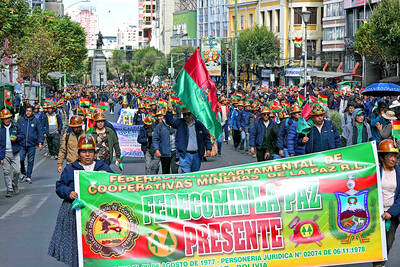
The Bolivian government on Friday struck a deal with protesting miners, but was still grappling with blockades and demonstrations by other workers across La Paz. Other groups are still blocking access roads into the city, which is also the seat of the government. Police on Thursday prevented the miners from entering the main square by using tear gas, while the demonstrators hurled stones and explosives with slingshots. Protests against the policies of Bolivian President Rodrigo Paz have convulsed the Andean nation since early this month, and roadblocks were choking routes into La Paz throughout Friday, the national road authority said. Miners demanded that Paz
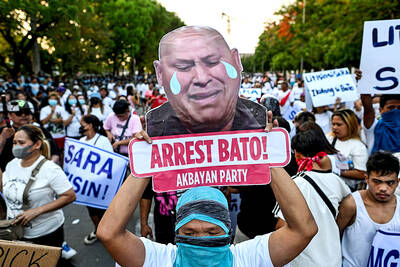
The Philippines said it has asked the country’s Supreme Court to allow it to arrest former Philippine president Rodrigo Duterte’s chief drug war enforcer to stand trial in an international tribunal. The International Criminal Court (ICC) last week unsealed an arrest warrant against Philippine Senator Ronald dela Rosa, accusing him along with Duterte and other “coperpetrators” of the “crime against humanity of murder.” Dela Rosa briefly sought refuge in the Philippine Senate last week while asking the Philippine Supreme Court to stop an ongoing attempt by government agents to arrest him. “By his own conduct, he has placed himself outside the protection of
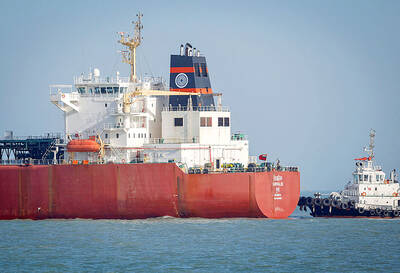
A ship anchored off the United Arab Emirates (UAE) was seized and taken toward Iran and another — a cargo ship near Oman — sank after being attacked, authorities said on Thursday, as tensions escalated near the Strait of Hormuz. It was not immediately clear who was behind these incidents, but they happened as a senior Iranian official reiterated his country’s claim of control over the waterway and another said it had a right to seize oil tankers connected to the US. The turmoil in the strait has been a sticking point for weeks in talks between the US and Iran to

Crowds in Bangladesh are flocking to snap photographs with an unlikely social media star — an albino buffalo with flowing blond hair nicknamed “Donald Trump” that is due to be sacrificed within days. Owner Zia Uddin Mridha, 38, said his brother named the 700kg bull over its flowing helmet of hair resembling the signature look of the US president. “My younger brother picked this name because of the buffalo’s extraordinary hair,” he said at his farm in Narayanganj, just outside the capital, Dhaka. Mridha said that a constant stream of curious visitors — social media fans, onlookers and children — have come throughout


 RSS
RSS