


The FBI has questioned dozens of demonstrators planning to come to New York for the Republican convention later this month and encouraged agents to scour protest groups for evidence of any planned disruptions.
In a nationwide move that civil rights advocates called "chilling", the FBI has drawn up a list of people it intends to question because they may have information about possible violence.
In Missouri, three unnamed young men have been subpoenaed and informed that they are part of a domestic terrorism investigation, although their lawyer says the police have not told them on what grounds.
"It is part of a national effort to chill dissent in this country," said William Dobbs, the spokesman for United for Peace and Justice, which is planning to stage week-long demonstrations in New York during the convention. "And it is always a worry that this kind of intimidation will scare some people off."
The FBI says it is concentrating on possible crimes rather than trying to quash dissent. Most interrogations have centered on whether violent demonstrations are planned.
"The FBI isn't in the business of `chilling' anyone's first amendment rights," FBI spokesman Joe Parris told the New York Times, referring to the right to free speech and free assembly enshrined in the US constitution. "But criminal behavior isn't covered by the first amendment. What we're concerned about are injuries to convention participants, injuries to citizens, injuries to police and first responders."
Those planning to protest say the interrogations amount to harassment. "The message I took from it was that they were trying to intimidate us into not going to any protests and to let us know that `hey, we're watching you,'" said Sarah Bardwell, an intern at an anti-war group in Denver.
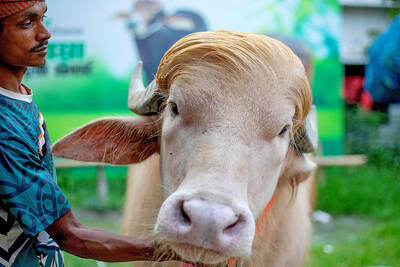
Crowds in Bangladesh are flocking to snap photographs with an unlikely social media star — an albino buffalo with flowing blond hair nicknamed “Donald Trump” that is due to be sacrificed within days. Owner Zia Uddin Mridha, 38, said his brother named the 700kg bull over its flowing helmet of hair resembling the signature look of the US president. “My younger brother picked this name because of the buffalo’s extraordinary hair,” he said at his farm in Narayanganj, just outside the capital, Dhaka. Mridha said that a constant stream of curious visitors — social media fans, onlookers and children — have come throughout

It began as a satirical online project. Now millions of young people in India are flocking to it as an outlet for their frustration. A parody political party called the Cockroach Janta Party, with the insect as its symbol, has exploded across India’s social media by turning absurdist humor into protest. Memes and short videos mocking corruption, joblessness and political dysfunction have flooded social media sites, where millions of users are embracing the cockroach — known for its ability to survive harsh conditions — as a tongue-in-cheek symbol of endurance. The online movement’s rise has been unusually rapid. The Cockroach Janta Party (CJP)
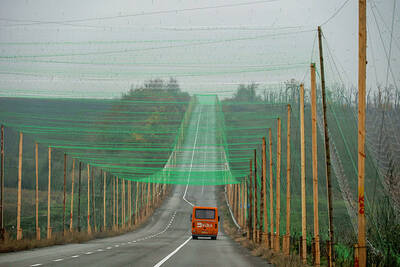
BIGGER ROLE: Beijing has said it maintains an impartial stance on the war in Ukraine, but by training Russian troops, China is far more involved than previously known China’s armed forces secretly trained about 200 Russian military personnel in China late last year, and some have since returned to fight in Ukraine, according to three European intelligence agencies and documents seen by Reuters. While China and Russia have held a number of joint military exercises since Moscow’s full-scale invasion of Ukraine in 2022, Beijing has repeatedly said that it is neutral in the conflict and presents itself as a peace mediator. The covert training sessions, which predominantly focused on the use of drones, were outlined in a dual-language Russian-Chinese agreement signed by senior Russian and Chinese officers in Beijing on
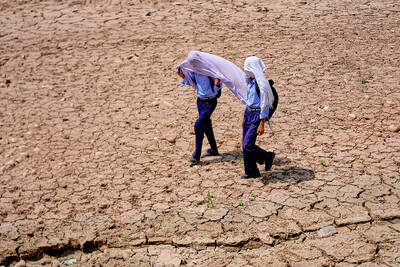
HOTTER: While Indians are accustomed to summer heat, climate change has caused northwestern India to warm faster than other parts of the country, an academic said Roads and markets have emptied during afternoons and some farmers have switched to nighttime work to avoid scorching temperatures as a heat wave grips large parts of India. The India Meteorological Department forecast maximum temperatures for yesterday of about 45°C in the capital, New Delhi, where authorities have opened temporary “cooling zones” to help people cope. The weather department warned that conditions would likely persist across several northern regions in the coming days, with temperatures staying well above seasonal averages. Authorities urged people to stay indoors during the hottest hours and take precautions against heat-related illnesses. India declares a heat wave whenever maximum temperatures


 RSS
RSS