


Mexican opposition legislators are up in arms over the US Border Patrol's use of weapons firing plastic bullets filled with pepper powder against Mexican migrants as they cross the border illegally.
Although the nonlethal weapons have been used sporadically for at least two years, the issue was thrust into the spotlight with a recent video shown on Mexican television of agents in battle dress firing paint ball game-style rifles loaded with florescent plastic pepper pellets at targets.
"We will not permit these kinds of acts that violate human rights," Sadot Sanchez, who heads the Senate's human rights commission and is a member of PRI, the opposition Institutional Revolutionary Party, said Wednesday.
Last week, Zacatecas state Governor Ricardo Monreal fired off a telegram to US President George W. Bush, describing the use of the weapon as "xenophobic and racist" and "reminiscent of the Kristallnacht [purges] in Nazi Germany."
The video shown this month also contained separate images of a Mexican lifting his T-shirt to reveal welts and bruises on his chest, presumably from pellet impacts.
The pellets are plastic-coated but break on impact, causing welts and releasing pepper dust. In Mexico, critics call them "rubber bullets."
Mexicans are traditionally very sensitive about the relationship with their powerful northern neighbor. Millions of Mexicans live and work in the US and many first crossed the 3,200km border as undocumented migrants.
Hundreds of people die every year in treacherous border crossings and previous incidents of Mexicans being shot by US Border Patrol agents caused uproar here. The introduction of the pepper weapons was in part aimed at preventing fatal shootings along the border.
Agents of the US Border Patrol's Tucson sector in Arizona, the most heavily crossed route for illegal migrants, have had the weapons for the past two years but officials say there are strict regulations on their use.
The weapons "are only ever used to defend yourself, another agent, or an innocent third party from assault," spokesman Andy Adame said on Wednesday.
"They allow us to disarm migrants throwing softball sized rocks at agents, without using deadly force against them."
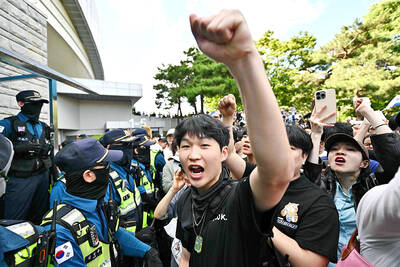
‘ABSURD MISTAKE’: The election commission said that there had been a failure to anticipate turnout after 14 polling stations ran short of ballot papers South Korean riot police yesterday cleared protesters from a Seoul polling station after a 35-hour blockade sparked by a shortage of ballot papers during local elections earlier this week. Wednesday’s election was the first nationwide vote since South Korean President Lee Jae-myung took office following the ouster of Yoon Suk-yeol over his short-lived martial law declaration. Lee’s ruling Democratic Party swept most races, but failed to flip the crucial Seoul mayoral seat. The South Korean National Election Commission apologized, blaming a failure to anticipate turnout after 14 polling stations in Seoul ran short of ballot papers. Some polling stations stayed open until 10pm to

France experienced its hottest spring on record, the French weather service said on Tuesday, after an exceptional early heat wave that also broke highs for the season in England and Wales. Meteo-France said the average nationwide temperature over March to May was 13.8°C — about 1.7°C above the norm, and surpassing records set in 2011 and 2020. “The warmest spring since records began in 1900,” it said in a bulletin. All three months were warmer than average, but the onset of an “unprecedented heatwave” late last month pushed the mercury to highs typically seen at the height of the summer. “Our country had never

A Sherpa guide was found crawling to base camp on Mount Everest a week after he went missing and was reunited with his family, who had given up hope he would return. Dawa Sherpa was last seen on Friday last week descending the mountain, but he did not reach base camp even though his client did. The pair were among the last climbers on the mountain as the climbing season came to an end and the route was dismantled. Dawa was located by a cleaning crew on Thursday morning as he was crawling down the snowy slopes around the Khumbu Icefall, just above
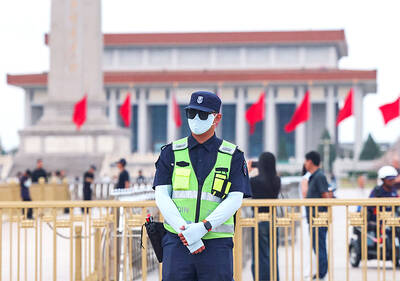
Chinese authorities are snuffing out any remembrance of the deadly 1989 military crackdown on student-led pro-democracy protests in Tiananmen Square, which happened 37 years ago yesterday, in a further tightening of a years-long campaign to erase what happened from public memory. Police told relatives of the victims they would not be allowed to visit a cemetery in Beijing on the anniversary of the crackdown, a person with knowledge of the matter said. Relatives of the victims visited the cemetery on the anniversary for more than 30 years to read memorial statements with police keeping watch, Amnesty International said. Hundreds of people,


 RSS
RSS