


A passenger train in northwest Turkey ignored a stop signal and rammed into an oncoming train Wednesday, killing six people and injuring 85 others, officials said, in the nation's third deadly rail accident in as many weeks.
Rescue workers in blue and orange jumpsuits climbed through the wreckage near the village of Tavsancil in Kocaeli province, some 80km east of Istanbul, to recover trapped and smashed bodies. They threw mangled pieces of metal out the shattered windows and used axes and torches to cut through the wreckage.

PHOTO: AP
The prime minister's office announced that six people were killed in the accident and 85 people were injured.
Earlier the semiofficial Anatolia news agency, quoting prosecutor Veysel Eroglu, who is investigating the accident, reported that nine people were killed in the crash. But the agency later reported the death toll at six. There was no explanation for the discrepancy.
A few bodies were still believed to be trapped inside the wreckage.
Armed troops were guarding the site.
By nightfall, rescue operations had largely ended and emergency crews were using flashlights to search inside the wreckage for any bodies.
The accident occurred after a train traveling from Ankara to Istanbul ignored a signal and failed to stop at a junction, Cemal Yaman, an official of a local branch of the train workers' union told the Anatolia news agency. The train was carrying 153 passengers and nine crew members.
Deputy Prime Minister Abdullah Gul said, "One of the trains passed a red light. When the [engineer] noticed he tried to reduce speed but unfortunately the accident occurred."
However, conductor Hasan Yucedag told Anatolia from his hospital bed that "the light was green for us. It suddenly turned red as we were about to cross."
Yucedag suffered a broken arm.
The other train was traveling from Istanbul to Adapazari in northwestern Turkey, officials said.
The Prime Minister's Crisis Center said 85 people were injured. Most of the injured were released from hospital by nightfall.
Mahmut Yanmis, who survived the accident, told CNN-Turk television the collision occurred after his train left Tavsancil station.
"I made my way through a broken window," said Yanmis, who had stitches on his head and scratches on his arms. "When I went out of the car, I saw the decapitated body of a conductor trapped at the gate of the locomotive.
"I saw the passenger sitting next to me dead. Body pieces were scattered everywhere."
At the crash site, a middle-aged man screamed, "My God! My God! Ismail! Ismail!" in apparent reference to a victim.
Several relatives or friends sat on the bumper of an ambulance, waiting for news. One man sat with his head between his hands, crying.
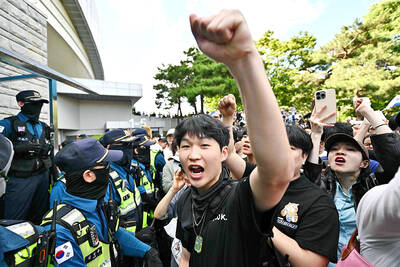
‘ABSURD MISTAKE’: The election commission said that there had been a failure to anticipate turnout after 14 polling stations ran short of ballot papers South Korean riot police yesterday cleared protesters from a Seoul polling station after a 35-hour blockade sparked by a shortage of ballot papers during local elections earlier this week. Wednesday’s election was the first nationwide vote since South Korean President Lee Jae-myung took office following the ouster of Yoon Suk-yeol over his short-lived martial law declaration. Lee’s ruling Democratic Party swept most races, but failed to flip the crucial Seoul mayoral seat. The South Korean National Election Commission apologized, blaming a failure to anticipate turnout after 14 polling stations in Seoul ran short of ballot papers. Some polling stations stayed open until 10pm to

France experienced its hottest spring on record, the French weather service said on Tuesday, after an exceptional early heat wave that also broke highs for the season in England and Wales. Meteo-France said the average nationwide temperature over March to May was 13.8°C — about 1.7°C above the norm, and surpassing records set in 2011 and 2020. “The warmest spring since records began in 1900,” it said in a bulletin. All three months were warmer than average, but the onset of an “unprecedented heatwave” late last month pushed the mercury to highs typically seen at the height of the summer. “Our country had never
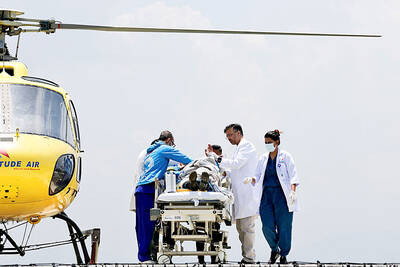
A Sherpa guide was found crawling to base camp on Mount Everest a week after he went missing and was reunited with his family, who had given up hope he would return. Dawa Sherpa was last seen on Friday last week descending the mountain, but he did not reach base camp even though his client did. The pair were among the last climbers on the mountain as the climbing season came to an end and the route was dismantled. Dawa was located by a cleaning crew on Thursday morning as he was crawling down the snowy slopes around the Khumbu Icefall, just above
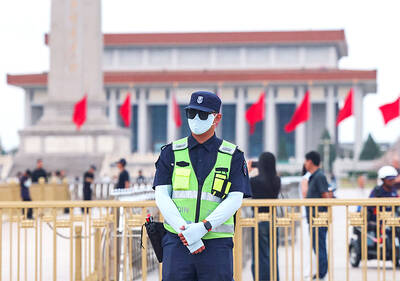
Chinese authorities are snuffing out any remembrance of the deadly 1989 military crackdown on student-led pro-democracy protests in Tiananmen Square, which happened 37 years ago yesterday, in a further tightening of a years-long campaign to erase what happened from public memory. Police told relatives of the victims they would not be allowed to visit a cemetery in Beijing on the anniversary of the crackdown, a person with knowledge of the matter said. Relatives of the victims visited the cemetery on the anniversary for more than 30 years to read memorial statements with police keeping watch, Amnesty International said. Hundreds of people,


 RSS
RSS