


Prime Minister John Howard yesterday tried to discredit former defense chiefs and senior diplomats who lambasted his decision to take part in the US-led invasion of Iraq, saying they had retired before the world changed on Sept. 11, 2001.
The 43 eminent Australians, including two former chiefs of defense and three ambassadors, issued a scathing public statement at the weekend, accusing the government of rubber-stamping US foreign policy and of joining the Iraq war on the basis of false assumptions and deceptions.
Howard questioned the relevance of their opinions in the era of global terrorism.
"Every single person who signed that statement had retired from service well before the 11th of September, 2001," Howard told Sydney radio station 2GB. "We're living in a different and more dangerous world and some of the older approaches are no longer quite as relevant."
Some government lawmakers were even harsher in their criticism.
"I think we have to ask the question, these doddering daiquiri diplomats, would they have done any different?" lawmaker Deanne Kelly said. "The world has changed too from the comfort zone they lived in. Frankly they should keep their opinions to themselves."
One of the statement's signatories, Peter Gration, Australia's military chief from 1987 to 1993, including during the first Gulf War, said the government can not brush aside the criticism "by saying these are old guys and their opinion doesn't count."
"This is the first time in my memory that 43 Australians who've held very senior positions in agencies, have been key diplomats abroad and have been heads of armed services have come out to make such a strong statement," Gration told Australian Broadcasting Corp radio.
The opposition Labor Party lawmaker responsible for foreign affairs, Kevin Rudd, agreed.
"This is classically arrogant John Howard trying to dismiss criticism and remove all responsibility from himself," he said.
"These former military heads have extensive diplomatic experience between them under governments both Liberal and Labor and, because of their professional engagement, remain deeply in contact with the rest of the official community, including in a period since Sept. 11."
Later in parliament, Howard said Gration had also stated in an article published in November 2002 that Iraq possessed weapons of mass destruction.
"The argument that I took this country to war based on a lie is itself a lie," Howard told lawmakers.
The statement comes as some commentators predict Howard this week will call for elections to be held Sept. 18. Opinion polls predict the election will be too close to call, but have suggested the Iraq war will be a major issue with up to 75 percent of voters believing the invasion was not justified.
Howard's decision to commit 2,000 troops to the invasion sparked the biggest peace protests in Australia since the Vietnam War. Australia still has nearly 900 troops in and around Iraq, and Howard says they must remain there as long as they are needed. Labor leader Mark Latham has pledged to bring some home by Christmas if he wins power.
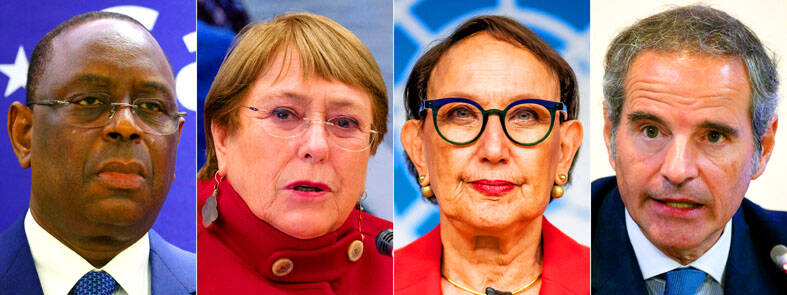
Four contenders are squaring up to succeed Antonio Guterres as secretary-general of the UN, which faces unprecedented global instability, wars and its own crushing budget crisis. Chile’s Michelle Bachelet, Argentina’s Rafael Grossi, Costa Rica’s Rebeca Grynspan and Senegal’s Macky Sall are each to face grillings by 193 member states and non-governmental organizations for three hours today and tomorrow. It is only the second time the UN has held a public question-and-answer, a format created in 2016 to boost transparency. Ultimately the five permanent members of the UN’s top body, the Security Council, hold the power, wielding vetoes over who leads the

A humanoid robot that won a half-marathon race for robots in Beijing on Sunday ran faster than the human world record in a show of China’s technological leaps. The winner from Honor, a Chinese smartphone maker, completed the 21km race in 50 minutes and 26 seconds, said a WeChat post by the Beijing Economic-Technological Development Area, also known as Beijing E-Town, where the race began. That was faster than the human world record holder, Ugandan Jacob Kiplimo, who finished the same distance in about 57 minutes in March at the Lisbon road race. The performance by the robot marked a significant step forward

An earthquake registering a preliminary magnitude of 7.7 off northern Japan on Monday prompted a short-lived tsunami alert and the advisory of a higher risk of a possible mega-quake for coastal areas there. The Cabinet Office and the Japan Meteorological Agency said there was a 1% chance for a mega-quake, compared to a 0.1% chance during normal times, in the next week or so following the powerful quake near the Chishima and Japan trenches. Officials said the advisory was not a quake prediction but urged residents in 182 towns along the northeastern coasts to raise their preparedness while continuing their daily lives. Prime
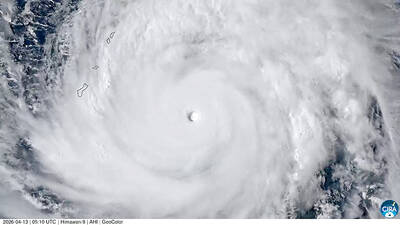
HAZARDOUS CONDITION: The typhoon’s sheer size, with winds extending 443km from its center, slowed down the ability of responders to help communities, an official said The US Coast Guard was searching for six people after losing contact with their disabled boat off the coast of Guam following Typhoon Sinlaku. The crew of the 44m dry cargo vessel, the US-registered Mariana, on Wednesday notified the coast guard that the boat had lost its starboard engine and needed assistance, Petty Officer 3rd Class Avery Tibbets said yesterday. The coast guard set up a one-hour communication schedule with the vessel, but lost contact on Thursday. A Coast Guard HC-130 Hercules aircraft was launched to search for the six people on board, but it had to return to Guam because of


 RSS
RSS