


When Charles Robert Jenkins, the former US soldier who has spent the last 40 years in North Korea, left the communist state yesterday morning, Japanese media were desperate to know if he intended to stay away permanently.
And they got no help from his dog.
In a strange tale made stranger by the obsessive musings of Japanese pundits, the media had unleashed its attention on an unlikely target: the Jenkins family dog.
Jenkins, 64, a North Carolina native who Washington wants to put on trial as a deserter, left Pyongyang with his two grown daughters to be reunited with his Japanese wife in Indonesia.
Japan's media had hoped the family dog might provide the vital clue: if Jenkins brought the dog, he intended to stay for some time in Indonesia. No dog, the reasoning went, and he intended a quick return to Pyongyang.
But just hours before Jenkins was due to arrive at the airport in Pyongyang, and the dog-watching could begin, a newspaper reported that the tell-tale pooch was already dead.
"Both of them are dead of old age," the Yomiuri Shimbun quoted a Japanese government official as saying, referring to the dog and its predecessor.
Jenkins has been a household name in Japan ever since his wife, 45-year-old Hitomi Soga, was released by North Korea two years ago along with four other Japanese abductees.
Jenkins, who met and married Soga in North Korea, had previously refused to join her in Japan for fear he would be handed over to the US for a court martial.
Indonesia, unlike Japan, has no extradition treaty with the US, so the media is speculating the family may live there for some time.
Yomiuri Shimbun said the Japanese government had made preparations in Indonesia in case Jenkins brought the dog.
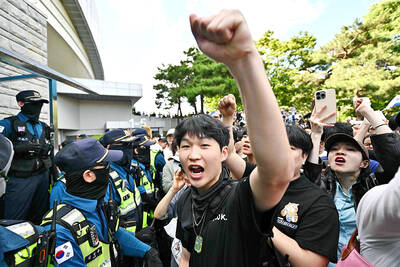
‘ABSURD MISTAKE’: The election commission said that there had been a failure to anticipate turnout after 14 polling stations ran short of ballot papers South Korean riot police yesterday cleared protesters from a Seoul polling station after a 35-hour blockade sparked by a shortage of ballot papers during local elections earlier this week. Wednesday’s election was the first nationwide vote since South Korean President Lee Jae-myung took office following the ouster of Yoon Suk-yeol over his short-lived martial law declaration. Lee’s ruling Democratic Party swept most races, but failed to flip the crucial Seoul mayoral seat. The South Korean National Election Commission apologized, blaming a failure to anticipate turnout after 14 polling stations in Seoul ran short of ballot papers. Some polling stations stayed open until 10pm to

France experienced its hottest spring on record, the French weather service said on Tuesday, after an exceptional early heat wave that also broke highs for the season in England and Wales. Meteo-France said the average nationwide temperature over March to May was 13.8°C — about 1.7°C above the norm, and surpassing records set in 2011 and 2020. “The warmest spring since records began in 1900,” it said in a bulletin. All three months were warmer than average, but the onset of an “unprecedented heatwave” late last month pushed the mercury to highs typically seen at the height of the summer. “Our country had never

A Sherpa guide was found crawling to base camp on Mount Everest a week after he went missing and was reunited with his family, who had given up hope he would return. Dawa Sherpa was last seen on Friday last week descending the mountain, but he did not reach base camp even though his client did. The pair were among the last climbers on the mountain as the climbing season came to an end and the route was dismantled. Dawa was located by a cleaning crew on Thursday morning as he was crawling down the snowy slopes around the Khumbu Icefall, just above
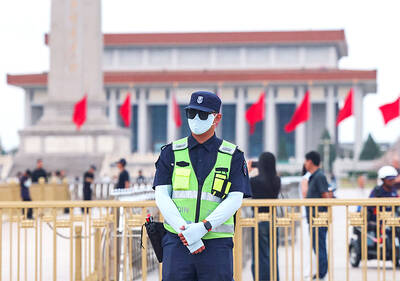
Chinese authorities are snuffing out any remembrance of the deadly 1989 military crackdown on student-led pro-democracy protests in Tiananmen Square, which happened 37 years ago yesterday, in a further tightening of a years-long campaign to erase what happened from public memory. Police told relatives of the victims they would not be allowed to visit a cemetery in Beijing on the anniversary of the crackdown, a person with knowledge of the matter said. Relatives of the victims visited the cemetery on the anniversary for more than 30 years to read memorial statements with police keeping watch, Amnesty International said. Hundreds of people,


 RSS
RSS