


US Secretary of State Colin Powell arrived in Indonesia yesterday to attend a regional security forum which is expected to focus on North Korea's nuclear threat and efforts to fight terror on land and sea.
Powell arrived at a military airbase in the Indonesian capital after a visit to Sudan.
He was to hold talks later yesterday with members of ASEAN and attend today's annual meeting of the 23-member ASEAN Regional Forum (ARF).
ARF, the Asia-Pacific's only security forum, includes all six countries involved in talks aimed at dismantling North Korea's nuclear weapons program -- China, Russia, the US, Japan and North and South Korea.
North Korean Foreign Minister Paek Nam-Sun is willing to meet Powell on the sidelines of the forum if the US side requests it, a Pyongyang official said on Wednesday.
A third round of six-party talks ended on Saturday in Beijing, with signs of flexibility but no concrete progress.
Participants agreed to meet again by the end of September.
At the last round the US put forward a new plan which would give the North three months to shut down and seal its nuclear weapons facilities in return for major economic and diplomatic rewards.
It was the first significant overture to Pyongyang since US President George W. Bush took office in early 2001 and placed Stalinist North Korea on an "axis of evil," alongside Iran and pre-war Iraq.
North Korea rejected the proposal as unrealistic but Washington said it expects the North to study it. Terrorism, including the threat of seaborne attacks in the piracy-prone Malacca Strait, is also expected to figure large on ARF's agenda. The US and Singapore are worried that terrorists could hijack an oil or gas tanker and use it as a floating bomb in a maritime version of Sept. 11.
However, the US recently backed away from suggestions that US forces might help patrol the waterway separating Indonesia, Singapore and Malaysia after it raised hackles in Indonesia and Malaysia.
About half the world's oil supplies pass through the strait.
Forum members will also discuss this week's handover of power in Iraq. ASEAN chair Indonesia, the world's largest Muslim-populated nation, was fiercely critical of the US invasion.
In an implied criticism of the military operation, ASEAN foreign ministers after a meeting on Wednesday described "surging unilateralism" as one of the world's challenges.
Powell will also be at odds with ASEAN on efforts to establish democracy in army-ruled member Myanmar.
The ministers on Wednesday dropped calls made last year for the release of democracy leader Aung San Suu Kyi and merely "underlined the need for the involvement of all strata of Myanmar society in the ongoing national convention" which is drafting a constitution.
Powell will seek more action from ASEAN to bring about democratic reforms, Assistant Secretary of State Lorne Craner said this week.
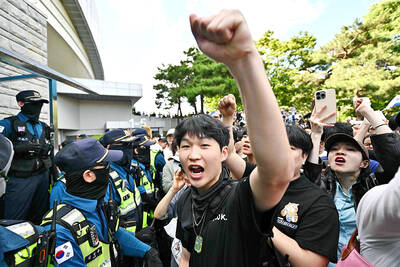
‘ABSURD MISTAKE’: The election commission said that there had been a failure to anticipate turnout after 14 polling stations ran short of ballot papers South Korean riot police yesterday cleared protesters from a Seoul polling station after a 35-hour blockade sparked by a shortage of ballot papers during local elections earlier this week. Wednesday’s election was the first nationwide vote since South Korean President Lee Jae-myung took office following the ouster of Yoon Suk-yeol over his short-lived martial law declaration. Lee’s ruling Democratic Party swept most races, but failed to flip the crucial Seoul mayoral seat. The South Korean National Election Commission apologized, blaming a failure to anticipate turnout after 14 polling stations in Seoul ran short of ballot papers. Some polling stations stayed open until 10pm to

France experienced its hottest spring on record, the French weather service said on Tuesday, after an exceptional early heat wave that also broke highs for the season in England and Wales. Meteo-France said the average nationwide temperature over March to May was 13.8°C — about 1.7°C above the norm, and surpassing records set in 2011 and 2020. “The warmest spring since records began in 1900,” it said in a bulletin. All three months were warmer than average, but the onset of an “unprecedented heatwave” late last month pushed the mercury to highs typically seen at the height of the summer. “Our country had never

A Sherpa guide was found crawling to base camp on Mount Everest a week after he went missing and was reunited with his family, who had given up hope he would return. Dawa Sherpa was last seen on Friday last week descending the mountain, but he did not reach base camp even though his client did. The pair were among the last climbers on the mountain as the climbing season came to an end and the route was dismantled. Dawa was located by a cleaning crew on Thursday morning as he was crawling down the snowy slopes around the Khumbu Icefall, just above
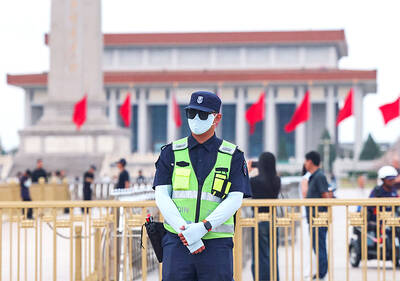
Chinese authorities are snuffing out any remembrance of the deadly 1989 military crackdown on student-led pro-democracy protests in Tiananmen Square, which happened 37 years ago yesterday, in a further tightening of a years-long campaign to erase what happened from public memory. Police told relatives of the victims they would not be allowed to visit a cemetery in Beijing on the anniversary of the crackdown, a person with knowledge of the matter said. Relatives of the victims visited the cemetery on the anniversary for more than 30 years to read memorial statements with police keeping watch, Amnesty International said. Hundreds of people,


 RSS
RSS