


Ukrainian soldiers fired into the air to disperse hundreds of Iraqis who rioted for jobs and food as a second southern Shiite Muslim city was rocked by unrest -- a barometer of rising frustration with the US-led occupation in a region of Iraq considered friendly to the Americans.
Also Monday, a roadside bomb in the capital killed one American soldier and wounded two, officials said, bringing the US death toll in the Iraqi conflict to 495. Large explosions rocked central Baghdad later in the day, but officials reported no casualties.
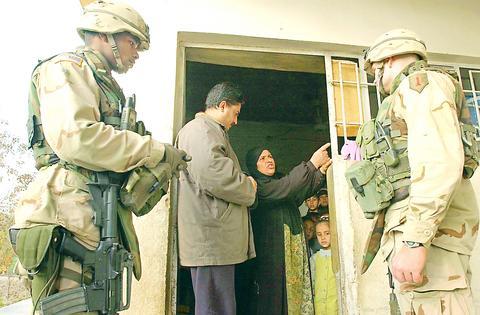
PHOTO: AP
Trouble started in Kut, 150km southeast of Baghdad, when about 400 protesters marched Monday for a third straight day on a government building to demand jobs. Someone in the crowd threw a grenade at police and Ukrainian soldiers guarding the building, injuring four Iraqi policemen and one Ukrainian, according to Lieutenant Zafer Wedad, an Iraqi police official.
The Ukrainians then fired into the air to disperse the crowd, injuring one protester, Wedad said. He said the demonstrators hurled bricks at the building and trashed a post office in the city.
In a similar protest in Amarah on Sunday, waves of protesters rushed British troops guarding the city hall before being pushed back. On Saturday, clashes in Amarah killed six protesters and wounded at least 11.
Unrest in the Shiite areas has spread as the country's leading Shiite cleric, Grand Ayatollah Ali al-Husseini al-Sistani, has spoken out against the US-backed formula for transferring power to the Iraqis.
No details were available about the death of the American soldier in Baghdad. In the late Monday blasts, Iraqi and US security officials said at least two mortars exploded near the Baghdad Hotel in the center of the capital. At least one round exploded in the Tigris River and the other exploded on the river bank, US troops said. There were no casualties, the Americans said.
Also Monday, another roadside bomb exploded near a US Army convoy in Ramadi, a town west of Baghdad, but the military said no US casualties were reported. Residents said two Iraqis were killed when the Americans opened fire after the attack.
Meanwhile, acting on an Iraqi tip, US soldiers shot dead seven of the estimated 40 members of an armed gang allegedly trying to steal oil from a pipeline south of Samarra, 100km north of Baghdad, the Army said Monday.
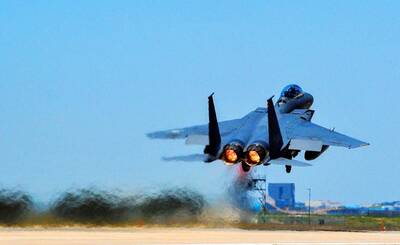
South Korea’s air force yesterday apologized for a 2021 midair collision involving two fighter jets, a day after auditors said the pilots were taking selfies and filming during the flight and held them responsible for the accident. “We sincerely apologize to the public for the concern caused by the accident that occurred in 2021,” an air force spokesman told a news conference, adding that one of the pilots involved had been suspended from flying duties, received severe disciplinary action and has since left the military. The apology followed a report released on Wednesday by the South Korean Board of Audit and Inspection,

Indonesian police have arrested 13 people after shocking images of alleged abuse against small children at a daycare center went viral, sparking outrage across the nation, officials said on Monday. Police on Friday last week raided Little Aresha, a daycare center in Yogyakarta on Java island, following a report from a former employee. CCTV footage circulating on social media showed children, most younger than two, lying on the floor wearing only diapers, their hands and feet bound with rags. The police have confirmed that the footage is authentic. Police said they also found 20 children crammed into a room just 3m by 3m. “So

About 240 Indians claiming descent from a Biblical tribe landed at Tel Aviv airport on Thursday as part of a government operation to relocate them to Israel. The newcomers passed under a balloon arch in blue and white, the colors of the Israeli flag, as dozens of well-wishers welcomed them with a traditional Jewish song. They were the first “bnei Menashe” (“sons of Manasseh”) to arrive in Israel since the government in November last year announced funding for the immigration of about 6,000 members of the community from the states of Manipur and Mizoram in northeast India. The community claims to descend from

‘TROUBLING’: The firing of Phelan, who was an adviser to a nonprofit that supported the defense of Taiwan, was another example of ‘dysfunction’ under Trump, a US senator said US Secretary of the Navy John Phelan has been fired, a US official and a person familiar with the matter said on Wednesday, in another wartime shakeup at the Pentagon coming just weeks after US Secretary of Defense Pete Hegseth ousted the Army’s top general. The Pentagon announced his departure in a brief statement, saying he was leaving the administration “effective immediately,” but it did not provide a reason or say whether it was his decision to go. The sources, who spoke on condition of anonymity, said Phelan was dismissed in part because he was moving too slowly to implement reforms to


 RSS
RSS