


Two years ago, a 16-year-old high school girl who lived near here was hospitalized with a high fever. After doctors found that she had an acute case of genital herpes, she told her parents that her teacher had had sex with her.
When approached by the parents, the teacher denied the claim, warning them that their daughter would be expelled if they reported him.
Experts say molestation and statutory rape are commonplace in schools across Japan, and that victims rarely come forward. To do so would violate a host of powerful social conventions, said Akiko Kamei, a retired teacher who is the country's only nationally known expert in classroom sexual abuse.
"In Japan there is a rape myth, which says that the victim of a rape is always to blame," Kamei said. "Moreover, women are told that if you suffer molestation or groping, you have to be ashamed. If you talk about it to anyone else, you are going to be tainted for the rest of your life."
Beyond that, even when they are identified and caught, molesters rarely receive more than a slap on the wrist.
Speaking at a public symposium, a member of Parliament, Seiichi Ota, recently made light of reports of gang rapes at a Tokyo university. "Boys who commit group rape are in good shape," Ota said. "I think they are rather normal. Whoops, I shouldn't have said that." (The legislator's comments were carried in many Japanese newspapers.)
Recently, however, the public tolerance for rape has begun to change as a handful of victims or their families have pressed charges against classroom molesters. The mother of the girl infected with herpes, for example, went to the police, which led not only to the dismissal of the 49-year-old teacher, but to a one-year prison sentence for him as well.
In an interview about the incident, the mother requested anonymity. She said that if her identity were revealed, she would be ostracized and could even lose her job.
As if to underline the family's concern, the daughter has left Japan, fleeing the taunts of fellow students and the cold shoulder of teachers at her former school.
"Whose interests would it serve for us to go public?" said the mother, who asked not only that her name not be used, but that the name of her town, which is near Hayato, in western Japan, not be revealed. "We would have liked to receive solidarity from other people, but that is not how it works in Japan."
This reality was vividly demonstrated in another recent molestation case in Osaka, where a 13-year-old girl insisted, against her parents' advice, on bringing charges against a 51-year-old teacher. In February, the man was fired and given a two-year prison sentence for fondling the girl in a school office, though more than 40 teachers, friends and colleagues signed a petition requesting leniency.
The victim's best friend told her she had ruined the teacher's life, according to one newspaper, The Mainichi Shimbun. When the girl answered that it was the other way around, the classmate replied: "Well, you are young. You have a second chance."
The victim told the court that after the teacher's arrest she became an object of ridicule.
"When I was at a supermarket, I was surrounded by some senior students I had never spoken to before," she said, according to the newspaper account. "They shouted, `That's the sexually harassed one!' and laughed at me."
Kamei, who published books on sexual abuse under a pseudonym while she was a teacher, came to her field more than a decade ago, when an alarmed mother approached her to say that her 8-year-old girl was masturbating. It emerged that a teacher had been fondling the girl.
Kamei said that at the time, she and the mother merely insisted that the teacher be sent to another school. "Even today, if a prosecutor fails to bring an indictment, the teacher is completely off the hook," she said. "Even after administrative dismissal, some of these teachers find work in other schools in other districts, or even as volunteers with children, although some people estimate there is an almost 100 percent chance of recidivism."
There are no generally accepted statistics on classroom sexual abuse in Japan. According to figures compiled by the Education Ministry, which parents and advocates for victims say reflect vast underreporting, there were 27 cases of molestation by teachers in 1992, a number that included cases in which teachers themselves were victims.
By 2001, the most recent year for which statistics are available, the number of reported cases had risen to 122.
In Tokyo, an Education Ministry official minimized the extent of the problem.
"Compared to other issues such as bullying, truancy and school violence, the rate of incidence is not so high," said Yoshiyasu Tanaka. "Of course I don't think the official reporting shows everything, but still, this is not something that occurs in every school, whereas problems like bullying occur almost everywhere."

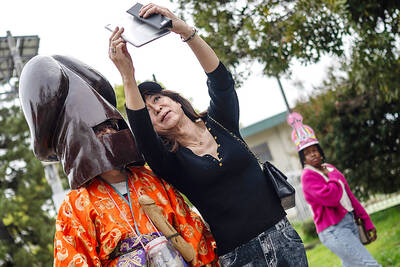
Showcasing phallus-shaped portable shrines and pink penis candies, Japan’s annual fertility festival yesterday teemed with tourists, couples and families elated by its open display of sex. The spring Kanamara Matsuri near Tokyo features colorfully dressed worshipers carrying a trio of giant phallic-shaped objects as they parade through the street with glee. The festival, as legend has it, honors a local blacksmith in the Edo Period (1603-1868) who forged an iron dildo to break the teeth of a sharp-toothed demon inhabiting a woman’s vagina that had been castrating young men on their wedding nights. A 1m black steel phallus sits in the courtyard of

JAN. 1 CLAUSE: As military service is voluntary, applications for permission to stay abroad for over three months for men up to age 45 must, in principle, be granted A little-noticed clause in sweeping changes to Germany’s military service policy has triggered an uproar after it emerged that the law requires men aged up to 45 to get permission from the armed forces before any significant stay abroad, even in peacetime. The legislation, which went into effect on Jan. 1 aims to bolster the military and demands all 18-year-old men fill out a questionnaire to gauge their suitability to serve in the armed forces, but stops short of conscription. If the “modernized” model fails to pull in enough recruits, parliament will be compelled to discuss the reintroduction of compulsory service, German
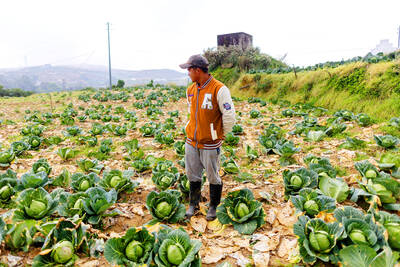
Filipino farmers like Romeo Wagayan have been left with little choice but to let their vegetables rot in the field rather than sell them at a loss, as rising oil prices linked to the Iran war drive up the cost of harvesting, labor and transport. “There’s nothing we can do,” said Wagayan, a 57-year old vegetable farmer in the northern Philippine province of Benguet. “If we harvest it, our losses only increase because of labor, transportation and packing costs. We don’t earn anything from it. That’s why we decided not to harvest at all,” he said. Soaring costs caused by the Middle East

Hungarian Prime Minister Viktor Orban’s officially declared wealth is fairly modest: some savings and a jointly owned villa in Budapest. However, voters in what Transparency International deems the EU’s most corrupt country believe otherwise — and they might make Orban pay in a general election this Sunday that could spell an end to his 16-year rule. The wealth amassed by Orban’s inner circle is fueling the increasingly palpable frustration of a population grappling with sluggish growth, high inflation and worsening public services. “The government’s communication machine worked well as long as our economic situation remained relatively good,” said Zoltan Ranschburg, a political analyst


 RSS
RSS