


Citizen Congress Watch (CCW) yesterday met with Legislative Speaker You Si-kun (游錫堃) to push for increased transparency and professionalism in the Legislative Yuan, the legislative watchdog said.
You said that the legislature could consider developing an improved version of the Parliament Broadcast IVOD service, which provides live broadcasts of legislative sessions, as well as archived recordings of past sessions.
The most important issue discussed at the meeting was the need for legislative professionalism, and the legislature’s right of consent to the appointment of personnel, You said.

Photo: Peter Lo, Taipei Times
The group’s hope that budgets could be examined within the legally stipulated time frame, and that the legislature could enact legislation to ensure this happens were good suggestions and would be taken into consideration, he said.
Asked whether he could improve the legislature or its public image during his time in office, You said he would continue to build on the foundation of reform that his predecessor, Su Jia-chyuan (蘇嘉全), started to promote when he was in office.
You said he had asked Legislative Yuan Secretary-General Lin Chih-chia (林志嘉) to look into improving the parliamentary broadcast service.
CCW director-general Wu Kun-lu (吳鯤魯) thanked You for working toward the realization of the group’s goals.
The broadcast service had been watched by more than 200 million viewers, and it has been very helpful for Taiwanese living abroad to feel connected with the nation and to keep them up-to-date on national issues, Wu said.
The group hopes that even more substantial content could be made accessible through the service’s Web site, Wu said.
“Without a good legislature, there is no good nation,” Wu said, adding that he hoped the legislature would continue working toward national reform.
Many companies and people have been reluctant or unable to donate to different causes because of concern over the COVID-19 outbreak, Wu said, adding that he hoped the public would continue to support the organization, which has been supervising the legislature since 1987.
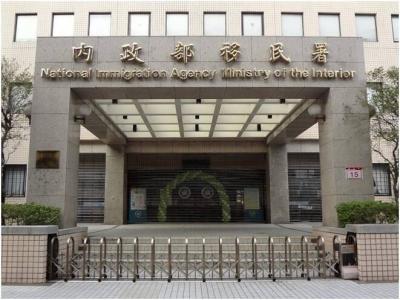
A small number of Taiwanese this year lost their citizenship rights after traveling in China and obtaining a one-time Chinese passport to cross the border into Russia, a source said today. The people signed up through Chinese travel agencies for tours of neighboring Russia with companies claiming they could obtain Russian visas and fast-track border clearance, the source said on condition of anonymity. The travelers were actually issued one-time-use Chinese passports, they said. Taiwanese are prohibited from holding a Chinese passport or household registration. If found to have a Chinese ID, they may lose their resident status under Article 9-1

Taiwanese were praised for their composure after a video filmed by Taiwanese tourists capturing the moment a magnitude 7.5 earthquake struck Japan’s Aomori Prefecture went viral on social media. The video shows a hotel room shaking violently amid Monday’s quake, with objects falling to the ground. Two Taiwanese began filming with their mobile phones, while two others held the sides of a TV to prevent it from falling. When the shaking stopped, the pair calmly took down the TV and laid it flat on a tatami mat, the video shows. The video also captured the group talking about the safety of their companions bathing

PROBLEMATIC APP: Citing more than 1,000 fraud cases, the government is taking the app down for a year, but opposition voices are calling it censorship Chinese Nationalist Party (KMT) Chairwoman Cheng Li-wun (鄭麗文) yesterday decried a government plan to suspend access to Chinese social media platform Xiaohongshu (小紅書) for one year as censorship, while the Presidential Office backed the plan. The Ministry of the Interior on Thursday cited security risks and accusations that the Instagram-like app, known as Rednote in English, had figured in more than 1,700 fraud cases since last year. The company, which has about 3 million users in Taiwan, has not yet responded to requests for comment. “Many people online are already asking ‘How to climb over the firewall to access Xiaohongshu,’” Cheng posted on

A classified Pentagon-produced, multiyear assessment — the Overmatch brief — highlighted unreported Chinese capabilities to destroy US military assets and identified US supply chain choke points, painting a disturbing picture of waning US military might, a New York Times editorial published on Monday said. US Secretary of Defense Pete Hegseth’s comments in November last year that “we lose every time” in Pentagon-conducted war games pitting the US against China further highlighted the uncertainty about the US’ capability to intervene in the event of a Chinese invasion of Taiwan. “It shows the Pentagon’s overreliance on expensive, vulnerable weapons as adversaries field cheap, technologically


 RSS
RSS