


The annual Taiwan International Festival of the Arts (TIFA), which was scheduled to open on Friday, has suffered its first hit from the COVID-19 outbreak, with two international companies canceling their trips to Taiwan and a local food-centric production being postponed until later this year.
The National Theater Concert Hall (NTCH) yesterday morning announced that two dance troupes, Michael Keegan-Dolan’s Teac Damsa from Ireland and the London-based Candoco Dance Company, had been unable to obtain the necessary overseas performance insurance to cover their trips to Taipei.
They had also been concerned that their future tour itineraries might be affected by other nations’ disease prevention or quarantine restrictions, and so, after talks with the NTCH, they decided to cancel their Taiwan debuts.

Photo courtesy of the National Theater Concert Hall
Teac Damsa had been scheduled to give three performances of Keegan-Dolan’s Swan Lake and Loch na hEala at the National Theater starting on Friday night, while Candoco was to perform Yasmeen Godder’s Face In and Hetain Patel’s Let’s Talk About Dis from March 20 to March 22 in the National Experimental Theater.
The outdoor launch party for this year’s TIFA was to be three free performances on Friday of Taiwanese playwright-director Fan Chung-chi’s (樊宗錡) Bando (十二碗菜歌), a musical incorporating traditional banquet catering, with snacks provided to audience members, in the main plaza between the National Theater and the Concert Hall.
Given concerns that sharing food has a high risk of viral transmission, organizers decided to postponed the production until the fall.
The National Kaohsiung Center for the Arts (Weiwuying) announced that next weekend’s two shows of American choreographer William Forsythe’s A Quiet Evening of Dance have also been canceled due to COVID-19 concerns.
The production had been scheduled for two stops in Asia on its current world tour — Hong Kong for a show on Thursday and then Kaohsiung.
It lost the Hong Kong show when the entire month-long Hong International Art Festival was scrapped on Feb. 10 due to the COVID-19 outbreak in China, with the territory’s government postponing most of its large performance venues.
The NTCH and Weiwuying said that tickets for the canceled shows are refundable.
The National Performing Arts Center, the umbrella organization for the NTCH, Weiwuying and the National Taichung Theater, previously said that it is taking disease-prevention precautions at all of its venues, with employees required to have their temperatures taken daily and frontline staff to wear masks while on duty, while disinfection measures are being increased.
Audience members are required to have their temperatures taken before entering a venue, so they are encouraged to factor this into their arrival plans. They are also encouraged to wear masks.
Earlier this month the TaipeiEYE, a small Taipei theater that produces traditional Beijing opera, puppet and acrobatic shows for tourists, announced that it was canceling all of its shows through Feb. 25 and offering full refunds to ticket holders.
Information on the resumption of shows will be posted on its Web site and Facebook page, it said.
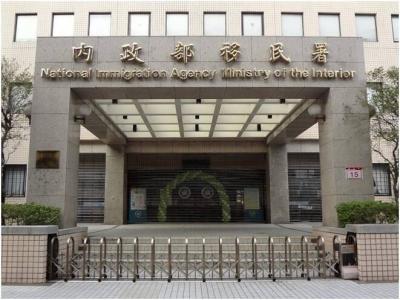
A small number of Taiwanese this year lost their citizenship rights after traveling in China and obtaining a one-time Chinese passport to cross the border into Russia, a source said today. The people signed up through Chinese travel agencies for tours of neighboring Russia with companies claiming they could obtain Russian visas and fast-track border clearance, the source said on condition of anonymity. The travelers were actually issued one-time-use Chinese passports, they said. Taiwanese are prohibited from holding a Chinese passport or household registration. If found to have a Chinese ID, they may lose their resident status under Article 9-1
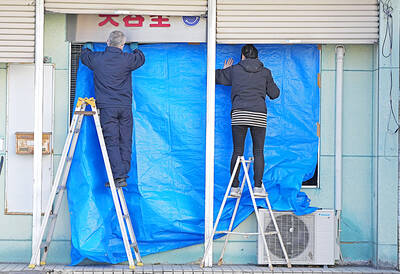
Taiwanese were praised for their composure after a video filmed by Taiwanese tourists capturing the moment a magnitude 7.5 earthquake struck Japan’s Aomori Prefecture went viral on social media. The video shows a hotel room shaking violently amid Monday’s quake, with objects falling to the ground. Two Taiwanese began filming with their mobile phones, while two others held the sides of a TV to prevent it from falling. When the shaking stopped, the pair calmly took down the TV and laid it flat on a tatami mat, the video shows. The video also captured the group talking about the safety of their companions bathing

PROBLEMATIC APP: Citing more than 1,000 fraud cases, the government is taking the app down for a year, but opposition voices are calling it censorship Chinese Nationalist Party (KMT) Chairwoman Cheng Li-wun (鄭麗文) yesterday decried a government plan to suspend access to Chinese social media platform Xiaohongshu (小紅書) for one year as censorship, while the Presidential Office backed the plan. The Ministry of the Interior on Thursday cited security risks and accusations that the Instagram-like app, known as Rednote in English, had figured in more than 1,700 fraud cases since last year. The company, which has about 3 million users in Taiwan, has not yet responded to requests for comment. “Many people online are already asking ‘How to climb over the firewall to access Xiaohongshu,’” Cheng posted on

A classified Pentagon-produced, multiyear assessment — the Overmatch brief — highlighted unreported Chinese capabilities to destroy US military assets and identified US supply chain choke points, painting a disturbing picture of waning US military might, a New York Times editorial published on Monday said. US Secretary of Defense Pete Hegseth’s comments in November last year that “we lose every time” in Pentagon-conducted war games pitting the US against China further highlighted the uncertainty about the US’ capability to intervene in the event of a Chinese invasion of Taiwan. “It shows the Pentagon’s overreliance on expensive, vulnerable weapons as adversaries field cheap, technologically


 RSS
RSS