


A Taiwanese businessman drove hundreds of kilometers from a city in the Chinese province of Hubei that is sealed off due to the 2019 novel coronavirus outbreak to pick up medicine for a Taiwanese child with hemophilia trapped in the city.
Chien Chun-nan (簡俊男), head of the association of Taiwanese businesspeople in Hubei’s Jingmen, on Sunday helped the Taipei-based Straits Exchange Foundation (SEF) deliver the medicine, SEF Vice Chairman Yao Jen-to (姚人多) said on Facebook yesterday.
“Just now, Chien of the Jingmen Taiwan business association successfully handed the shots of hemophilia medicine to the mother” of the sick child, Yao wrote.
He thanked many people — especially leaders of Taiwanese business associations — for completing the “thousand mile” drug delivery mission.
Yao said that after receiving an appeal from the parents in Hubei, the center of the outbreak, the SEF asked Chien if he could pick up the medicine delivered from Taiwan to Zhengzhou in Henan Province, 500km from Jingmen.
After learning about the urgent need, Chien promised he would do everything in his power to help.
“If necessary, I will go to Zhengzhou myself,” Yao quoted Chien as saying, adding that it was that promise that made the mission possible.
Under time pressure, one of his SEF colleagues volunteered to deliver the medicine from Kaohsiung to Taiwan Taoyuan International Airport, where Mandarin Airlines agreed to ship it to Zhengzhou on Sunday, Yao said, thanking the Taiwanese carrier for helping.
Soon after the airplane arrived in Zhengzhou, the Taiwan business association in the city had someone pick up the medicine at the airport and drive to the provincial border to hand it to Chien, who was waiting there, Yao added.
Under China’s stringent anti-epidemic border controls, no vehicles in Henan are allowed to cross into other provinces, he said.
Chien then drove back to Jingmen to deliver the medicine to the mother, by which time it was already several minutes past midnight, Yao wrote, adding that after the trip Chien had to drive another 120km home.
Yao said most leaders of Taiwanese business associations in China are like Chien, prepared to spare no effort to help their compatriots in need.
“Thank you all. I want to deliver my heartfelt thanks to the Taiwanese businesspeople who helped their compatriots in China during this challenging time,” he wrote.
According to the SEF, the father of the hemophiliac appealed for help on Jan. 27, saying that his wife and child flew to Jingmen for a family reunion on Jan. 19, five days before the city was sealed off amid the outbreak.
The father, a Kaohsiung resident, said that his son is a severe hemophiliac and needs weekly shots of an innovative medicine to prevent hemorrhaging.
The medicine is not available in China and his son had only one last dose left for Sunday, SEF officials said in a news release yesterday.
The mother and son were not included on a chartered flight commissioned to evacuate Taiwanese from Wuhan back to Taiwan on Monday last week.
The flight, which carried 247 people, has been criticized by some for prioritizing not those in need, but people with privilege.
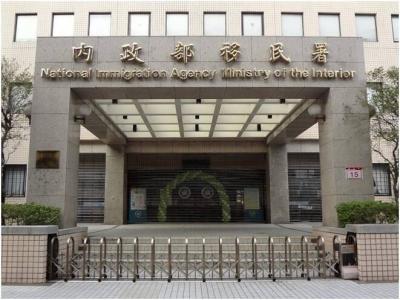
A small number of Taiwanese this year lost their citizenship rights after traveling in China and obtaining a one-time Chinese passport to cross the border into Russia, a source said today. The people signed up through Chinese travel agencies for tours of neighboring Russia with companies claiming they could obtain Russian visas and fast-track border clearance, the source said on condition of anonymity. The travelers were actually issued one-time-use Chinese passports, they said. Taiwanese are prohibited from holding a Chinese passport or household registration. If found to have a Chinese ID, they may lose their resident status under Article 9-1
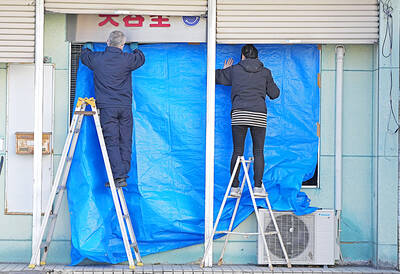
Taiwanese were praised for their composure after a video filmed by Taiwanese tourists capturing the moment a magnitude 7.5 earthquake struck Japan’s Aomori Prefecture went viral on social media. The video shows a hotel room shaking violently amid Monday’s quake, with objects falling to the ground. Two Taiwanese began filming with their mobile phones, while two others held the sides of a TV to prevent it from falling. When the shaking stopped, the pair calmly took down the TV and laid it flat on a tatami mat, the video shows. The video also captured the group talking about the safety of their companions bathing

PROBLEMATIC APP: Citing more than 1,000 fraud cases, the government is taking the app down for a year, but opposition voices are calling it censorship Chinese Nationalist Party (KMT) Chairwoman Cheng Li-wun (鄭麗文) yesterday decried a government plan to suspend access to Chinese social media platform Xiaohongshu (小紅書) for one year as censorship, while the Presidential Office backed the plan. The Ministry of the Interior on Thursday cited security risks and accusations that the Instagram-like app, known as Rednote in English, had figured in more than 1,700 fraud cases since last year. The company, which has about 3 million users in Taiwan, has not yet responded to requests for comment. “Many people online are already asking ‘How to climb over the firewall to access Xiaohongshu,’” Cheng posted on

A classified Pentagon-produced, multiyear assessment — the Overmatch brief — highlighted unreported Chinese capabilities to destroy US military assets and identified US supply chain choke points, painting a disturbing picture of waning US military might, a New York Times editorial published on Monday said. US Secretary of Defense Pete Hegseth’s comments in November last year that “we lose every time” in Pentagon-conducted war games pitting the US against China further highlighted the uncertainty about the US’ capability to intervene in the event of a Chinese invasion of Taiwan. “It shows the Pentagon’s overreliance on expensive, vulnerable weapons as adversaries field cheap, technologically


 RSS
RSS