


Checking one’s weight daily and exercising more are two good ways to control or lose weight after the holidays, experts said, while cautioning people to avoid overexercising.
A telephone survey conducted by the Health Promotion Administration (HPA) in 2016 showed that 39 percent of respondents gained an average of 1.7kg after indulging during the Lunar New Year holiday.
While “eating less and exercising more” and “changing to a healthier lifestyle” are tried and tested formulas for controlling body weight, there is a study-proven “trick” to help prevent holiday weight gain, HPA Health Education and Tobacco Control Division head Lo Su-ying (羅素英) said.
“Weighing oneself daily could prevent a person from gaining weight during the holiday,” she said.
A US study published last year showed that most people gained between 0.4kg and 1.5kg during the holiday season — from Thanksgiving to New Year’s Day — and holiday weight was the major contributor to annual excess weight gain, Lo said.
Participants who were asked to weigh themselves daily maintained their weight after the holiday season, while some who were overweight even lost weight, but most of those who did not weigh themselves gained weight, Lo said.
The study suggests that increasing individual awareness of body weight could be an effective way to prevent holiday weight gain, encouraging people to watch their food intake more carefully or exercise a little more, she said.
The HPA recommends adults exercise for at least 30 minutes every day, or take at least 150 minutes of moderate-to-vigorous-intensity physical activity per week.
The 30-minute workouts can be broken down into smaller segments throughout the day, with each session lasting at least 10 minutes, it said.
People doing vigorous-intensity activity for more than 10 minutes usually would not be able to chat with others without pausing for breath, while those doing moderate-intensity activity would be able to talk, but not sing, it said.
Low-intensity activity should not count in the 150 minutes per week exercise, it said.
Taipei Municipal Hospital Heping Branch Division of Disaster Medicine director Kuo Chung-tai (郭鐘太) said that while most people know exercise is good for their health, some do not know how to evaluate their physical condition being doing workouts and might try to challenge or go over their limit.
“If you start experiencing symptoms such as shortness of breath, dizziness or heat exhaustion while working out, then it is a sign you should stop,” he said.
“People should consider their physical condition and environment when doing exercises,” Kuo said.
Older people should be more cautious and say “no” if they feel ill or unprepared before a workout, such as if they feel exhausted, have a cold or when there is a drastic change in the weather, he said.
Aerobics and strength training are good for improving physical fitness, but people should be aware of their limits, as some injuries can cause irreversible damage, he said.
“Cardiovascular events are the most critical situations to deal with in the emergency room, as the heart can change drastically in just a few minutes, which might result in sudden death,” Kuo said, adding that the first 10 minutes are crucial in saving a life if the person’s heart suddenly stops beating.
People ought to be aware of their safety limits when exercising to prevent getting injured when pushing for maximum results, he said.
The HPA has a simplified physical activity readiness questionnaire for people aged 15 to 69 to evaluate their safety limits, referenced from the Physical Activity Readiness Questionnaire by the Canadian Society for Exercise Physiology, Kuo said.
It includes questions such as: Have you felt pressure in your chest during daily or physical activities? Have you felt lightheadedness, dizziness, or loss of consciousness during physical activity? Has a physician told you to avoid certain types of physical activity due to heart problems?
People who answered yes to one or more questions are advised to consult a doctor before modifying or increasing their workout levels, while people who are pregnant, or have a cold or fever, are advised to avoid intensifying their workouts.
The HPA also recommends doing the proper amount of exercise regularly rather than doing too much at once or pushing beyond one’s physiological limit, to avoid injuries, overexhaustion or loss of confidence in doing exercise.
It also advises people to monitor their exercise intensity by using heart-rate monitoring devices, doing warm-up exercises for five to 10 minutes before a workout and cool-down exercises for 10 to 15 minutes after a workout, as well as stopping to rest when they feel uncomfortable during a workout and seeing a doctor if the discomfort or pain continues.
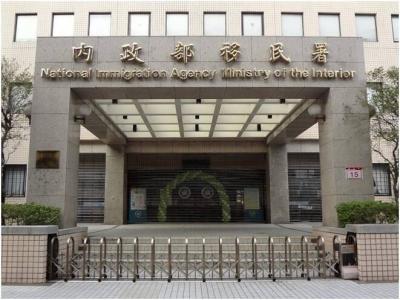
A small number of Taiwanese this year lost their citizenship rights after traveling in China and obtaining a one-time Chinese passport to cross the border into Russia, a source said today. The people signed up through Chinese travel agencies for tours of neighboring Russia with companies claiming they could obtain Russian visas and fast-track border clearance, the source said on condition of anonymity. The travelers were actually issued one-time-use Chinese passports, they said. Taiwanese are prohibited from holding a Chinese passport or household registration. If found to have a Chinese ID, they may lose their resident status under Article 9-1
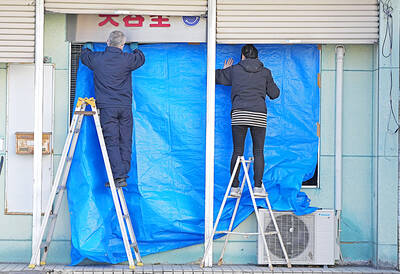
Taiwanese were praised for their composure after a video filmed by Taiwanese tourists capturing the moment a magnitude 7.5 earthquake struck Japan’s Aomori Prefecture went viral on social media. The video shows a hotel room shaking violently amid Monday’s quake, with objects falling to the ground. Two Taiwanese began filming with their mobile phones, while two others held the sides of a TV to prevent it from falling. When the shaking stopped, the pair calmly took down the TV and laid it flat on a tatami mat, the video shows. The video also captured the group talking about the safety of their companions bathing

PROBLEMATIC APP: Citing more than 1,000 fraud cases, the government is taking the app down for a year, but opposition voices are calling it censorship Chinese Nationalist Party (KMT) Chairwoman Cheng Li-wun (鄭麗文) yesterday decried a government plan to suspend access to Chinese social media platform Xiaohongshu (小紅書) for one year as censorship, while the Presidential Office backed the plan. The Ministry of the Interior on Thursday cited security risks and accusations that the Instagram-like app, known as Rednote in English, had figured in more than 1,700 fraud cases since last year. The company, which has about 3 million users in Taiwan, has not yet responded to requests for comment. “Many people online are already asking ‘How to climb over the firewall to access Xiaohongshu,’” Cheng posted on

A classified Pentagon-produced, multiyear assessment — the Overmatch brief — highlighted unreported Chinese capabilities to destroy US military assets and identified US supply chain choke points, painting a disturbing picture of waning US military might, a New York Times editorial published on Monday said. US Secretary of Defense Pete Hegseth’s comments in November last year that “we lose every time” in Pentagon-conducted war games pitting the US against China further highlighted the uncertainty about the US’ capability to intervene in the event of a Chinese invasion of Taiwan. “It shows the Pentagon’s overreliance on expensive, vulnerable weapons as adversaries field cheap, technologically


 RSS
RSS