


The Chinese Communist Party (CCP) is likely to continue its carrot-and-stick approach toward Taiwan, but would become more polarizing, the Institute for National Defense and Security Research think tank said in a report last week.
The CCP would likely adopt the same approach in its Taiwan policies in the near future, only with even more polarizing policies, such as introducing more “soft approaches” to appeal to Taiwanese, while simultaneously rolling out “hard approaches” by stepping up efforts to squeeze Taiwan’s international space and conducting more military drills near China’s southeastern coast, the report said.
National security agencies in October last year found that China had attempted to interfere with the Jan. 11 presidential and legislative elections by poaching diplomatic allies, limiting Chinese tourism and heightening military threats, the report said.

Photo: Tu Chu-min, Taipei Times
Other moves included the China-based Association of Taiwan Investment Enterprises on the Mainland placing newspaper adverts opposing the Anti-infiltration Act (反滲透法) and subsidizing Taiwanese businesspeople in China about NT$6,500 per person for airplane tickets to Taiwan so they could vote for candidates favored by China, the report said.
However, President Tsai Ing-wen’s (蔡英文) landslide re-election and the Democratic Progressive Party’s continued legislative majority show that China’s aggressive attitude sparked a backlash in Taiwan and its political interference failed, the report said.
That Beijing is sticking to its script suggests that it is ignorant of the strong sentiment in Taiwan against Chinese President Xi Jinping’s (習近平) “one county, two systems” formula, it said.
After the pro-democracy camp won a large share of the Hong Kong district council elections in November last year and former Liaison Office of the Central People’s Government in Hong Kong director Wang Zhimin (王志民) was replaced on Jan. 4, Beijing would examine its agencies in charge of “Taiwan affairs,” which would be held accountable for failing to stay abreast of and influence public opinion here, the report said.
In related news, photographs of the Chinese People’s Liberation Army simulating a military operation on a command center on Sunday circulated on Chinese social media.
The photos showed operations at sites apparently modeled after places in Penghu County and southern Taiwan.
The Ministry of National Defense yesterday said that it shoulders responsibility for national security and it would respond promptly to any threat to regional security.
As the Chinese government has neither confirmed nor denied the authenticity of the images, ministry officials said that it would treat the situation seriously.
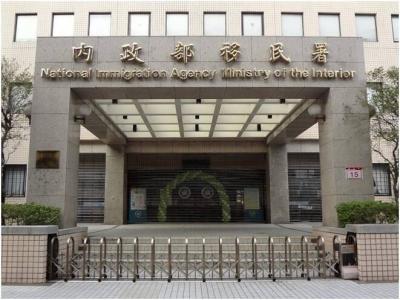
A small number of Taiwanese this year lost their citizenship rights after traveling in China and obtaining a one-time Chinese passport to cross the border into Russia, a source said today. The people signed up through Chinese travel agencies for tours of neighboring Russia with companies claiming they could obtain Russian visas and fast-track border clearance, the source said on condition of anonymity. The travelers were actually issued one-time-use Chinese passports, they said. Taiwanese are prohibited from holding a Chinese passport or household registration. If found to have a Chinese ID, they may lose their resident status under Article 9-1

Taiwanese were praised for their composure after a video filmed by Taiwanese tourists capturing the moment a magnitude 7.5 earthquake struck Japan’s Aomori Prefecture went viral on social media. The video shows a hotel room shaking violently amid Monday’s quake, with objects falling to the ground. Two Taiwanese began filming with their mobile phones, while two others held the sides of a TV to prevent it from falling. When the shaking stopped, the pair calmly took down the TV and laid it flat on a tatami mat, the video shows. The video also captured the group talking about the safety of their companions bathing

PROBLEMATIC APP: Citing more than 1,000 fraud cases, the government is taking the app down for a year, but opposition voices are calling it censorship Chinese Nationalist Party (KMT) Chairwoman Cheng Li-wun (鄭麗文) yesterday decried a government plan to suspend access to Chinese social media platform Xiaohongshu (小紅書) for one year as censorship, while the Presidential Office backed the plan. The Ministry of the Interior on Thursday cited security risks and accusations that the Instagram-like app, known as Rednote in English, had figured in more than 1,700 fraud cases since last year. The company, which has about 3 million users in Taiwan, has not yet responded to requests for comment. “Many people online are already asking ‘How to climb over the firewall to access Xiaohongshu,’” Cheng posted on

A classified Pentagon-produced, multiyear assessment — the Overmatch brief — highlighted unreported Chinese capabilities to destroy US military assets and identified US supply chain choke points, painting a disturbing picture of waning US military might, a New York Times editorial published on Monday said. US Secretary of Defense Pete Hegseth’s comments in November last year that “we lose every time” in Pentagon-conducted war games pitting the US against China further highlighted the uncertainty about the US’ capability to intervene in the event of a Chinese invasion of Taiwan. “It shows the Pentagon’s overreliance on expensive, vulnerable weapons as adversaries field cheap, technologically


 RSS
RSS