


The third phase of government-funded flu vaccinations started yesterday, the Centers for Disease Control (CDC) said, urging pregnant women, government health workers and others who are eligible for the free vaccinations to get their shots before the Lunar New Year holiday.
The final round of free vaccinations is available for adults aged 50 to 64; pregnant women and parents of infants younger than six months old; caretakers at long-term care centers and nursing homes; workers at health departments and disease prevention agencies; childcare facility and nursery employees; and poultry, livestock and animal disease prevention workers, the CDC said.
People with rare diseases, catastrophic illness, high-risk chronic diseases or a body mass index of 30 and more, are also eligible, it added.
The government-funded quadrivalent vaccine, provided in three phases to people in higher-risk categories starting from Nov. 15 last year, protects against two strains of influenza A — H1N1 and H3N2 — and two strains of influenza B — the Yamagata and Victoria lineages, it said.
The first round of shots focused on elementary to high-school students and medical professionals, and the second phase expanded to include preschool children and older people.
The CDC statistics showed that 109,827 hospital visits for flu-like illness were reported last week, which was 8.1 percent more than the previous week.
Among 62 serious cases of flu-related complications reported last week, 59 were infected with the H1N1 virus, 18 cases (29 percent) were people aged 50 to 64 and the youngest case was a nine-month-old, CDC Deputy Director-General Philip Lo (羅一鈞) said on Tuesday.
Records showed that middle-aged people have lower vaccination rates, but are also at risk of serious complications from the flu, he said.
All eligible recipients, especially middle-aged people, should be vaccinated, and only under two conditions should they avoid getting vaccinated, Taipei City Hospital’s Renai Branch Community Integrated Care Division director Wu Tai-yin (吳岱穎) said yesterday.
“The two conditions are: having had serious adverse reaction after getting vaccinated or having a serious allergic reaction to a certain ingredient in the vaccine, and having an acute severe illness or a fever,” Wu said. “People with mild cold symptoms who do not hav a fever are still advised to get vaccinated.”
As of Sunday, about 3.38 million government-funded vaccines have been administered, with about 1.24 million vaccines unused, and the last batch of about 1.42 million vaccines would be dispatched to local healthcare facilities today, he added.
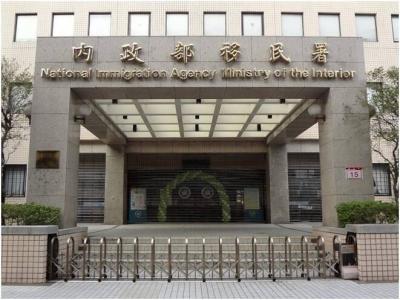
A small number of Taiwanese this year lost their citizenship rights after traveling in China and obtaining a one-time Chinese passport to cross the border into Russia, a source said today. The people signed up through Chinese travel agencies for tours of neighboring Russia with companies claiming they could obtain Russian visas and fast-track border clearance, the source said on condition of anonymity. The travelers were actually issued one-time-use Chinese passports, they said. Taiwanese are prohibited from holding a Chinese passport or household registration. If found to have a Chinese ID, they may lose their resident status under Article 9-1

Taiwanese were praised for their composure after a video filmed by Taiwanese tourists capturing the moment a magnitude 7.5 earthquake struck Japan’s Aomori Prefecture went viral on social media. The video shows a hotel room shaking violently amid Monday’s quake, with objects falling to the ground. Two Taiwanese began filming with their mobile phones, while two others held the sides of a TV to prevent it from falling. When the shaking stopped, the pair calmly took down the TV and laid it flat on a tatami mat, the video shows. The video also captured the group talking about the safety of their companions bathing

PROBLEMATIC APP: Citing more than 1,000 fraud cases, the government is taking the app down for a year, but opposition voices are calling it censorship Chinese Nationalist Party (KMT) Chairwoman Cheng Li-wun (鄭麗文) yesterday decried a government plan to suspend access to Chinese social media platform Xiaohongshu (小紅書) for one year as censorship, while the Presidential Office backed the plan. The Ministry of the Interior on Thursday cited security risks and accusations that the Instagram-like app, known as Rednote in English, had figured in more than 1,700 fraud cases since last year. The company, which has about 3 million users in Taiwan, has not yet responded to requests for comment. “Many people online are already asking ‘How to climb over the firewall to access Xiaohongshu,’” Cheng posted on

A classified Pentagon-produced, multiyear assessment — the Overmatch brief — highlighted unreported Chinese capabilities to destroy US military assets and identified US supply chain choke points, painting a disturbing picture of waning US military might, a New York Times editorial published on Monday said. US Secretary of Defense Pete Hegseth’s comments in November last year that “we lose every time” in Pentagon-conducted war games pitting the US against China further highlighted the uncertainty about the US’ capability to intervene in the event of a Chinese invasion of Taiwan. “It shows the Pentagon’s overreliance on expensive, vulnerable weapons as adversaries field cheap, technologically


 RSS
RSS