


“China is not to be trusted,” former American Institute in Taiwan director Stephen Young said in Taipei yesterday, using Beijing’s dealings with the pro-democracy protesters in Hong Kong as an example.
Young made the remark at a forum in Taipei on Taiwan-US relations hosted by the Taiwan Thinktank and the Washington-based Global Taiwan Institute.
Despite China’s promise of a high degree of autonomy for Hong Kong for 50 years under the “one country, two systems” formula, the situation in Hong Kong over the past six months suggests a gradual collapse of autonomy, said Young, who served as US consul general to Hong Kong from 2010 to 2013.
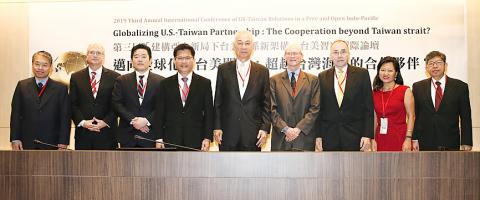
Photo: Fang Pin-chao, Taipei Times
Taiwan has an option, “unfortunately, Hong Kong has not,” he said, in reference to China’s “one country, two systems” model.
What happened in Hong Kong is a lesson for all that China is not to be trusted, he said, adding that Taiwanese could learn from the Hong Kong situation, despite China trying to convince them to feel easy about unifcation.
The US must stand on the side of democratic Taiwan as China seeks to marginalize it internationally, he said.
Meanwhile, in a keynote speech at the forum, Minister of Transportation and Communications Lin Chia-lung (林佳龍) said that the government would soon officially apply to join the US border preclearance system, to expedite entry for its citizens into the US.
The two countries have already exchanged letters of intent regarding a One-Stop Security arrangement, which recognizes security screening at Taoyuan International Airport so that checked luggage originating from there could be transferred to connecting flights in the US without having to be screened again, Lin said.
Taiwan is hoping to expand the arrangement to hand luggage before 2022, Lin said.
The US has approved Taiwan to join the preclearance system “in principle,” and as soon as it provides the details of how to proceed, the government would make the application, he said.
According to US Customs and Border Protection (CBP), preclearance is the “strategic stationing of CBP law enforcement personnel overseas to inspect travelers prior to boarding US-bound flights.”
The operation is meant to streamline border procedures, reduce congestion at US ports of entry and facilitate travel between preclearance locations and US ports unequipped to handle international travelers, according to the CBP.
The CBP has more than 600 law enforcement officers and agriculture specialists stationed at 15 preclearance airports in six countries, namely the Bahamas, Bermuda, Canada, Ireland, the United Arab Emirates and Aruba, a Caribbean constituent of the Netherlands.
Taiwan is part of the US Visa Waiver and Global Entry program, which allows for expedited entry into the US.
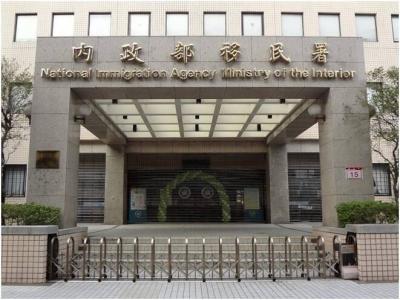
A small number of Taiwanese this year lost their citizenship rights after traveling in China and obtaining a one-time Chinese passport to cross the border into Russia, a source said today. The people signed up through Chinese travel agencies for tours of neighboring Russia with companies claiming they could obtain Russian visas and fast-track border clearance, the source said on condition of anonymity. The travelers were actually issued one-time-use Chinese passports, they said. Taiwanese are prohibited from holding a Chinese passport or household registration. If found to have a Chinese ID, they may lose their resident status under Article 9-1
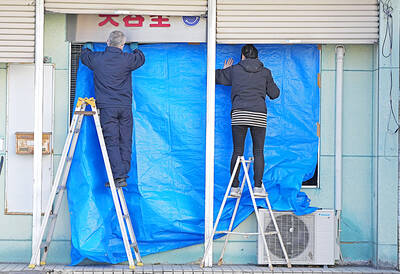
Taiwanese were praised for their composure after a video filmed by Taiwanese tourists capturing the moment a magnitude 7.5 earthquake struck Japan’s Aomori Prefecture went viral on social media. The video shows a hotel room shaking violently amid Monday’s quake, with objects falling to the ground. Two Taiwanese began filming with their mobile phones, while two others held the sides of a TV to prevent it from falling. When the shaking stopped, the pair calmly took down the TV and laid it flat on a tatami mat, the video shows. The video also captured the group talking about the safety of their companions bathing

PROBLEMATIC APP: Citing more than 1,000 fraud cases, the government is taking the app down for a year, but opposition voices are calling it censorship Chinese Nationalist Party (KMT) Chairwoman Cheng Li-wun (鄭麗文) yesterday decried a government plan to suspend access to Chinese social media platform Xiaohongshu (小紅書) for one year as censorship, while the Presidential Office backed the plan. The Ministry of the Interior on Thursday cited security risks and accusations that the Instagram-like app, known as Rednote in English, had figured in more than 1,700 fraud cases since last year. The company, which has about 3 million users in Taiwan, has not yet responded to requests for comment. “Many people online are already asking ‘How to climb over the firewall to access Xiaohongshu,’” Cheng posted on

A classified Pentagon-produced, multiyear assessment — the Overmatch brief — highlighted unreported Chinese capabilities to destroy US military assets and identified US supply chain choke points, painting a disturbing picture of waning US military might, a New York Times editorial published on Monday said. US Secretary of Defense Pete Hegseth’s comments in November last year that “we lose every time” in Pentagon-conducted war games pitting the US against China further highlighted the uncertainty about the US’ capability to intervene in the event of a Chinese invasion of Taiwan. “It shows the Pentagon’s overreliance on expensive, vulnerable weapons as adversaries field cheap, technologically


 RSS
RSS