


People with a positive outlook live an average of 7.5 years longer than their peers who are morose and unwilling to learn new things, Chang Gung Memorial Hospital Department of Rehabilitation doctor Chen Chih-kuang (陳智光) said on Tuesday, citing a study published by Yale University that observed 660 people aged 50 or older for 23 years.
Longevity is not based on health or wealth, but on a person’s take on life and the world, Chen said.
Chen cited a separate study from Harvard University that showed that 30 percent of 70,000 participants “maintained optimistic attitudes” and were less affected by cancer, heart attacks, strokes, respiratory tract diseases and other issues that could lead to death than those who were “gloomy and dour.”
Telomeres are a region of repetitive nucleotides at each end of chromosomes that ensure the complete replication of chromosomes and are linked to aging and cancer, he said.
They get shorter after every replication and replication ceases once the telomere is a certain length, he said.
The studies show that pressure, severe depression and other negative psychological states increase the rate of telomere shortening, he said.
The Huangdi Neijing (黃帝內經), a fundamental text in Chinese medicine, includes a section titled: “Anger affects the liver; joy the heart; thought the spleen; worry the lungs and fear the kidney,” Chen said, adding that traditional Chinese medicine teaches that emotional stress is the source of many physical ailments and leads to premature aging.
To have better health, people must maintain an equilibrium of emotions, he said.
Maintaining a sanguine outlook helps deter the effects of aging, Chen said.
The phrase: “You are old when you feel it” is not mere philosophy, but is backed up by medical research, he added.

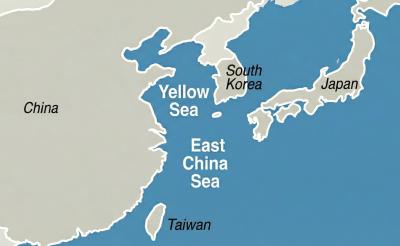
China has reserved offshore airspace in the Yellow Sea and East China Sea from March 27 to May 6, issuing alerts usually used to warn of military exercises, although no such exercises have been announced, the Wall Street Journal (WSJ) reported yesterday. Reserving such a large area for 40 days without explanation is an “unusual step,” as military exercises normally only last a few days, the paper said. These alerts, known as Notice to Air Missions (Notams), “are intended to inform pilots and aviation authorities of temporary airspace hazards or restrictions,” the article said. The airspace reserved in the alert is
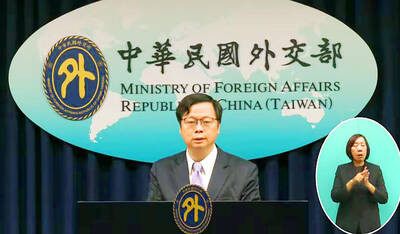
NAMING SPAT: The foreign ministry called on Denmark to propose an acceptable solution to the erroneous nationality used for Taiwanese on residence permits Taiwan has revoked some privileges for Danish diplomatic staff over a Danish permit that lists “Taiwan” as “China,” Eric Huang (黃鈞耀), head of the Ministry of Foreign Affairs’ Department of European Affairs, told a news conference in Taipei yesterday. Reporters asked Huang whether the Danish government had responded to the ministry’s request that it correct the nationality on Danish residence permits of Taiwanese, which has been listed as “China” since 2024. Taiwan’s representative office in Denmark continues to communicate with the Danish government, and the ministry has revoked some privileges previously granted to Danish representatives in Taiwan and would continue to review

More than 6,000 Taiwanese students have participated in exchange programs in China over the past two years, despite the Mainland Affairs Council’s (MAC) “orange light” travel advisory, government records showed. The MAC’s publicly available registry showed that Taiwanese college and university students who went on exchange programs across the Strait numbered 3,592 and 2,966 people respectively. The National Immigration Agency data revealed that 2,296 and 2,551 Chinese students visited Taiwan for study in the same two years. A review of the Web sites of publicly-run universities and colleges showed that Taiwanese higher education institutions continued to recruit students for Chinese educational programs without

A bipartisan group of US senators has introduced a bill to enhance cooperation with Taiwan on drone development and to reduce reliance on supply chains linked to China. The proposed Blue Skies for Taiwan Act of 2026 was introduced by Republican US senators Ted Cruz and John Curtis, and Democratic US senators Jeff Merkley and Andy Kim. The legislation seeks to ease constraints on Taiwan-US cooperation in uncrewed aerial systems (UAS), including dependence on China-sourced components, limited access to capital and regulatory barriers under US export controls, a news release issued by Cruz on Wednesday said. The bill would establish a "Blue UAS


 RSS
RSS