


As President Tsai Ing-wen (蔡英文) and former premier William Lai (賴清德) crossed swords on economic issues in a televised platform presentation session yesterday, Tsai sidestepped a question on whether the winner of the Democratic Progressive Party (DPP) primary could count on the other’s full support.
The question was raised by Liberty Times (the Taipei Times’ sister newspaper) editor-in-chief Tzou Jiing-wen (鄒景雯), the first of three panelists to ask a question that the presidential hopefuls had four minutes to answer.
Lai said that from the moment he entered the primary, he made it clear that, if he lost, he would accept the outcome and support Tsai, adding that his stance had not changed.
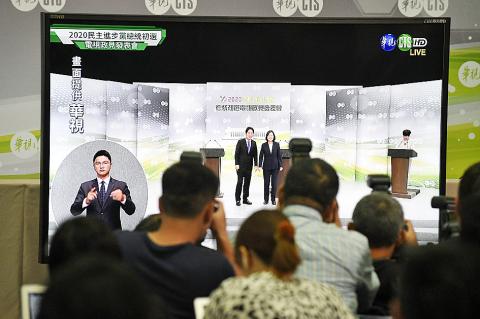
Photo: Chen Chih-chu, Taipei Times
As Tsai had been why the primary’s starting date had been postponed three times and why the rules had changed, she was due to say publicly whether she would support him if he won, Lai said.
The primary is the first in the DPP’s history in which a president seeking re-election faces a challenger from within the party, so it is crucial to think about how to achieve party unity after the primary, Tsai said.
Who represents the DPP would no longer matter after the primary, she said, adding that what would be important is who can best realize the party’s values through the new government, unite party members and attract talent to join the administration.
Taiwan Citizen Front founder and lawyer Lai Chung-chiang (賴中強) asked the two whether, if elected, they would significantly increase the minimum monthly wage and lower the quota on foreign workers.
Taiwan’s minimum hourly wage of NT$150 trails behind South Korea’s NT$238 and Japan’s NT$256, while foreign workers make up 5.7 percent of the nation’s workforce, compared with South Korea’s 2 percent and Japan’s 1.6 percent, Lai Chung-chiang said, adding that the chronic problem of low wages has triggered a brain drain, a low birth rate and a rise in populism.
Her administration has placed greater importance on solving the salary issue than any other as shown by raising the minimum wage three times — by 15 percent — Tsai said, adding that her team would propose another minimum wage hike if economic growth permitted it or if a rise in the cost of living warranted it.
Raising the minimum wage benefitted people with the lowest incomes, but a wage hike also needs to consider whether the 1.4 million small and medium-sized companies could afford it, William Lai said.
A good economy justifies a hike, but a weak economy does not mandate an increase, or only a small increase, he said.
Other factors that contribute to low wages are mass-exporting manufacturing to China and the need for businesses to cap personnel costs to retain global competitiveness, so the worth of workers should be increased through education, such as equipping students with skills needed for artificial intelligence or the Internet of Things, he said.
Business Today president Liang Yung-huang (梁永煌) asked the two to list the priorities of their economic platforms.
Local businesses faced with the challenge of new business models or international goliaths must be tackled, followed by attracting investment from local firms based in China amid the US-China trade dispute, William Lai said.
Legislation allowing workers the option to allocate a part of their monthly salary to a bank account as their pension fund would have his support, he said, adding that if necessary, his administration would subsidize such a fund to better provide for workers.
Tsai said she would drive domestic demand by fostering national defense and renewable energy, citing her administration’s promotion of offshore wind farms and a project to build indigenous submarines.
Exports should be diversified not only by tapping into markets in Southeast Asia, Oceana and India, but also by expand Taiwan’s reach in Europe, she said, adding that she would speed up efforts to upgrade industries to respond to global business trends, thereby helping local firms develop a global presence.
Above all, she would continue to improve long-term care services, so that every young Taiwanese would know that the government would care for them in retirement, she added.
Speaking at separate news conferences after the presentation, William Lai said it was pity that Tsai stressed party unity, while her reticence to say whether she would support him if he won the primary hurt the party’s need for unity.
Asked about the issue, Tsai said only that “as a DPP member, I will respect the party’s decision.”
Additional reporting by Huang Hsin-po and Su Fun-her
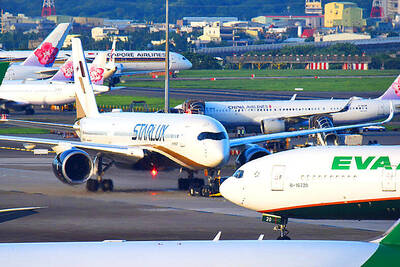
Trips for more than 100,000 international and domestic air travelers could be disrupted as China launches a military exercise around Taiwan today, Taiwan’s Civil Aviation Administration (CAA) said yesterday. The exercise could affect nearly 900 flights scheduled to enter the Taipei Flight Information Region (FIR) during the exercise window, it added. A notice issued by the Chinese Civil Aviation Administration showed there would be seven temporary zones around the Taiwan Strait which would be used for live-fire exercises, lasting from 8am to 6pm today. All aircraft are prohibited from entering during exercise, it says. Taipei FIR has 14 international air routes and
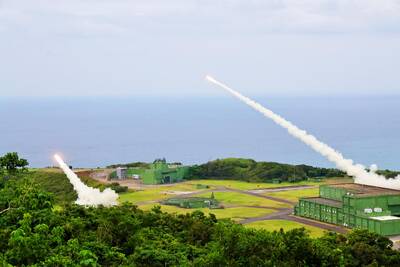
Taiwan lacks effective and cost-efficient armaments to intercept rockets, making the planned “T-Dome” interception system necessary, two experts said on Tuesday. The concerns were raised after China’s military fired two waves of rockets during live-fire drills around Taiwan on Tuesday, part of two-day exercises code-named “Justice Mission 2025.” The first wave involved 17 rockets launched at 9am from Pingtan in China’s Fujian Province, according to Lieutenant General Hsieh Jih-sheng (謝日升) of the Office of the Deputy Chief of the General Staff for Intelligence at the Ministry of National Defense. Those rockets landed 70 nautical miles (129.6km) northeast of Keelung without flying over Taiwan,
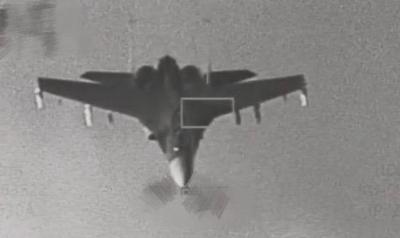
The Ministry of National Defense (MND) today released images of the military tracking China’s People's Liberation Army (PLA) movements during the latest round of Chinese drills around Taiwan. The PLA began "Justice Mission 2025" drills today, carrying out live-fire drills, simulated strikes on land and maritime targets, and exercises to blockade the nation's main ports. The exercises are to continue tomorrow, with the PLA announcing sea and air space restrictions for five zones around Taiwan for 10 hours starting from 8:30am. The ministry today released images showing a Chinese J-16 fighter jet tracked by a F-16V Block 20 jet and the
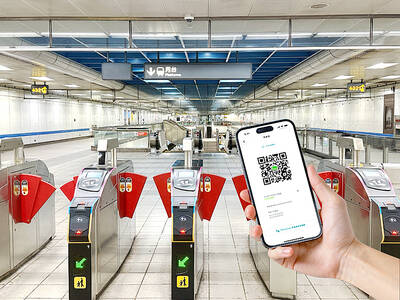
City buses in Taipei and New Taipei City, as well as the Taipei MRT, would on Saturday begin accepting QR code payments from five electronic payment providers, the Taipei Department of Transportation said yesterday. The new option would allow passengers to use the “transportation QR code” feature from EasyWallet, iPass Money, iCash Pay, Jkopay or PXPay Plus. Passengers should open their preferred electronic payment app, select the “transportation code” — not the regular payment code — unlock it, and scan the code at ticket readers or gates, General Planning Division Director-General Liu Kuo-chu (劉國著) said. People should move through the


 RSS
RSS