


The Ministry of Education has taken measures to prevent universities and colleges from forcing Southeast Asian students into manual labor, Deputy Minister of Education Lio Mon-chi (劉孟奇) said yesterday.
The ministry had previously given great liberty to schools offering internship programs as part of the government’s New Southbound Policy, but after discovering how the regulations have been abused, it has inspected nine schools and set down new requirements for all institutes participating in the program, Lio said.
He was referring to a series of scandals last year and this year in which Yu Da University of Science and Technology, the University of Kang Ning and Hsing Wu University were accused of collaborating with personnel agencies to trick Southeast Asian students into performing illegal work unrelated to the internship they signed up for.
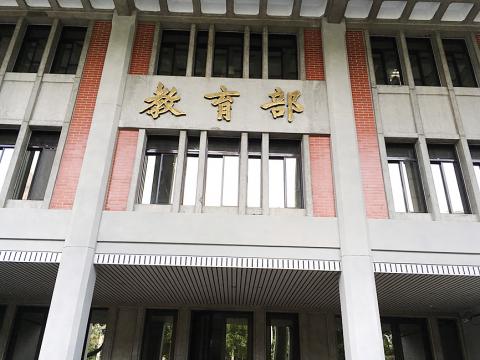
Photo: Rachel Lin, Taipei Times
The internship program is designed to provide training to students who might be hired as middle-level managers by Taiwanese companies after graduation, Liu said.
It is part of an effort to boost the nation’s economy amid a declining birthrate, he said.
To prevent a repeat of the alleged abuses, the schools offering the program are now required to submit copies of the students’ internship contracts and salary transfer records to the ministry, so that it can see whether their work hours are legal and if their internship subsidies have been docked by personnel agencies, Liu said.
The schools are also banned from receiving tuition and other fees from personnel agencies or companies where the students work, he said.
Furthermore, any work opportunities that the school passes on to international students must be reported to the ministry, he added.
The schools are also required to submit their syllabuses to the ministry for review at least 15 days in advance, Liu said.
If the schools breach the regulations, for example by requiring students to work past legal work hour limits, they could be banned from recruiting international students or receiving government subsidies and given ad hoc consultation, he said.
The ministry would consider students’ Chinese-language skills and pass rates for professional certificates when evaluating the program’s performance, he said.
The schools would be required to provide a document detailing the program in the students’ native language before they arrive in Taiwan, he said, adding that the document would serve as a reference in the event of a dispute.

SECURITY: Starlink owner Elon Musk has taken pro-Beijing positions, and allowing pro-China companies to control Taiwan’s critical infrastructure is risky, a legislator said Starlink was reluctant to offer services in Taiwan because of the nation’s extremely high penetration rates in 4G and 5G services, the Ministry of Digital Affairs said yesterday. The ministry made the comments at a meeting of the legislature’s Transportation Committee, which reviewed amendments to Article 36 of the Telecommunications Management Act (電信管理法). Article 36 bans foreigners from holding more than 49 percent of shares in public telecommunications networks, while shares foreigners directly and indirectly hold are also capped at 60 percent of the total, unless specified otherwise by law. The amendments, sponsored by Chinese Nationalist Party (KMT) Legislator Ko
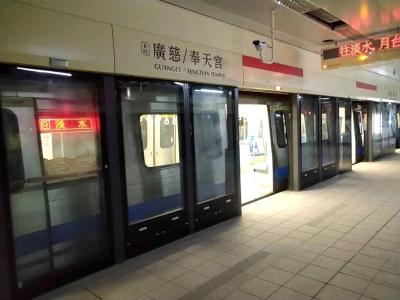
The eastern extension of the Taipei MRT Red Line could begin operations as early as late June, the Taipei Department of Rapid Transit Systems said yesterday. Taipei Rapid Transit Corp said it is considering offering one month of free rides on the new section to mark its opening. Construction progress on the 1.4km extension, which is to run from the current terminal Xiangshan Station to a new eastern terminal, Guangci/Fengtian Temple Station, was 90.6 percent complete by the end of last month, the department said in a report to the Taipei City Council's Transportation Committee. While construction began in October 2016 with an

The military has spotted two Chinese warships operating in waters near Penghu County in the Taiwan Strait and sent its own naval and air forces to monitor the vessels, the Ministry of National Defense (MND) said. Beijing sends warships and warplanes into the waters and skies around Taiwan on an almost daily basis, drawing condemnation from Taipei. While the ministry offers daily updates on the locations of Chinese military aircraft, it only rarely gives details of where Chinese warships are operating, generally only when it detects aircraft carriers, as happened last week. A Chinese destroyer and a frigate entered waters to the southwest
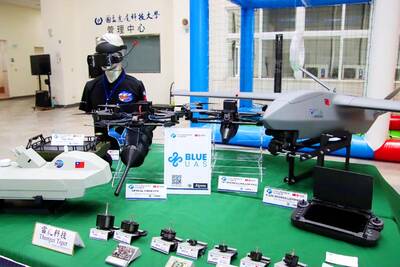
NON-RED SUPPLY: Boosting the nation’s drone industry is becoming increasingly urgent as China’s UAV dominance could become an issue in a crisis, an analyst said Taiwan’s drone exports to Europe grew 41.7-fold from 2024 to last year, with demand from Ukraine’s fight against Russian aggression the most likely driver of growth, a study showed. The Institute for Democracy, Society and Emerging Technology (DSET) in a statement on Wednesday said it found that many of Taiwan’s uncrewed aerial vehicle (UAV) sales were from Poland and the Czech Republic. These countries likely transferred the drones to Ukraine to aid it in its fight against the Russian invasion that started in 2022, it said. Despite the gains, Taiwan is not the dominant drone exporter to these markets, ranking second and fourth


 RSS
RSS