


Civil Aeronautics Administration (CAA) Director-General Lin Kuo-hsien (林國顯) yesterday told lawmakers that he had reservations about the agency being placed in charge of maintaining the runways and taxiways at Taiwan Taoyuan International Airport once again, saying that runway problems would be gradually solved through the airport operator’s runway renovation project.
The CAA used to be responsible for maintaining all of the nation’s airport runways and taxiways, including those at the nation’s premier gateway, but Taoyuan International Airport Corp (TIAC) took over management of the Taoyuan terminal and its runways after the state-run company was established on Nov. 1, 2010.
However, the quality of the Taoyuan airport’s runways and their maintenance has come under scrutiny after a series of incidents exposed pavement problems.
The most recent incident was on March 9, when the discovery of a pothole on the south runway delayed 121 flights.
The incidents prompted Starlux Airlines chairman Chang Kuo-wei (張國煒) on Tuesday to again urge the government to let the CAA resume responsibility for maintaining Taoyuan’s runways and taxiways.
At a question-and-answer session of the Legislative Yuan’s Transportation Committee yesterday morning, Democratic Progressive Party legislators Chen Ming-wen (陳明文) and Yeh Yi-jin (葉宜津) echoed Chang’s appeal.
TIAC should manage the airport’s terminal operations and let CAA maintain the runways and taxiways, the pair said.
Lin said that runway maintenance and terminal management are closely related, adding that terminals would have to be closed during runway maintenance.
TIAC was established because it is able to find professionals to manage the nation’s largest international airport based on the Government Procurement Act (政府採購法), he said.
The company has budgeted NT$3 billion (US$97.3 million) to renovate the Taoyuan airport’s runways, Lin said, adding that he believes the company would gradually build up its capacity to repair and maintain runways.
Asked if he agrees that the CAA should be responsible for maintaining the runways, Lin said that he had no authority to speak on the matter, adding that the agency could only intervene or punish TIAC if the Taoyuan runways are found to be unsafe.
In other developments, Lin said that the agency had charged the Chungshan Institute of Science and Technology with the task of proposing more effective measures to counter intrusions by uncrewed aerial vehicles in restricted areas, adding that the institute would brief the Office of Homeland Security next month.
By the end of this year, the agency would start using drone jammers and frequency detectors to deter drones from entering airports’ airspace and surrounding areas, Lin said.
The Transportation Committee asked the CAA to come up with more effective solutions to address aviation safety hazards that could be caused by drones after Taipei International Airport (Songshan airport) was shut down for 63 minutes on Friday last week due to two intrusions by drones, affecting eight flights and 589 passengers.
In addition to drone jammers, the agency has also spoken with manufacturers and importers of aerial drones, which have agreed to install digital fencing on drones so that they cannot fly into restricted areas, Lin said.
Regulations on aerial drones in the Civil Aviation Act (民用航空法), which are to go into effect in January next year, would require owners of drones weighing more than 250g to register with the CAA, while those weighing more than 1kg must be equipped with digital fencing.
Under the act, starting in 2026, all drones would have to be equipped with digital fencing.
Additional reporting by staff writer

Taiwanese can file complaints with the Tourism Administration to report travel agencies if their activities caused termination of a person’s citizenship, Mainland Affairs Council Minister Chiu Chui-cheng (邱垂正) said yesterday, after a podcaster highlighted a case in which a person’s citizenship was canceled for receiving a single-use Chinese passport to enter Russia. The council is aware of incidents in which people who signed up through Chinese travel agencies for tours of Russia were told they could obtain Russian visas and fast-track border clearance, Chiu told reporters on the sidelines of an event in Taipei. However, the travel agencies actually applied
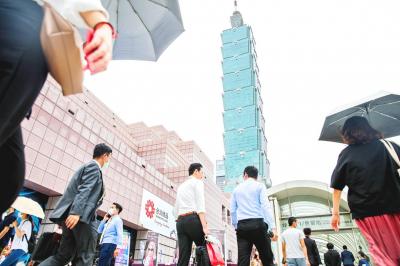
Japanese footwear brand Onitsuka Tiger today issued a public apology and said it has suspended an employee amid allegations that the staff member discriminated against a Vietnamese customer at its Taipei 101 store. Posting on the social media platform Threads yesterday, a user said that an employee at the store said that “those shoes are very expensive” when her friend, who is a migrant worker from Vietnam, asked for assistance. The employee then ignored her until she asked again, to which she replied: "We don't have a size 37." The post had amassed nearly 26,000 likes and 916 comments as of this

New measures aimed at making Taiwan more attractive to foreign professionals came into effect this month, the National Development Council said yesterday. Among the changes, international students at Taiwanese universities would be able to work in Taiwan without a work permit in the two years after they graduate, explainer materials provided by the council said. In addition, foreign nationals who graduated from one of the world’s top 200 universities within the past five years can also apply for a two-year open work permit. Previously, those graduates would have needed to apply for a work permit using point-based criteria or have a Taiwanese company
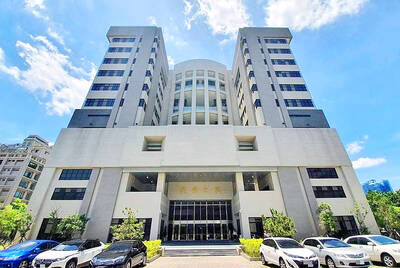
The Shilin District Prosecutors’ Office yesterday indicted two Taiwanese and issued a wanted notice for Pete Liu (劉作虎), founder of Shenzhen-based smartphone manufacturer OnePlus Technology Co (萬普拉斯科技), for allegedly contravening the Act Governing Relations Between the People of the Taiwan Area and the Mainland Area (臺灣地區與大陸地區人民關係條例) by poaching 70 engineers in Taiwan. Liu allegedly traveled to Taiwan at the end of 2014 and met with a Taiwanese man surnamed Lin (林) to discuss establishing a mobile software research and development (R&D) team in Taiwan, prosecutors said. Without approval from the government, Lin, following Liu’s instructions, recruited more than 70 software


 RSS
RSS