


Taipei Mayor Ko Wen-je (柯文哲) yesterday rejected speculation that his meetings with former presidents Lee Teng-hui (李登輝) and Chen Shui-bian (陳水扁) were part of a plan to run for president.
Ko visited Lee at his house in Taipei’s Cuishan Villa (翠山莊) community on Feb. 12 and met with Chen at his Kaohsiung home on Friday, during a visit to Kaohsiung and Pingtung.
The meeting with Lee was reported by a Chinese-language media outlet, which also claimed that an anonymous source said that Ko’s main purpose was to show concern for Lee’s recovery from a fall in November last year, and that Lee seemed happy to see Ko and also praised him for doing a good job.
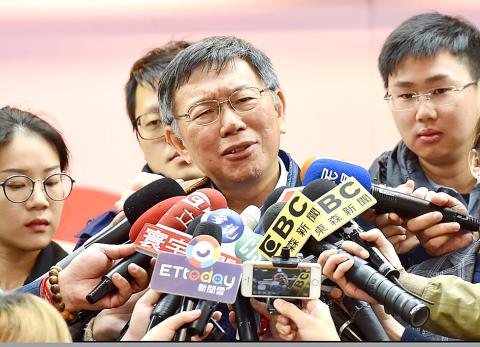
Photo: Huang Yao-cheng, Taipei Times
The meeting with Chen Shui-bian was confirmed by the former president on Facebook in a posting titled “New Hero Story,” with a photograph of himself next to Ko and his wife, Peggy Chen (陳珮琪), holding a manuscript that is to be published next month.
Asked by reporters about speculation that the visits implied a presidential run, and perhaps a tactical voting campaign to capture votes from President Tsai Ing-wen (蔡英文), the mayor did not comment directly.
Visiting Lee or Chen Shui-bian is something that comes naturally, because he visits both men regularly, he said.
He had not seen Lee since the former president was hospitalized last year, because he did not want Lee’s doctor to feel pressured if he asked technical questions about Lee’s condition, Ko said, so he waited to visit him at home after Lee recovered.
He has a “doctor-patient relationship” with Chen Shui-bian, so he always visits him when he is in Kaohsiung, and since Chen served as Taipei mayor as well as president, he can learn many things from talking with him, Ko said.
Media reports of the visits as “drawing pro-independence figures to his side” or “starting a tactical voting campaign” were just creating conspiracies, he said.
Asked if Chen Shui-bian was upset about a remark Ko made in 2017 about Chen having faked his illness, Ko said no, adding that “[Chen] does not have to fake his illness, because he has become really ill.”

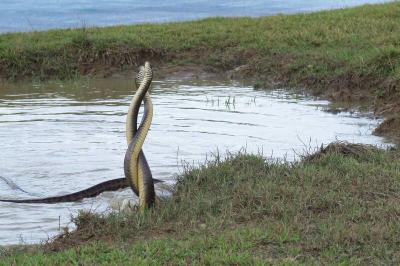
Kenting National Park service technician Yang Jien-fon (楊政峰) won a silver award in World Grand Prix Photography Awards Spring Season for his photograph of two male rat snakes intertwined in combat. Yang’s colleagues at Kenting National Park said he is a master of nature photography who has been held back by his job in civil service. The awards accept entries in all four seasons across six categories: architectural and urban photography, black-and-white and fine art photography, commercial and fashion photography, documentary and people photography, nature and experimental photography, and mobile photography. Awards are ranked according to scores and divided into platinum, gold and
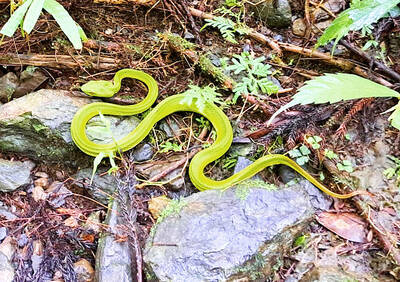
More than half of the bamboo vipers captured in Tainan in the past few years were found in the city’s Sinhua District (新化), while other districts had smaller catches or none at all. Every year, Tainan captures about 6,000 snakes which have made their way into people’s homes. Of the six major venomous snakes in Taiwan, the cobra, the many-banded krait, the brown-spotted pit viper and the bamboo viper are the most frequently captured. The high concentration of bamboo vipers captured in Sinhua District is puzzling. Tainan Agriculture Bureau Forestry and Nature Conservation Division head Chu Chien-ming (朱健明) earlier this week said that the
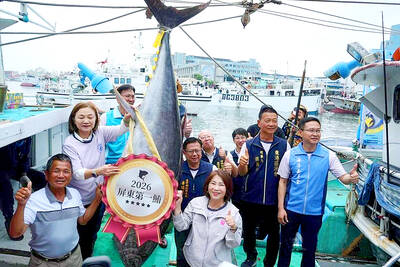
The first bluefin tuna of the season, brought to shore in Pingtung County and weighing 190kg, was yesterday auctioned for NT$10,600 (US$333.5) per kilogram, setting a record high for the local market. The auction was held at the fish market in Donggang Fishing Harbor, where the Siaoliouciou Island-registered fishing vessel Fu Yu Ching No. 2 delivered the “Pingtung First Tuna” it had caught for bidding. Bidding was intense, and the tuna was ultimately jointly purchased by a local restaurant and a local company for NT$10,600 per kilogram — NT$300 ,more than last year — for a total of NT$2.014 million. The 67-year-old skipper
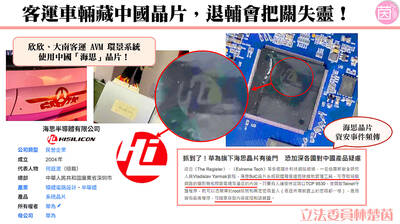
BREACH OF CONTRACT: The bus operators would seek compensation and have demanded that the manufacturer replace the chips with ones that meet regulations Two bus operators found to be using buses with China-made chips are to demand that the original manufacturers replace the systems and provide compensation for breach of contract, the Veterans Affairs Council said yesterday. Democratic Progressive Party Legislator Michelle Lin (林楚茵) yesterday said that Da Nan Bus Co and Shin-Shin Bus Co Ltd have fielded a total of 82 buses that are using Chinese chips. The bus models were made by Tron-E, while the systems provider was CYE Electronics, Lin said. Lin alleged that the buses were using chips manufactured by Huawei subsidiary HiSilicon Co, which presents a national security risk if the


 RSS
RSS